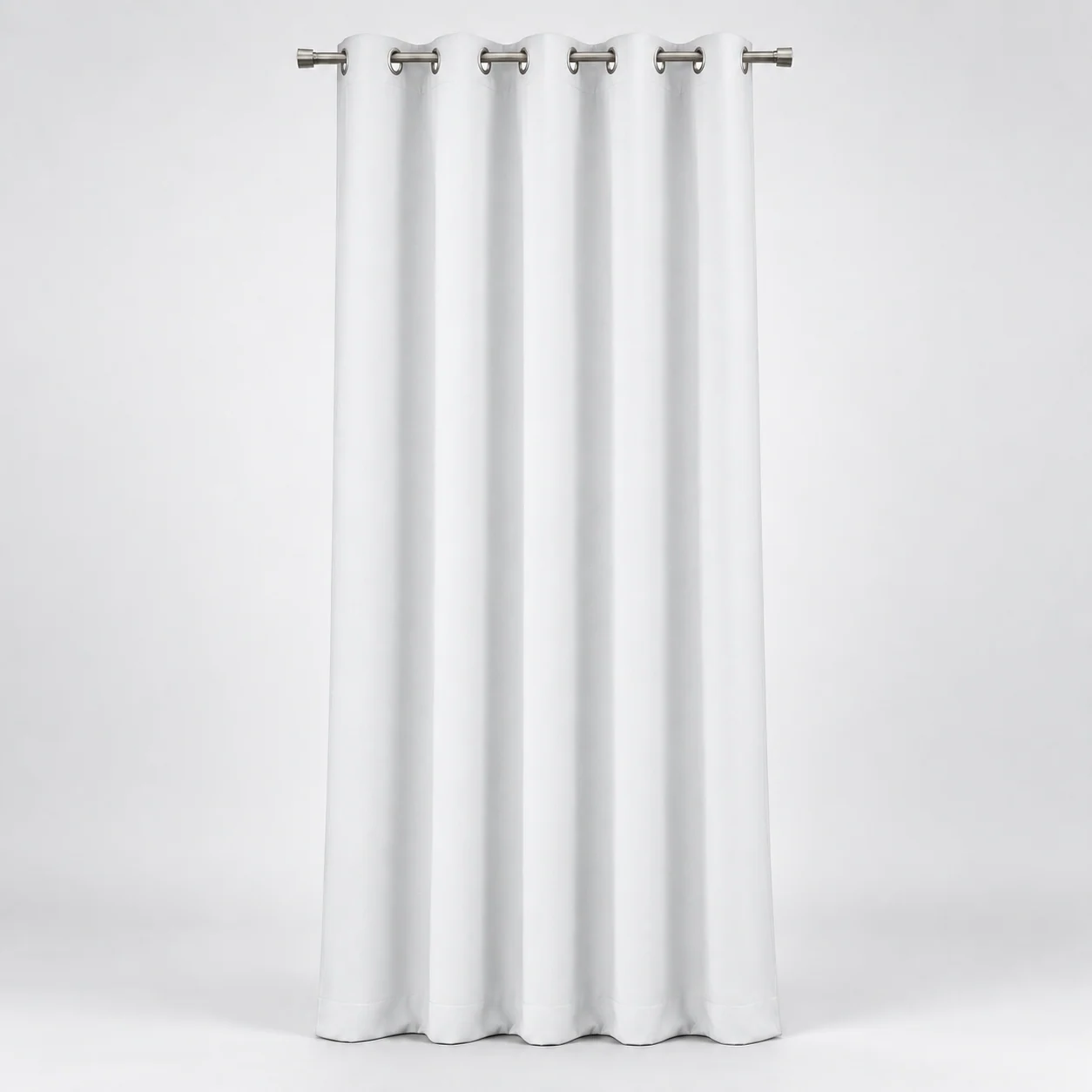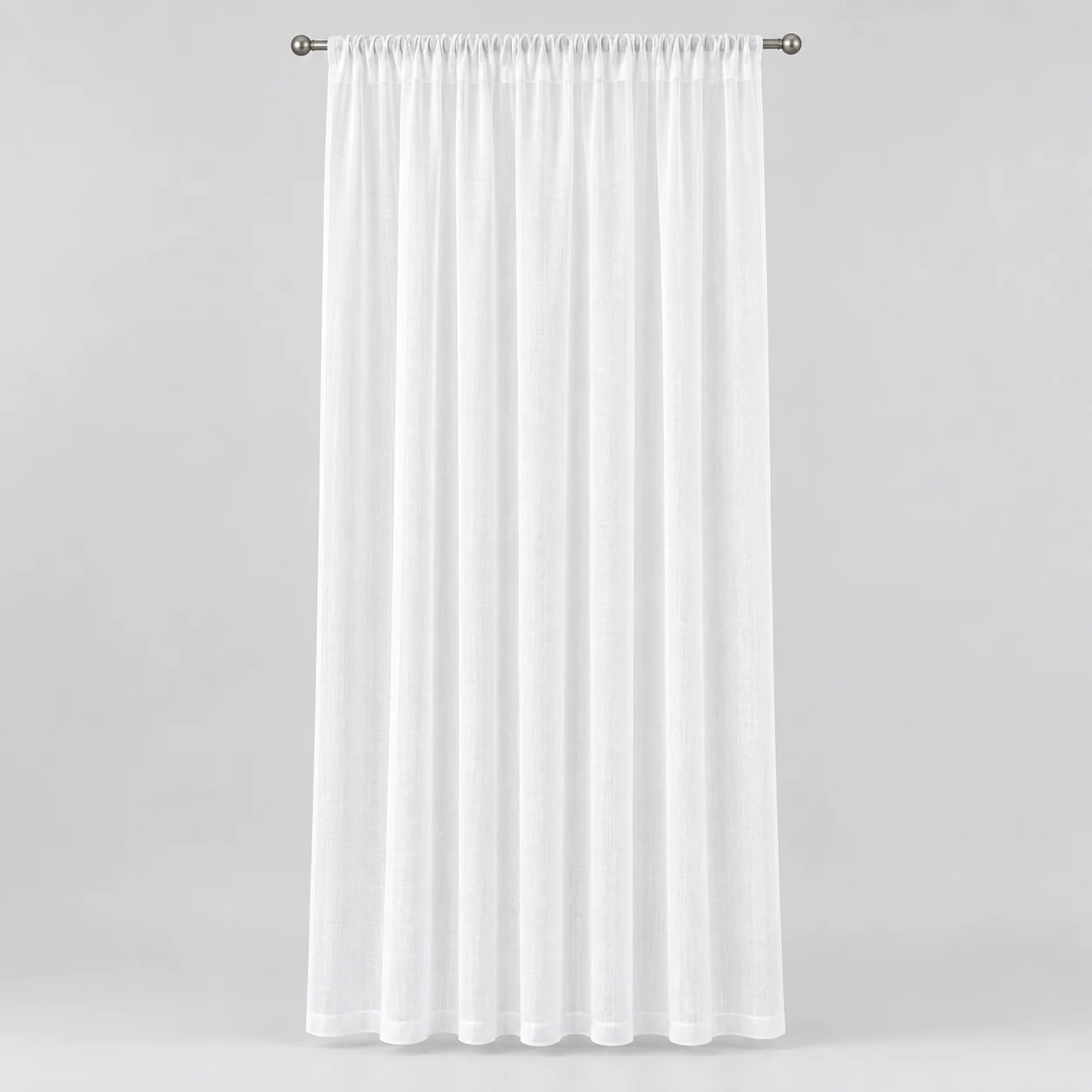
A bat cut flat on a table can lose its wings when wrapped around a curtain: the visible silhouette and hidden closing length need separate approval. This Halloween accessory brief focuses on how a shaped decoration reads around a gathered bundle. It does not replace a review of curtain-surface contact, mounting suitability or product safety. The central buying decision is whether the proposed wrap closes as intended while leaving the correct bat profile visible from the room.
Record the curtain in its gathered state
Flat panel width is not the wrapping dimension
Choose the curtain material, lining arrangement and gathering position used for the sample. Photograph the bundle from the front and side, noting how tightly it is gathered without forcing it into an artificial shape. Record the route the wrap follows around that bundle. A heavy lined curtain and a light unlined panel can create different wrapping needs even when their flat widths are similar.
Place that reference in the development brief with the intended left or right side of the window. If several curtain constructions are offered together, identify which have actually been tried. Do not describe the accessory as universally fitting because an adjustable closure exists. The usable adjustment range still needs to preserve the visible design on the selected curtain arrangements.
- Record the actual gathered curtain and wrap route.
- Keep untried curtain constructions outside the fit approval.
Divide the visible bat from the hidden return
Do not use the wing as an accidental fastening tab
Mark the central body, each wing and the part intended to pass behind the curtain. Show where the wing tips should sit when the closure is engaged. If one wing must overlap another, decide whether that overlap is part of the design or merely a consequence of an undersized wrap. The front drawing should be accompanied by a side view that explains which decorated areas disappear around the bundle.
Retain the selected silhouette in the artwork record. Changing only the overall length can move scallops or wing tips into the hidden return, so inspect the entire installed shape after a size revision. For paired window ties, decide whether the bats face the same direction or form a deliberate mirrored arrangement; do not let packers make that choice during assembly.
- Draw the visible wings and concealed return separately.
- Recheck the silhouette after changing the closing length.
Identify the proposed closing components
Decoration and restraint are not the same function
Ask the supplier to show exactly how the wrap is closed and which components are supplied. Record textiles, backing and any fastening hardware in the component list. A photograph showing a bat against a curtain does not reveal whether it is clipped, tied or temporarily supported. Keep the sample demonstrable without concealed adhesive or photographic assistance.
Have the responsible technical and site owners review suitability for the intended environment, including any hardware and installation limitations. Do not invent a holding-force rating or assume that an accessory is suitable near children because it is made from felt. This article's silhouette approval cannot replace the separate assessment of the actual finished product. A change in closure or backing should trigger a new fitted comparison.
- Show the real closure in front and rear records.
- Route product-use questions to the responsible owner.
Review the wings in the intended room view
A close-up can flatter a shape that disappears at distance
Observe the installed bat from the ordinary room entrance and from the side of the window. Check whether pointed wings curl inward, overlap the central body or disappear into the dark curtain folds. Compare color contrast under the relevant daylight and interior lighting. Keep the chosen shape intentionally soft or intentionally flatter rather than letting a supplier guess which interpretation the buyer expects.
Use the inspection-photo method to retain both a useful scale view and the full-room reference. Close images should show the join and edge finish without pretending to represent the normal visual impact. If the curtain is re-gathered, repeat the fitting using the written instructions; a single arrangement made by the stylist is not enough to describe a repeatable retail experience.
- Compare front, side and normal viewing-distance images.
- Refit the accessory without relying on the original stylist.
Pack the intended pair and fitting information
A counted pair may still contain the wrong orientation
Define whether the selling unit is one tie, an identical pair or two mirror-specific pieces. State the curtain and display props as excluded unless expressly supplied. The pack-out check should confirm complete accessories, the intended orientation and any approved fitting information. Open the proposed pack to see whether wing tips become folded beneath the fastening components.
Request quotations with the same wing construction, return length and closure scope. Ask about minima for material colors or hardware without assuming that two visually similar options share the same commercial terms. Link sampling and shipment planning to the approved fitted pair. A seasonal photograph is a design reference, not evidence that a particular curtain tie is stocked or guaranteed for an imminent Halloween installation.
- State single, identical pair or mirrored pair explicitly.
- Review wing presentation after opening the actual pack.
Send FY Bedding a gathered-curtain reference and the desired visible bat outline. Ask for a complete fitted accessory showing both wings, the hidden return and the real closure before selecting the pair assortment and packaging.