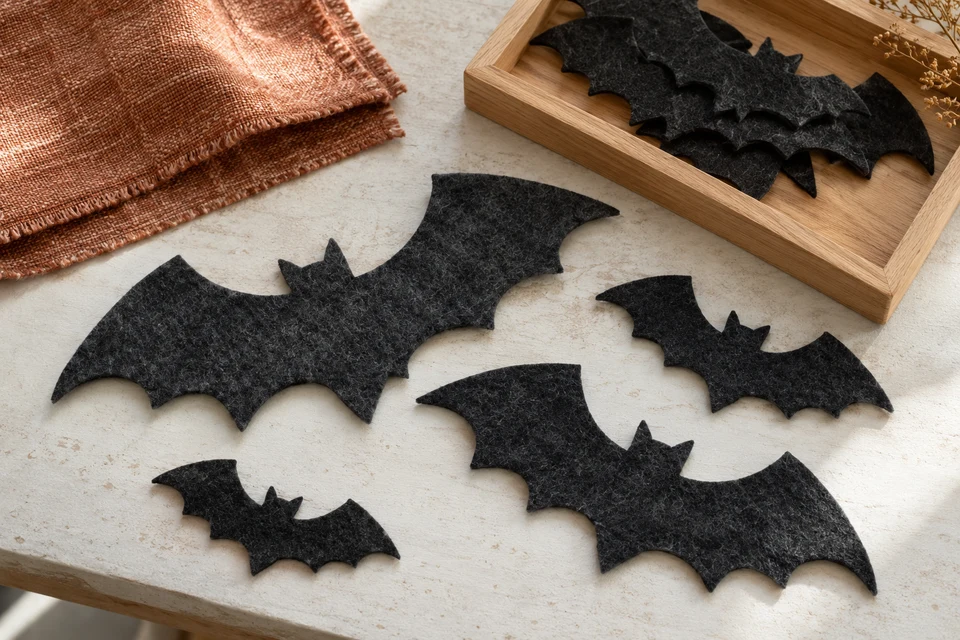
A pack of felt bat table scatter supplies separate shapes for decorative styling. It does not automatically include mounting tape, strings or a connected garland. Because the pieces are small and visually similar, a retail buyer needs a clear silhouette specification and a reliable assortment count. The intended decorative placement also needs to be stated without implying food-contact suitability, child use or other properties that have not been assessed for the final product and market.
Define the supply as unmounted pieces
Separate shapes should not become an unspecified assembly
State that each bat is supplied loose and identify any accessories that are included or expressly excluded. Show both faces of a sample so the buyer can confirm whether it has adhesive, backing, a loop or another attachment. Put the exact supply scope in the technical pack. A photograph of shapes arranged on a wall or table does not explain how that display was created.
If the retailer also wants a mounted version, treat it as a separate product proposal with its own components and evidence review. Do not allow an unrecorded adhesive layer to enter the loose-scatter quotation. Keep retail instructions consistent with what the customer actually receives. A buyer should be able to open the pack and identify the complete product without needing an accessory that appears only in a lifestyle image.
- List any mounting components and exclusions explicitly.
- Keep loose and mounted versions as separate approved proposals.
Approve the silhouette at each offered size
Scaling can change the readability of wings and ears
Provide the finished outline and identify the measurements used for each size, such as overall span and height. Show the wing tips, body and ears at actual scale. A small version may need a deliberately simplified outline to remain readable; it should not acquire missing details accidentally during production. Tie each accepted size to the design version record.
Compare physical cut samples rather than relying only on a vector preview. Review narrow valleys and tips in the proposed material and thickness, supported by supplier component information. Do not infer wool content or another composition from a felt-like surface. If the cutting method or material changes, check the real silhouette again and retain the revised sample as the acceptance reference for that specific size.
- Approve every size in the actual proposed material.
- Distinguish deliberate simplification from missing shape details.
Check the flat condition without forcing the shape
A loose decoration should be reviewed as received
Lay the pieces on the agreed review surface without weights, adhesive or temporary pressing. Observe curling, folded tips and whether the outline remains visible in its natural condition. Record the inspection condition so the same sample is not judged differently after someone has manually flattened it. A decorative reference can be useful, but it should not silently conceal an extra preparation step required of the retailer.
Where the buyer requests material or handling evidence, define the scope in a product evidence plan. Keep any requested care or cleaning instruction tied to the actual composition and construction. Flatness in one sample photograph does not establish washability, resistance to staining or repeated-use performance. Ask the responsible product owner which attributes are necessary for the intended decorative selling proposition.
- Review natural flatness before manual correction.
- Keep material and repeated-use claims separate from appearance approval.
Count pieces by size and design
Total quantity alone can hide an incorrect mix
Define the quantity of each silhouette size and any color variant in the selling pack. A total of many pieces is not an adequate assortment specification if the retail layout depends on a particular large-to-small balance. Use the assortment verification method to reconcile each group with the pack contents. Keep the count unit as an individual complete bat rather than a sheet of cut material.
Review how packing staff distinguish sizes that look similar at a glance. A simple approved count sample or compartmented staging method may be useful, but it must match the actual order. Check that the retail quantity statement describes the supplied pieces and does not include display props. Open more than a styled photography pack during the agreed release review so the assortment decision is based on the real packing process.
- Specify the complete size-and-color mix per pack.
- Reconcile individual pieces rather than relying only on total count.
Keep intended use and packing clear
Table styling is not evidence of food-contact suitability
Describe the pieces as decorative accessories within the intended retail scope. Do not imply that they are edible, suitable for direct food contact or appropriate for unsupervised child use. Ask the responsible product owner to review the final product and market requirements, including any necessary warnings or evidence. The buyer resource checklist can organize those decisions without inventing a universal compliance statement.
Agree a pack that keeps the silhouettes identifiable and inspect it after unpacking for folded wings or mixed counts. Compare quotations only when material, thickness, sizes, quantities and packing are aligned. Ask which choices drive the minimum order and sample cost, then request actual production milestones. A Halloween motif should not be used to promise immediate stock or a delivery date that the supplier has not confirmed.
- Keep decorative use distinct from food-contact or child-use claims.
- Review the unpacked silhouette and counted assortment together.
Send FY Bedding the bat outlines, size mix and intended retail pack. Request unmounted physical samples and a counted packed assortment so material, silhouette and supplied quantity can be confirmed together.