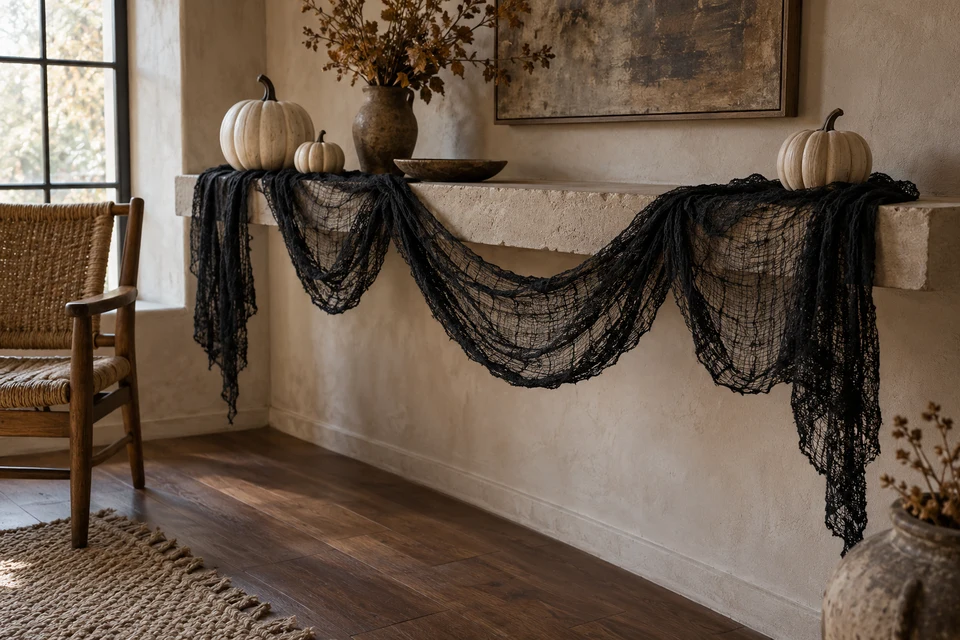
A loose black gauze scarf can create an understated Halloween display, but its irregular appearance makes a vague purchase description risky. The buyer needs to distinguish designed openings from damaged fabric, a styled drape from the supplied dimensions, and decoration from any claim about safe installation. This guide concerns a cold decorative ledge without heat or flame; it does not approve fabric near a working fireplace, heater or candle.
Describe the supplied cloth before styling it
The photograph is not the cut specification
Measure the scarf in the condition agreed with the supplier and describe its edge construction. Record whether it is one continuous piece, several joined lengths or a shaped panel. A three-swag photograph may require more cloth than a straight span suggests, while stretched open weave can make a short piece appear larger. Ask for the unstretched reference and the intended display reference rather than accepting one overall marketing dimension.
Use the technical brief to distinguish supplied shape from styled shape. Include the ledge width and depth as context, but avoid implying that a universal hanging method suits every room. Mounting hardware, surface condition and permitted installation belong to a separate assessment by the responsible party.
- Record the unstretched cloth and the styled span separately.
- Identify joins, shaped edges and supplied accessories.
Define intentional distress with physical boundaries
Random should not mean impossible to inspect
Select representative areas showing the desired yarn spacing, openings and edge irregularity. Agree which features may vary between pieces and which would stop acceptance, such as a major tear through a load-bearing display point or an unintended detached strip. Photographs should include scale and context, not only an atmospheric close-up. The objective is a controlled family of appearances, not an unrealistic promise that every loose yarn occupies an identical position.
Link these observations to the defect classification record. Ask the supplier how the selected distress is produced and how it is checked. If the buyer changes from a regular open weave to a heavily distressed effect, treat that as a new appearance brief. A darker photograph should not conceal a different fabric structure or missing material.
- Keep physical examples of acceptable and unacceptable openings.
- Define which irregularities may vary without changing the offer.
Review the display on a cold ledge
Drape and attachment remain separate decisions
Arrange a sample on a representative non-heated display ledge, keeping the actual ends and any attachment positions visible. Record the number of swags and where the fabric is gathered. Show a person responsible for the display how to reproduce the intended look without stretching the cloth to a different shape. Do not present a styled photograph as evidence of installation safety, attachment strength or fire performance.
The wall-textile display guide explains why support and textile scope should be separated. For a gauze scarf, pay particular attention to loose ends, surrounding objects and access routes in the proposed setting. If heat, public access or another controlled environment is involved, obtain the relevant professional assessment before approving that use.
- Photograph the complete scarf, including ends and supports.
- Exclude heat and flame from this decorative appearance trial.
Check separation and unfolding at receipt
A compressed bundle may hide tangled sections
Ask for a sample packed exactly as proposed for shipment. Open it without cutting near the textile, separate each scarf and follow the agreed unfolding sequence. Check whether distressed edges catch on one another and whether packing ties leave an unwanted narrow band. If a loose accessory is included, confirm it can be identified without pulling at the gauze itself. This is a practical receiving exercise, not a claim of transit qualification.
Use the sample receipt record to keep before-and-after images. Compare a loosely folded option with a compact bundle if the first presentation is difficult to restore. Include the added packing material and volume in the decision so the chosen appearance is not lost when the bulk pack is cost-reduced later.
- Trial the supplied opening sequence without hidden restyling.
- Retain a packed sample as well as the displayed reference.
State the retail scope plainly
Sell a textile decoration rather than an unspecified installation
The retail description should name the scarf, quantity, approximate styled use and any excluded supports. If ornaments in the photograph are not supplied, make that distinction easy to find. Avoid protective or flame-related claims unless evidence for the exact product and intended use supports them. Keep material composition and care statements tied to actual supplier records rather than inferring them from the gauze appearance.
Prepare a scoped inquiry through the buyer resource centre with the cut dimensions, appearance limits, pack reference and destination. Ask about the real minimum quantity, sample stages and production schedule for that construction. A flexible display concept can be useful for seasonal retail, but flexibility does not remove the need to define what one purchased unit contains.
- List included cloth and excluded decorative props.
- Confirm production timing before advertising a holiday launch.
Approve the plain scarf, the allowed distressed appearance and the proposed pack before relying on a styled display. FY Bedding can review a project brief containing those references; installation and fire-related suitability require their own evidence and authority.