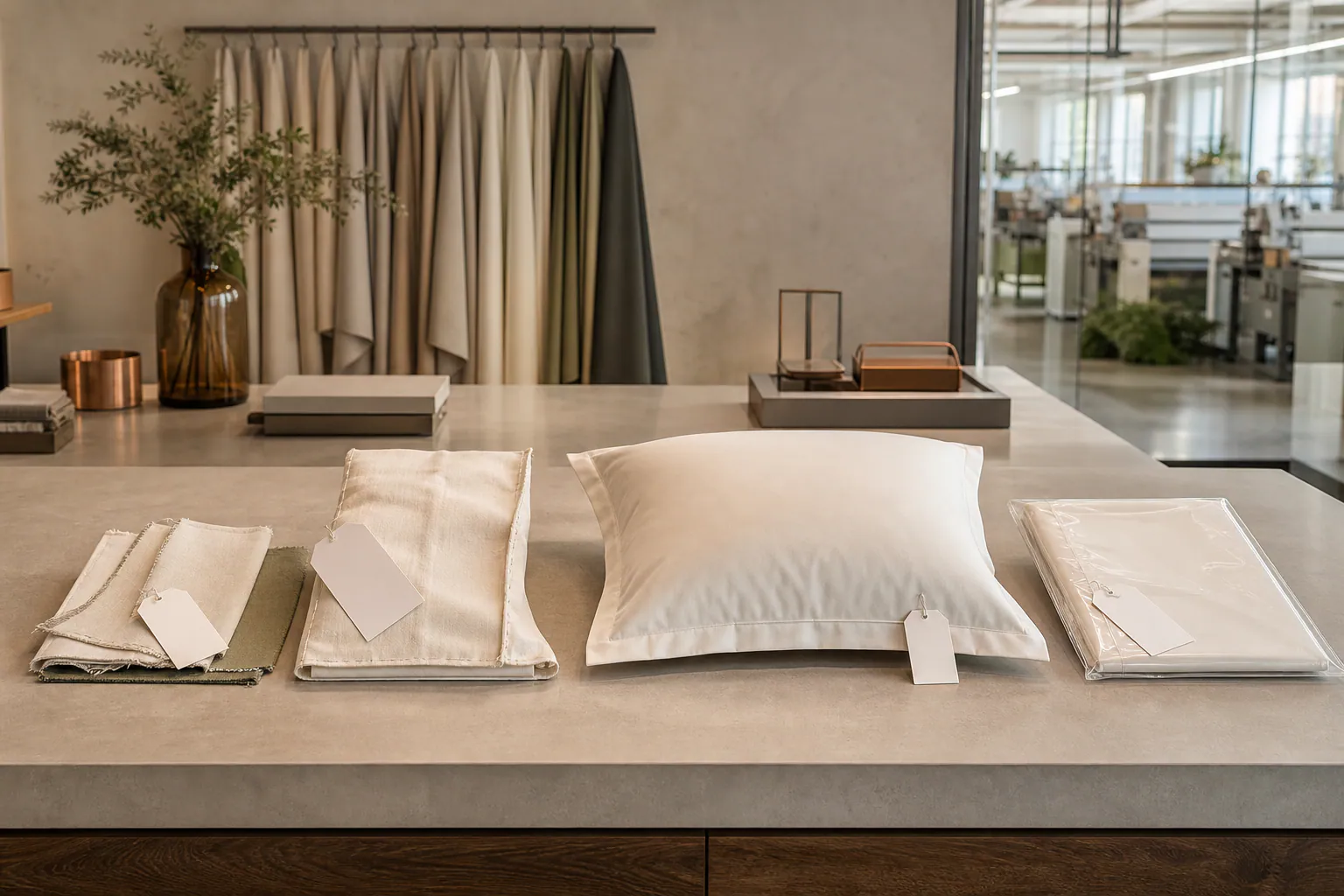
A book-shaped Halloween display prop and a protective sleeve for a real book solve different buying problems. The display prop may use a rigid blank block, an opening dummy structure or an existing store fixture. Before choosing embroidery or fabric, define what sits underneath the textile and whether customers will handle it. That decision determines the cover geometry, attachment method, packing volume and the items included in the quotation.
Identify the underlying display structure
Do not begin with a nominal book size
Supply the exact height, width, thickness and edge shape of the dummy block. If it opens, show the hinge route and the open position expected in the display. If it is solid, explain how the textile will be fitted and removed. A rectangular foam block and a hinged board prop can share an external size yet require different spine allowances and attachment details.
Use the development brief to separate the textile from the supporting structure. State whether the supplier provides the block, the cover alone or an assembled display object. Do not let styling photographs silently add a rigid component to a textile-only order. Photograph the actual fixture beside a dimensional drawing.
- Name the block material and whether it opens.
- Separate cover-only and complete-prop supply lines.
Lay out front, spine and back as one sequence
A closed cover must still tell the intended story
Mark which face will point toward the shopper and which direction the spine will face on the shelf. A crescent motif centered on a flat cover may shift toward the edge after wrapping around a thick dummy. Show the visible front area separately from the turn-under allowance. If several props form a stack, approve the exposed spine view as well as the upright front view.
The artwork placement discussion helps explain why a decorative panel needs a finished-view reference. Decide whether the reverse is plain or decorated and whether paired props intentionally mirror one another. Keep illustrative stars, moons and borders away from hinge folds unless a sample has shown that the effect is acceptable.
- Approve upright, stacked and open views actually used by the retailer.
- Assign front and spine artwork to a named orientation.
Review removable fastening on the real block
The cover should not depend on hidden styling fixes
Ask the supplier to demonstrate fitting the textile without tape or pins that are absent from the commercial design. Possible constructions should be evaluated on the actual block rather than chosen from a generic sewing diagram. Check whether pockets, ties or other proposed fastenings stay concealed during normal presentation. Record any crease that appears where the cover changes direction.
Consult the exposed-fastener review if hook-and-loop is proposed. The question is not only whether the cover stays in place but whether installation catches decorative stitches or adjacent textiles. Keep the assembly process understandable for the store team and distinguish an acceptable removable fixing from permanent adhesive assembly.
- Fit and remove the sample using only supplied components.
- Check the complete opening movement when the dummy is hinged.
Define the visual content without inventing a publication
Treat the object as a prop, not a book product
A seasonal textile prop can use original abstract motifs without claiming to reproduce a real book cover. Identify artwork ownership and permission scope before development. If a buyer requests a recognizable title, character or branded graphic, resolve the rights question separately instead of assuming that a supplier photograph grants reuse permission. Do not add invented certification marks or historical provenance to make the prop appear more authentic.
The seasonal artwork permission checklist supports that review. Keep purchase descriptions clear that the item is a decorative display cover or dummy prop, not a reading edition. Generated editorial imagery should remain labeled as an illustration and should not be used as evidence of an approved physical sample.
- Approve original motifs and their permitted use.
- Keep the product description consistent with the non-reading purpose.
Plan the store kit and its return to storage
Compare flat covers with assembled volume
An assembled dummy may occupy much more carton space than the removable textile. Ask for separate packing proposals when the retailer already owns suitable blocks. Include an assembly reference and a count of covers, blocks and fastening pieces in the receiving record. For a seasonal rollout, identify which items will be stored for reuse and which textile components may be replaced independently.
Use carton-volume planning for the agreed supplied configuration. Confirm sampling costs, minimums and the actual dispatch plan before allocating the kit to stores. A beautiful window concept does not establish that every location has the same shelf depth or that the display can arrive before a specific holiday date.
- Quote flat-cover and assembled options only when both are feasible.
- Include one store-ready assembly reference with the approved kit.
Share the dummy-block dimensions, display views and cover-only or complete-prop scope with FY Bedding. Request a fitted sample that the store team can assemble and remove without undocumented styling materials.