Hotel linen does not move directly from a supplier carton to a guest room. It passes through laundry finishing, shelves, trolleys, service lifts and housekeeping work areas. A towel or sheet can meet its dimensional specification while creating inefficient stacks, difficult retrieval or exposed clean stock on the property's actual cart. Procurement should therefore review the folded textile and the handling equipment together. This guide focuses on that physical interface: the usable shelf space, the chosen fold, the quantity carried and the conditions under which staff replenish rooms during ordinary operations.
Measure usable trolley space
Account for access rather than catalogue dimensions
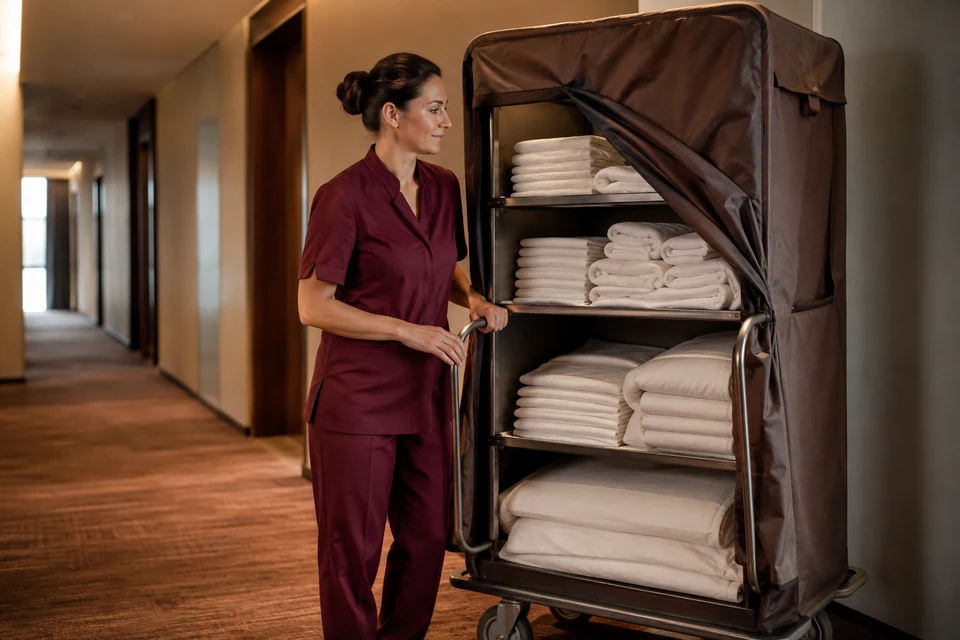
Record the cart model, internal shelf width and depth, vertical clearance, door or cover opening and any obstruction around handles or supports. The useful loading space may be smaller than the published external dimensions. Photograph the trolley empty and with its normal accessories installed. The floor-delivery planning guide helps place this record within the route from central storage to the room, including lift and service-area constraints that the property team should confirm.
Ask staff how they access each shelf and which items are usually needed first. A theoretical stack may fit only if someone removes several unrelated pieces to reach it. Include the equipment manufacturer's load and operating limits in the trial brief, and have the property confirm safe routes and handling. The textile supplier can help with folded dimensions and pack quantities, while the cart provider and hotel remain responsible for the equipment's suitability and safe use in the building.
- Measure clear shelf dimensions and openings.
- Record fitted covers and cart accessories.
- Observe retrieval from each shelf.
- Confirm equipment limits with the responsible provider.
Compare folds using actual textiles
Include loft and variation after laundering
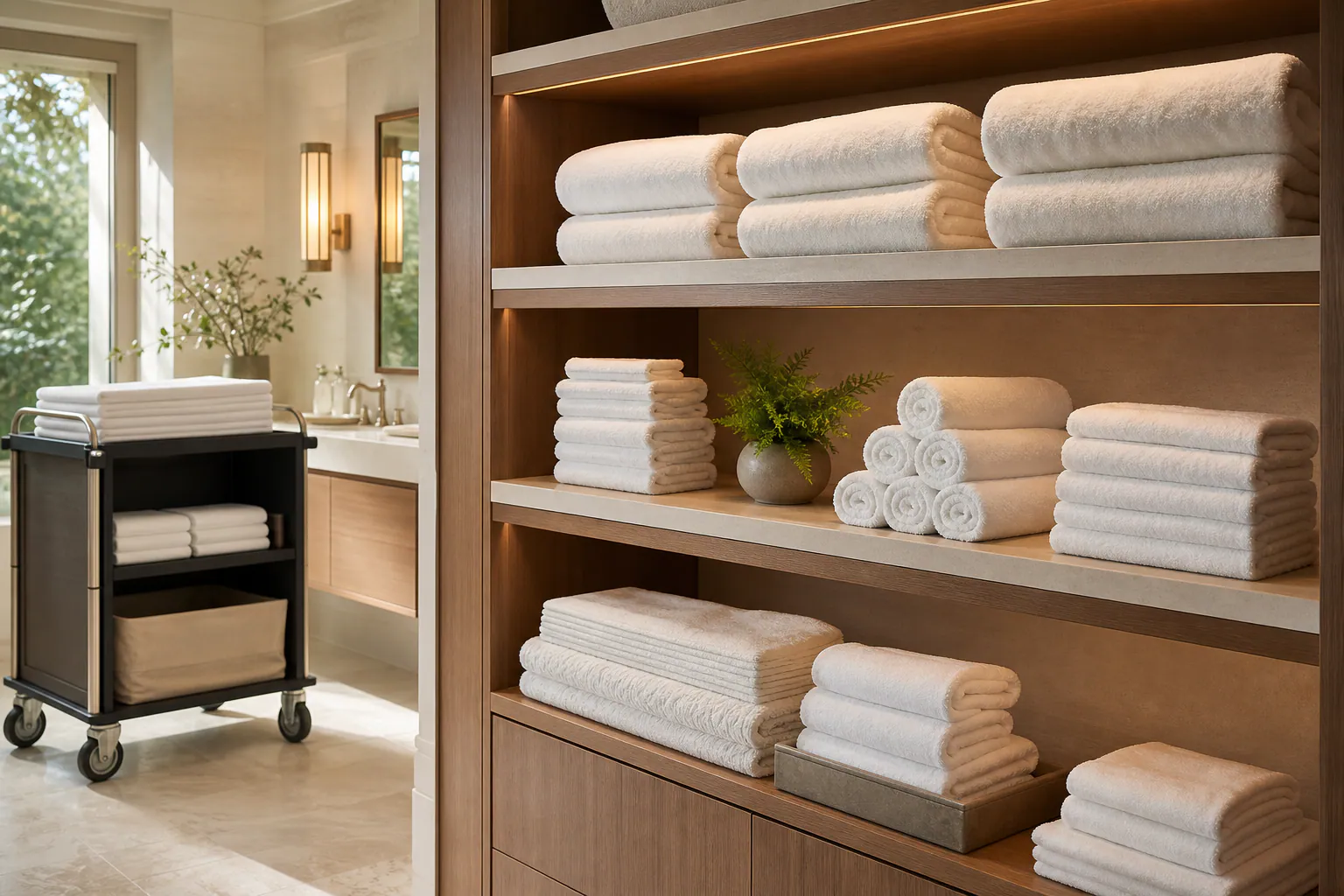
Prepare samples from the intended sheet and towel constructions, then measure their folded width, depth and height using a consistent method. Include several pieces because thick hems and variable folds can change a stack more than a single ideal sample suggests. The folding approval guide provides useful recording principles, although hotel trolley requirements should be assessed independently from retail presentation. Keep the fold sequence understandable to the laundry and housekeeping teams.
Repeat the comparison after the agreed wash and drying route. Fresh compressed goods may occupy less space than the same items prepared for service. The laundry throughput trial helps document how finishing and storage conditions affect the items arriving at the cart. Avoid approving a shelf capacity based on unusually tight compression that staff cannot reproduce or that makes the selected linen difficult to remove without disturbing the remaining clean stack.
- Measure more than one folded item.
- Include hems, loft and realistic fold variation.
- Repeat with service-ready laundered samples.
- Avoid relying on exceptional compression.
Build a route-specific load
Balance availability with practical retrieval
List the room tasks served by one trolley load and calculate the corresponding item quantities from the property's room standards. Show the assumptions: rooms per route, expected room mix, replenishment point and any contingency stock. The par-level framework can support the wider inventory calculation. Cart capacity should be treated as one operating constraint within that plan, rather than as a reason to change the guest-facing linen allocation without approval.
Load the proposed mix and trial retrieval in the normal sequence. Check whether staff can distinguish sizes, remove a piece cleanly and keep the remaining stacks orderly. The linen identification guide helps place markers where they remain visible in the chosen fold. If an arrangement works only when every shelf is perfectly full, repeat it with partial stacks to expose shifting, mixed sizes or awkward access near the end of a route.
- State the room mix behind each load.
- Trial retrieval in the normal working order.
- Keep size identifiers visible in the fold.
- Check partial as well as full stacks.
Review clean-stock handling
Use the property's agreed operating procedure
Walk the intended route with the responsible housekeeping team and observe how covers, doors and shelves are used at replenishment points. Record any moment when clean textiles are placed on an unsuitable surface or become difficult to protect during transfer. Apply the property's hygiene and handling procedures; a fit trial does not establish a universal infection-control standard. Separate the textile packing decision from any equipment or operational correction that must be approved by the hotel.
Review the handover from laundry or receiving into storage and carts. The receiving and laundry handover guide helps define condition and quantity checks at that point. Record damaged covers, rough shelf edges or other equipment concerns for the responsible team rather than attributing every snag or stain to the textile. A repeatable trial should show where the problem arose and which change needs confirmation before the cart load is approved.
- Follow the hotel's clean-stock handling procedure.
- Observe transfer and temporary placement points.
- Record equipment and textile concerns separately.
- Recheck the step affected by each correction.
Release fold and load instructions
Keep supplier packs aligned with operations
Approve a short fold instruction, shelf allocation and typical load record with photographs of representative stacks. Specify whether the supplier's shipping fold is the same as the service fold; it often serves a different purpose and should be identified clearly. Link the final textile dimensions and construction to the property specification. A change in towel weight, sheet size or finish may require another stack trial even if the cart itself remains unchanged.
Share the shelf measurements, intended room mix and care route in a hotel linen brief to FY Bedding. Ask for representative samples and folded measurements, then validate them with the property's actual trolley and staff. Use the trial to support a practical quantity and packaging discussion rather than promising a fixed labour saving. The final record should tell receiving, laundry and housekeeping which linen version, fold and shelf arrangement were approved for routine use.
- Approve a clear fold and shelf allocation.
- Distinguish shipping folds from service folds.
- Recheck stacks after relevant textile changes.
- Retain photographs and operating assumptions.
Can staff retrieve the required clean linen from a realistic full or partial trolley load using the approved fold, route and equipment limits?