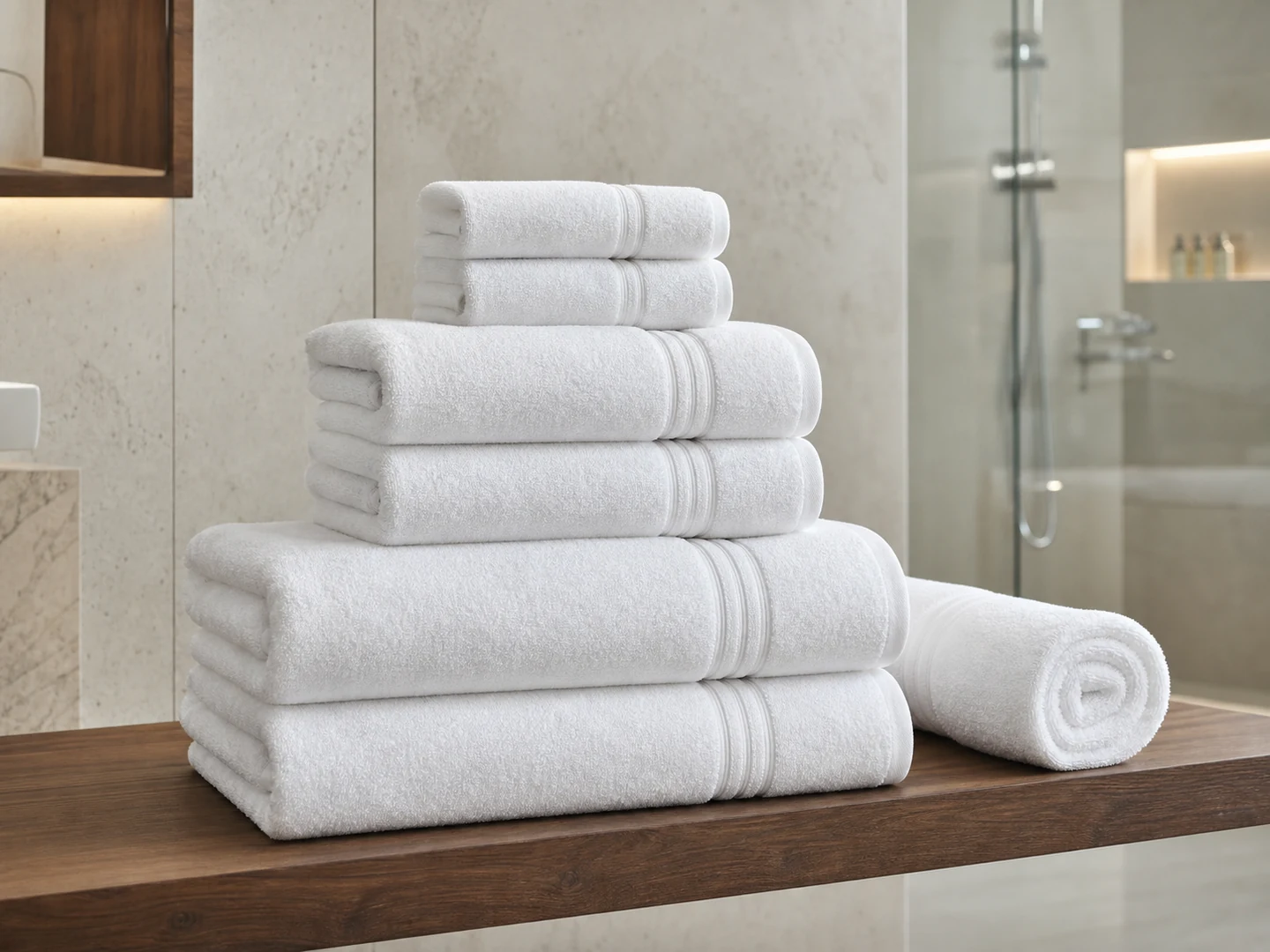
A towel that feels appealing in a showroom may create a very different workload in a hotel laundry. Finished size, mass, pile construction, water pickup, extraction behavior, dryer loading, moisture endpoint and folding method all influence how long a traceable load remains in process. Drying time alone is not a complete procurement answer: a faster cycle can be offset by a smaller practical load, additional handling, uneven residual moisture or a product condition the property will not accept. This guide provides a controlled trial for comparing hotel towel candidates within one defined laundry route. It connects product identity and pre-trial measurements to wash and extraction conditions, drying observations, complete-cycle throughput and post-trial textile assessment. It does not prescribe a universal dryer setting, load ratio, dryness threshold, pieces-per-hour target, energy result or service-life conclusion. Equipment instructions, property safety procedures and the laundry's authorized operating limits always govern the trial. Results apply only to the identified towels, equipment, load composition and process that were actually recorded. The objective is a decision file that lets procurement, housekeeping, laundry operations and the supplier understand which variable changed, where a bottleneck occurred and whether the operational result remains compatible with the approved towel specification.
Define the operational decision and baseline
Frame the trial around the real laundry route, not an isolated stopwatch
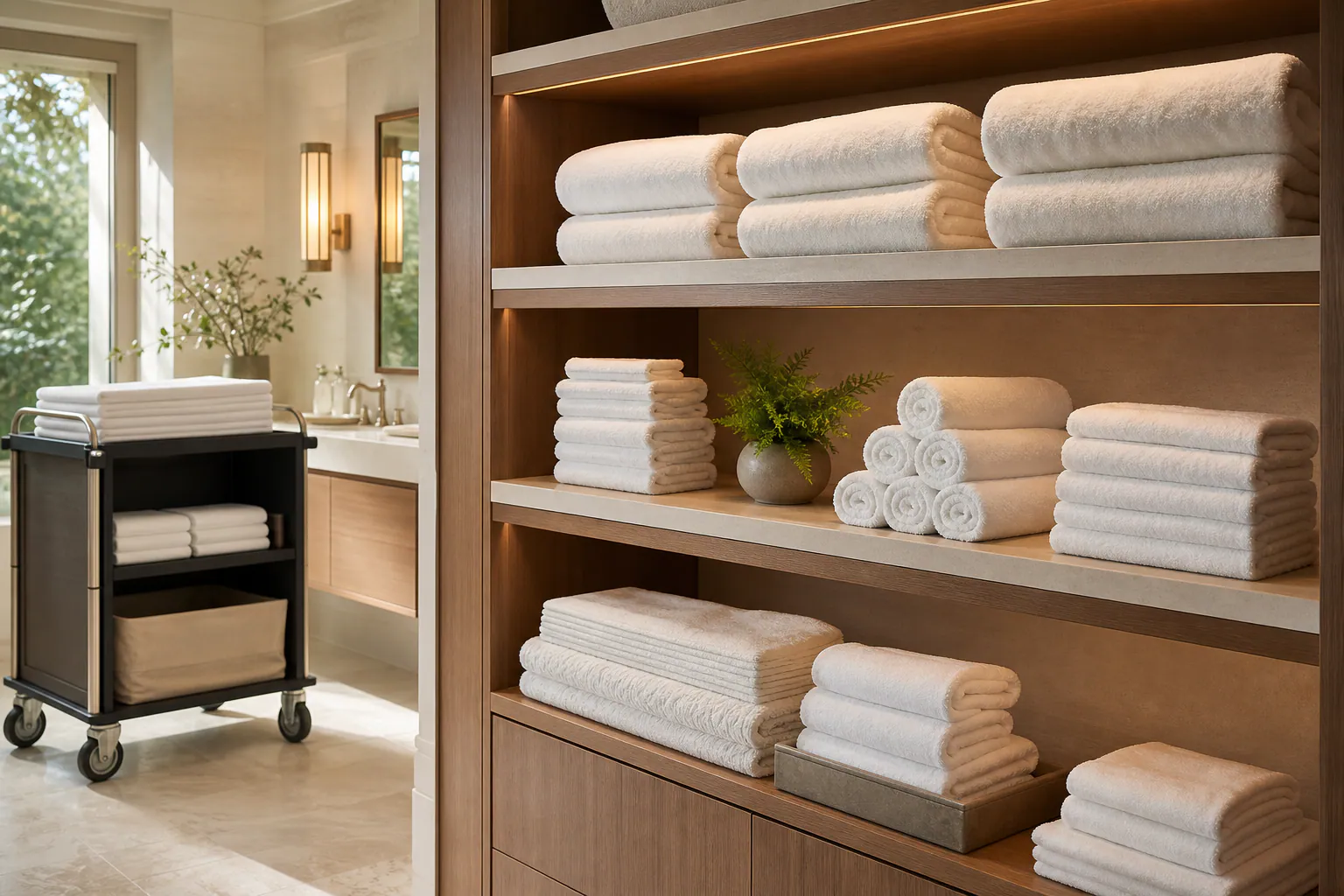
Start with the property and linen flow. List the towel SKUs and intended locations, daily or peak processing pattern, in-house or outsourced route, collection and sorting method, washer and extraction stage, transfer path, dryer, finishing or folding step, clean-storage requirement and any scheduled operating window supplied by the laundry. State whether the question concerns a new product, replacement construction, mixed bath-linen load or a bottleneck already observed in operation. The hotel linen wash-trial guide provides the wider product-and-process evidence framework; this trial narrows the decision to drying time and throughput while retaining the product-quality checks needed to interpret those figures responsibly.
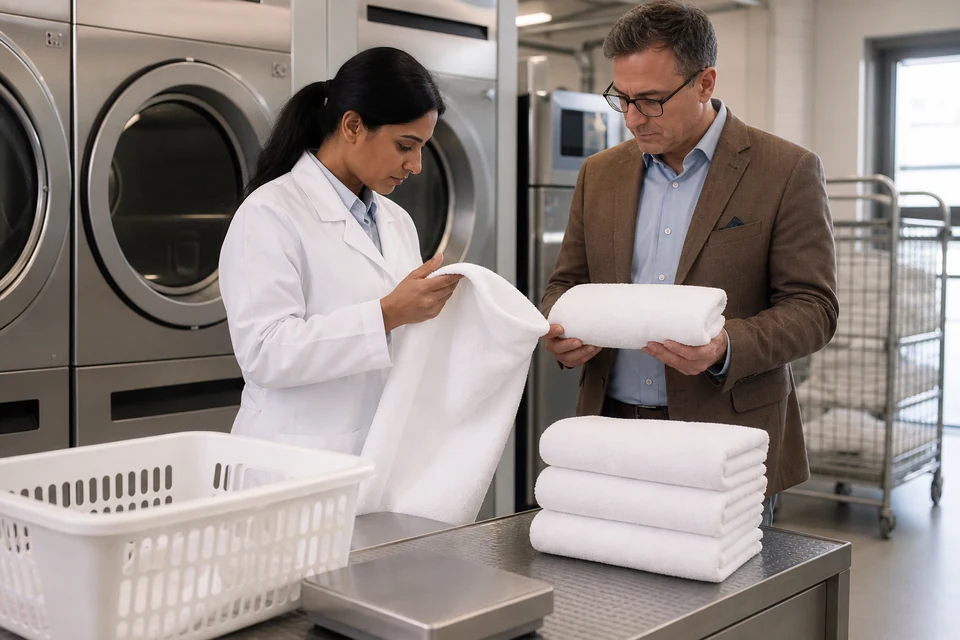
Write a trial brief with named owners from procurement, laundry operations and product quality. Define which candidates will be compared, which existing towel or approved sample is the baseline, what process stages are timed, what constitutes a complete load, how the dry endpoint is decided and which observations can stop a run. Record the equipment identities, rated or authorized operating limits supplied by the owner, maintenance status where available, ambient or utility information the team considers relevant and the operator procedure revision. Do not change machine safeguards or exceed authorized limits to create a favorable result. Use the hotel linen receiving and laundry handover checklist to keep custody, sample status and unresolved exceptions visible before trial towels enter the operating area.
- Map the full route from soiled sorting through clean folded storage.
- Name the procurement, laundry and quality owners for the trial.
- Define the comparison baseline, timed stages and dry endpoint in advance.
- Follow equipment instructions and the property's authorized safety procedure.
Control towel identity and trial-load composition
Make every time result traceable to a comparable textile load
For every candidate, record SKU, sample revision, production or sample lot, fiber and yarn description supplied in the approved specification, pile and ground construction, border and edge details, finished dimensions, conditioned dry mass and any finish or color that differentiates the item. GSM can support identification, but it does not predict the entire laundry behavior; the towel GSM sourcing guide explains why size, yarn, pile geometry and construction must remain visible. Inspect and condition samples consistently through the sample conditioning and measurement method. Exclude or separately identify damaged, pretreated or differently aged units rather than allowing them to distort a nominally equivalent candidate load.
Create a load sheet that states piece count by SKU, conditioned dry textile mass, load composition, loading sequence and the method used to determine each figure. Decide whether candidates will run as single-SKU loads or within a controlled representative mix, and keep that decision constant where a direct comparison is intended. If the operation normally combines towels of different sizes, record every component rather than labeling the load simply as towels. Track identification with the product traceability and lot-coding guide, and use the hotel linen sorting-marker plan to prevent one candidate or size from entering the wrong run. Do not fill a dryer by visual volume while reporting the comparison as equal dry mass.
- Record construction, conditioned dimensions and dry mass for every candidate.
- Identify damaged, aged or pretreated pieces rather than mixing their status.
- Freeze piece count, dry textile mass and SKU composition for each load.
- Use durable sample and load IDs through washing, drying and assessment.
Run the wash, extraction and drying sequence under control
Time the process only after its inputs and endpoint are defined
Record the actual washer program, equipment, water and chemistry information available to the authorized team, load sequence, extraction method and elapsed stages that precede drying. The mass and moisture condition leaving extraction can materially affect the next step, so weigh or otherwise assess the extracted load only by the agreed safe method and at the named point in the transfer sequence. Keep transfer delay, manual untangling and load splitting visible. A comparison that changes extraction, waiting time or load preparation between candidates cannot attribute the later drying difference to the towel alone. Where dimensional behavior is part of the decision, connect the sample record to the dimensional stability and shrinkage testing guide instead of treating a timed cycle as a complete care-performance assessment.
For drying, record dryer identity, authorized program and settings, load start condition, start and end timestamps, pauses, reversals or interventions, sensor or operator endpoint, and the defined recovery point before handling or assessment. If the team takes intermediate observations, specify how the load is sampled and returned without creating an unrecorded process change. Determine dry endpoint using the property's approved method, which may combine mass, instrument information and checks at representative towel locations; avoid declaring the load complete because one accessible surface feels dry. Note uneven moisture, hot spots, tangling, blocked airflow indicators or repeated extensions without diagnosing causes beyond the evidence. The towel absorbency testing guide remains a separate product test: water uptake performance should not be inferred from one dryer time.
- Record wash, extraction, transfer and drying stages as one connected run.
- Keep extracted-load condition and any delay or load splitting visible.
- Define the dry endpoint before timing and sample across the load.
- Log interventions and anomalies without assigning unsupported causes.
Calculate usable throughput and check towel condition
Combine process time with accepted output, not theoretical machine speed
Build a timeline from load preparation and washer start through extraction, transfer, drying, recovery, sorting, folding and placement into the defined clean-output state. Report both stage time and complete elapsed time so a quick dryer cycle does not hide a transfer or folding bottleneck. Calculate throughput only with clearly named units, such as accepted pieces or conditioned dry textile mass per recorded operating period, and state whether overlapping equipment cycles are included. Repeat runs under the agreed plan and show each observation rather than publishing a favorable single figure. Separate queue time caused by the wider operation from machine time, but retain both when they affect the property's achievable flow. No result should be represented as FY Bedding capacity, a universal laundry benchmark or a guarantee for other equipment.
Inspect traceable units after the agreed recovery condition before counting the output as acceptable. Record residual or uneven moisture, dimensions, edge and border distortion, pile appearance, handle where the buyer has a controlled reference, shade, lint observations, loop pulls, loose threads and folding consistency. Use the terry towel border and edge-distortion guide and the loop-pull strength guide for construction-specific evidence. Track lint through the defined collection and mass-loss route in the bath towel linting and wash-loss guide; visible dryer-screen lint alone is not a standardized loss result. Throughput should be recalculated from the accepted output if pieces require additional drying, rework or isolation.
- Separate machine time, handling time, queue time and complete elapsed time.
- State the exact piece or mass basis used for every throughput figure.
- Count only output that reaches the defined dry and quality condition.
- Keep individual repeats and exceptions visible instead of averaging them away.
Compare candidates, approve scope and monitor change
Turn the trial record into a limited purchasing decision
Prepare a comparison matrix that retains product revision, load composition, equipment and process settings, extracted-load condition, drying endpoint, stage times, complete throughput, towel-condition results, operator observations and deviations. Distinguish measured facts from operational judgments and commercial choices. A candidate may support a shorter recorded drying stage yet require a different load size or fail an approved appearance checkpoint; another may have a longer stage but fit an overlapping laundry schedule differently. Procurement and the laundry should therefore approve the complete scenario, not rank towels by one stopwatch value. Review the controlled sample and decision in the home-textile pre-production meeting before bulk production, including the circumstances that trigger another trial.
For receipt and reorder control, link the approved towel specification and golden sample to lot identity, then use the final inspection checklist for dimensions, workmanship, identification and packing evidence. Repeat or review the operational trial when towel construction, size, finish, wash chemistry, extraction, dryer, program, load composition or dry endpoint changes materially. Ongoing laundry data can be trended by identified SKU and period, but it should not be retroactively presented as a controlled product test unless collection conditions support that claim. Buyers can submit an FY Bedding hospitality brief with their towel matrix, laundry route, authorized equipment information and proposed comparison plan for a scoped sourcing discussion; final settings and acceptance criteria remain with the buyer and its authorized laundry team.
- Compare product, load, process, time and quality evidence in one matrix.
- Approve the complete operating scenario rather than the shortest cycle alone.
- Define change triggers for product, equipment, program and load composition.
- Keep routine operating trends distinct from controlled trial conclusions.
Select one accepted towel from a recorded trial load and prove that its SKU, revision and lot connect to conditioned dry measurements, exact load composition, wash and extraction record, defined dry endpoint, complete-stage timeline, accepted-output throughput and post-trial quality assessment without converting the result into a promise for another laundry route.