A replacement mop pad can have the expected nominal length and still be unsuitable for a property's existing frames. The backing interface, usable attachment area, edge coverage and condition after laundering all matter. Begin procurement with the actual frame and the intended operating workflow rather than a generic request for a microfiber pad. This guide addresses textile-to-frame compatibility. It does not establish cleaning efficacy, disinfection performance, chemical compatibility or suitability for a particular floor, which require separate review by the responsible operation.
Identify the installed frame population
Similar-looking equipment may not be identical
Record the frame make, model and physical dimensions for each equipment group in service. Where labels are missing, have the responsible team identify the frame before using it as a sample reference. Photograph the underside and attachment features as well as the top. A measurement of overall length does not describe where the pad is actually held. Keep worn or damaged frames separate from sound reference equipment so their condition does not distort the comparison.
List the number of frames and planned replacement pads by group. If several departments use different systems, do not combine them under one nominal pad size without checking compatibility. The operating team should decide whether the project is a like-for-like replacement or a deliberate equipment standardisation exercise. Those are different purchasing scopes. A pad-only quotation should not silently assume that the property will also buy new frames or replace their attachment components.
Match the backing interface
Size is only one part of the connection
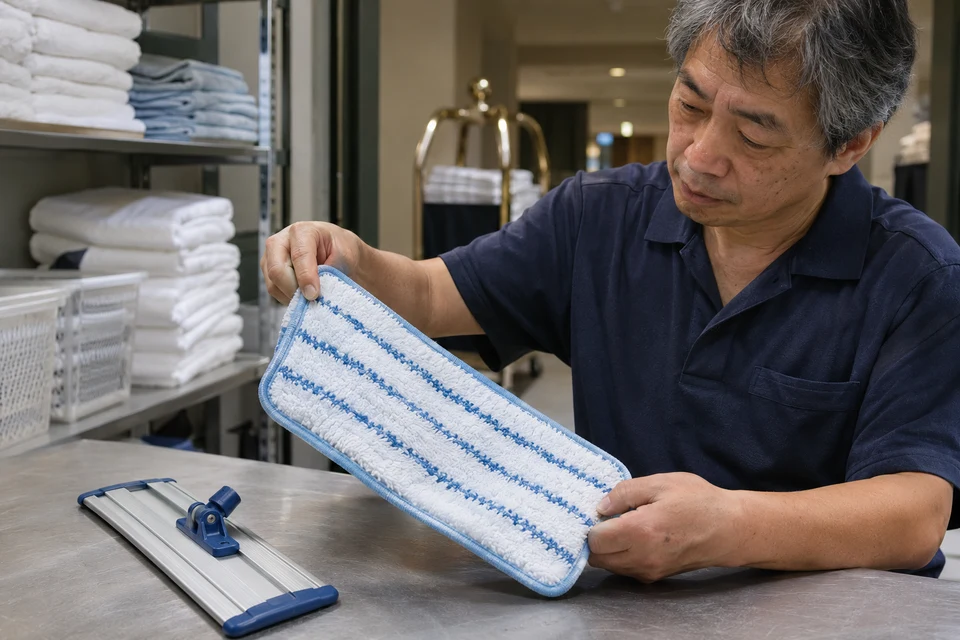
Inspect whether the frame uses hook-and-loop contact, pockets, tabs or another identified system. Ask the pad supplier to specify the corresponding backing and its effective engagement area. Rubbermaid Commercial's product information provides examples of hook-and-loop pad and frame systems, but that does not establish compatibility between an unrelated pad and any specific frame. Use the nominated equipment and the offered textile sample together in the evaluation.
Check placement without forcing the textile into an unintended shape. The pad should be assessed in its normal mounted position, including the corners and the edges where the frame could become exposed. Record any overhang and how it changes around the perimeter. A larger pad is not automatically a better fit if the unsupported edge folds under or interferes with the intended movement. Leave acceptance limits to the agreed equipment and operating requirements rather than inventing a universal allowance.
Trial normal mounting and removal
Involve the people who will handle the pads
Have trained housekeeping personnel follow the property's approved procedure with the proposed combination. Observe whether they can identify the correct face, position the pad consistently and remove it through the normal method. Record handling difficulties without improvising a new unsafe technique to make the sample pass. The procurement review should expose an interface problem while there is still time to change the specification or reject an unsuitable option.
Inspect the pad and attachment area after the agreed sequence. Note displaced backing, distorted edges or a connection that does not remain in the intended position. Separate the observation from its cause: a worn frame surface and a new pad may create a different result from a sound reference frame. Keep each trial linked to the actual equipment identity. A generic photograph of a pad on a floor cannot explain which combination was evaluated.
Include the approved laundry route
Recheck the same attachment after processing
Confirm with the responsible operation which care procedure is appropriate for the offered material and existing workflow. Use that agreed route for the development trial and retain its details. After processing and the specified preparation, compare dimensions, edge coverage and attachment behaviour again. Do not use another manufacturer's wash-count claim as evidence for the proposed pad. Results belong to the actual product and conditions under which they were obtained.
Keep cleaning chemistry and floor-use decisions with the qualified operational owner. A successful mounting trial does not prove chemical resistance, soil removal or microbiological performance. If those characteristics are required, identify the relevant evidence and sample scope separately before commercial approval. This prevents a simple compatibility check from being promoted into a broad performance claim that neither the buyer nor the supplier has demonstrated.
Order by the confirmed combination
Make substitutions visible before replenishment
Create an ordering reference that links pad identity, dimensions, backing construction, frame group and approved trial record. Distinguish textile supply from any frame or replacement attachment parts included in the offer. Record quantity per pack and how departments will recognise the correct item. If colour is used internally to distinguish applications, document that mapping without treating colour alone as proof of hygiene or suitability.
For a FY Bedding sourcing discussion, provide the frame information, sample photographs, quantities and evidence requirements and first confirm whether the requested programme is within scope. Do not assume availability from this guide. Ask the proposed supplier to identify minimum quantities, sampling responsibilities and lead-time dependencies. Recheck compatibility when backing, binding, dimensions or frame components change, and retain a sound frame reference for later replenishment decisions instead of approving substitutes only from a catalogue picture.
Approve a named pad on a named frame before and after the agreed care trial; keep compatibility separate from cleaning and disinfection claims.
Method references: Rubbermaid Commercial Products: Microfiber systems.