Two quotations marked shoe-shine amenity can cover very different products. One may supply a dry square of fabric for a valet tray; another may describe an impregnated applicator or a kit with polish. Before choosing a fabric, write down what the hotel intends to put in the room and what the supplier is actually supplying. A buyer looking for a bare cloth does not need a promise that it will restore a finish. They need a usable piece, a clear presentation and a replenishment unit staff can count.
Define the boundary of the amenity
Describe exclusions positively
Start with the housekeeping routine. Is a guest expected to pick up a single dry cloth in an envelope, borrow a reusable cloth from a staffed station, or receive a more extensive service from a valet? Draw the unit as supplied and the unit as presented. Specify an untreated textile if that is what is wanted; identify separate packaging, artwork and any component the hotel supplies. If a bidder proposes a treatment, ask for a separate offer and supporting information rather than letting it silently replace the original item.
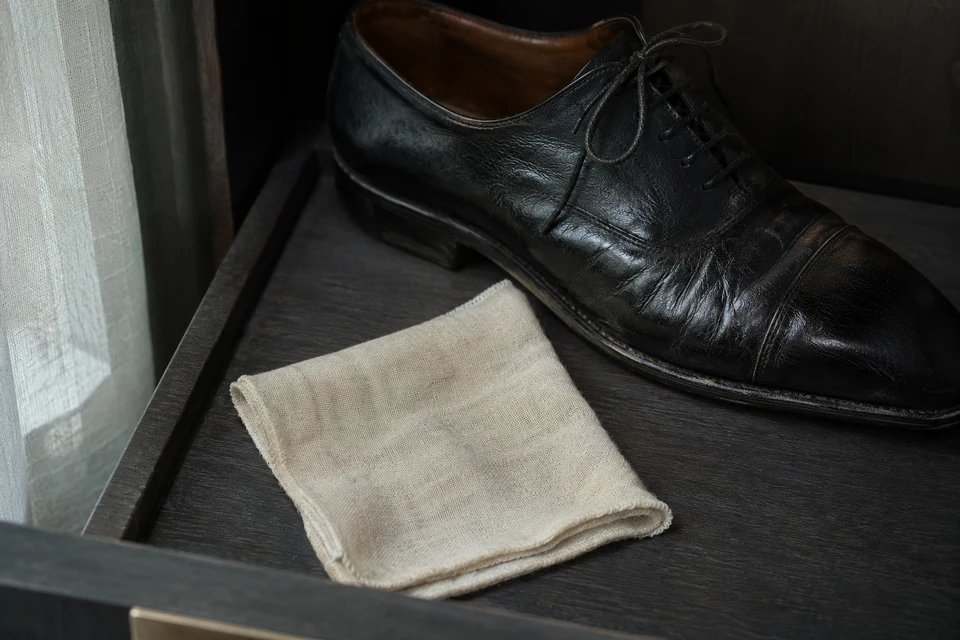
Keep room copy aligned with that boundary. A dry cloth can be shown as a textile accessory without promising that it is suitable for every material or produces a particular shine. If the hotel wishes to give use instructions, have the person responsible for the guest amenity approve them against the actual supplied product. A clean photograph of a sample beside a leather shoe cannot establish compatibility with a guest's footwear, polish or cleaning routine.
Try the cloth as a guest handles it
Compare useful area after folding
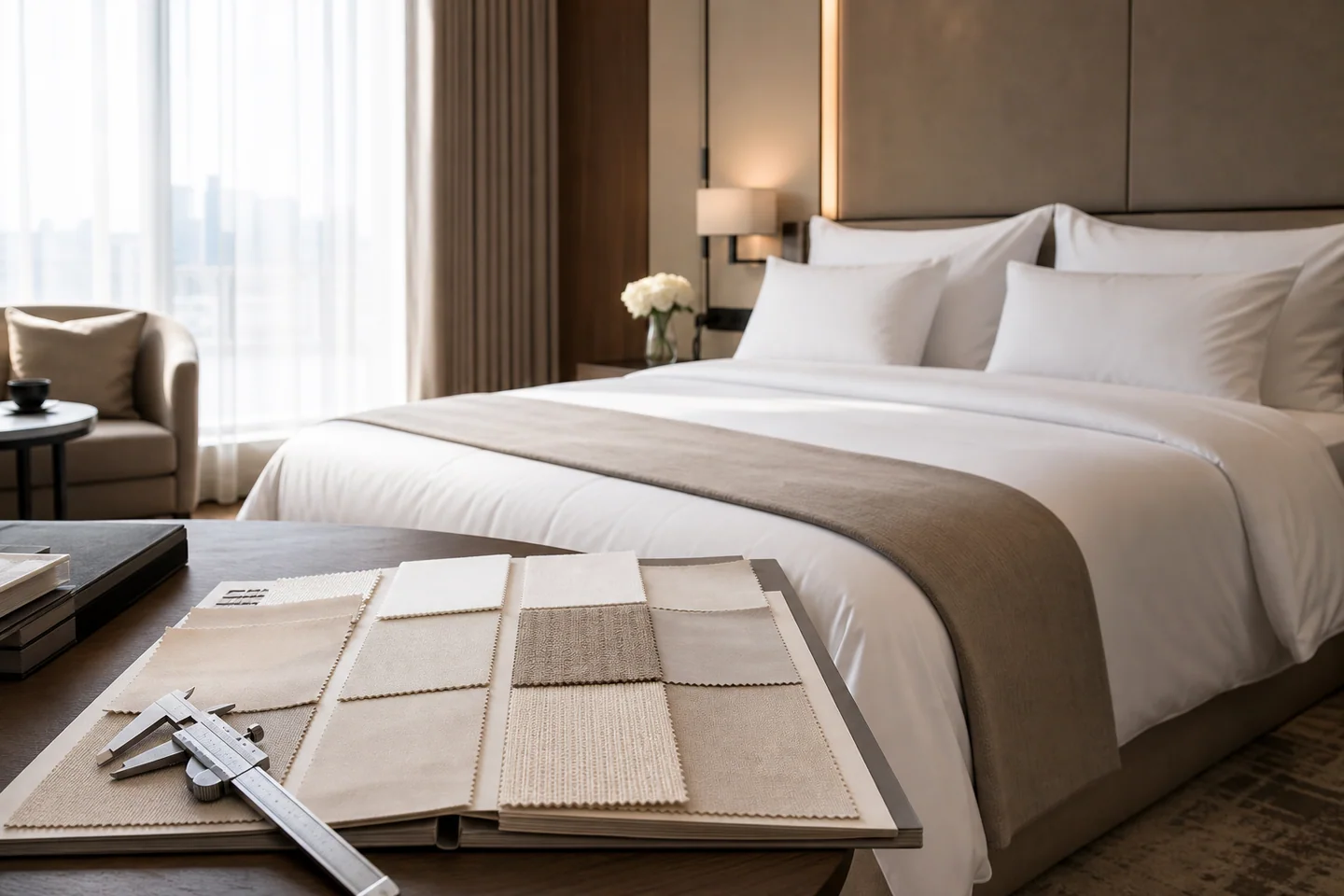
Give the sample to someone who has not seen the purchasing drawing. Ask them to unfold it, hold it naturally and show how much usable surface remains when turned over the fingers. A larger finished square with a thick rim can leave less comfortable working area than a slightly smaller cloth with a low-profile edge. Record finished dimensions in both directions and distinguish them from the folded size required by the envelope or tray. The sample room needs both dimensions to avoid solving one at the expense of the other.
On an expendable surface chosen by the buyer, compare edge handling, visible loose fibers and how readily the cloth can be turned to a clean area. Use the same trial movement and same surface for both candidates. Do not test on guest property. A staff member's observations are useful for comparison but are not a universal non-scratch or low-lint certification. If a claim matters to the brand, obtain the appropriate evidence and define the conditions to which it applies.
Follow the cloth onto the floor
Single-room and central-service routes differ
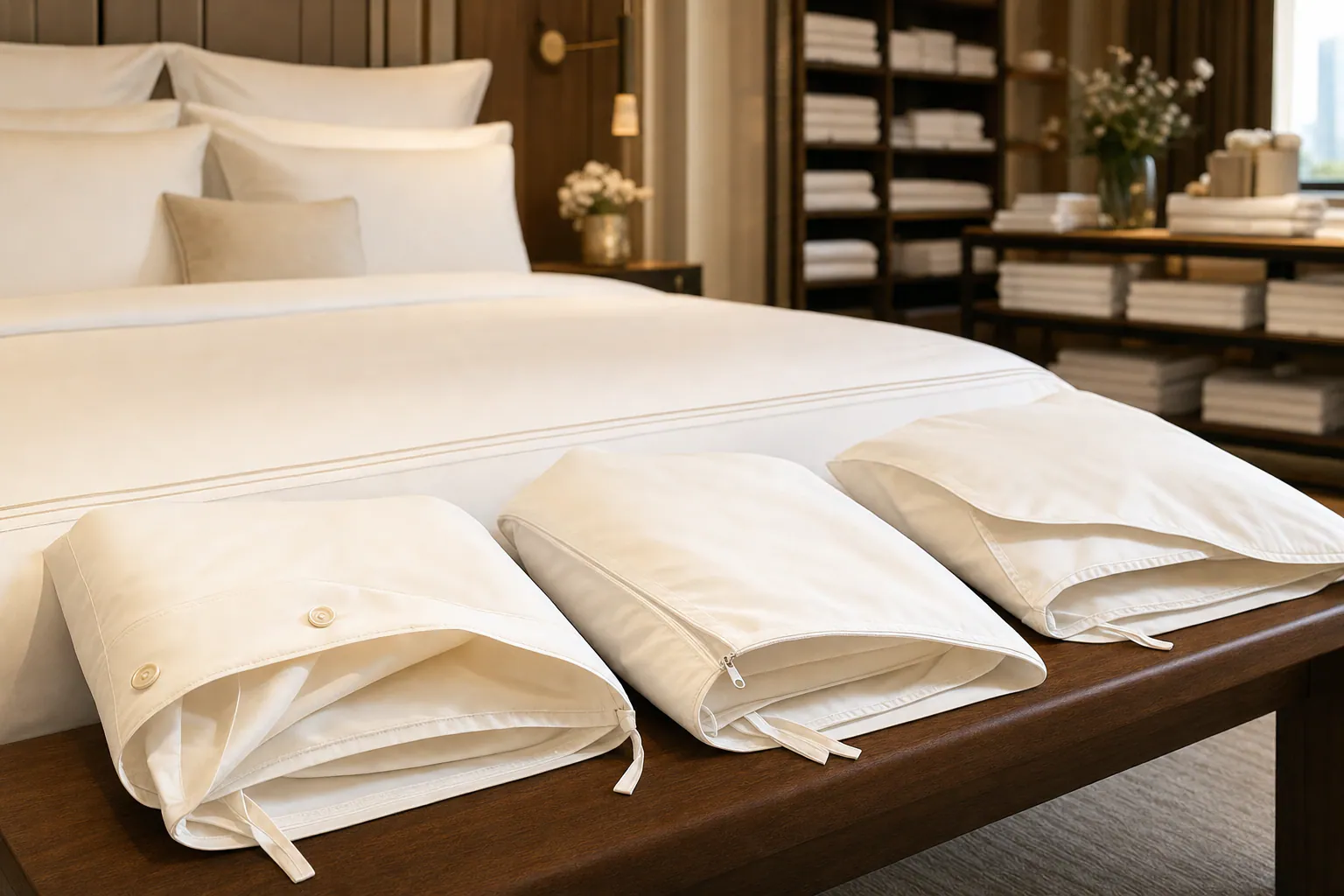
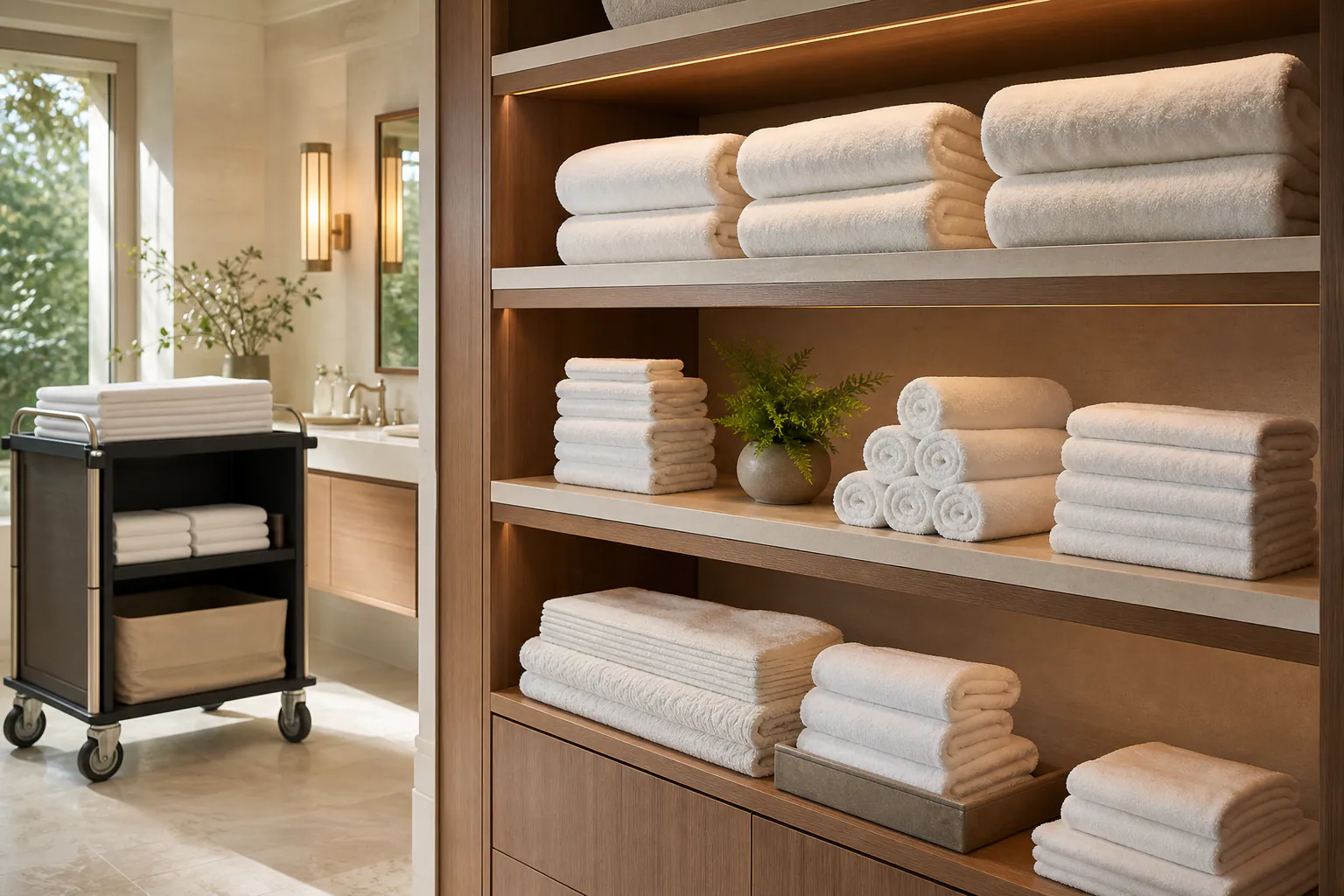
Pack several units as proposed and let the housekeeper replenish a trolley compartment. Is there an unambiguous way to count one room's issue? Does the garment-style fold open when the packet is taken from a stack? Can staff distinguish an unused unit from a loose cloth returned to the station? These are practical differences between a room amenity and a centrally managed cloth. Identify the handling route before deciding that individual envelopes are necessary, or that dispensing loose cloths will save time.
For a reusable service route, the hotel also needs a decision on segregation, collection and its own laundering or disposal procedure. Do not assume a textile can enter the normal guest-linen stream after use. Ask the operator which route is acceptable and what care evidence is required. For single-issue products, ask purchasing to check the pack count, storage footprint and whether individual wrapping is actually specified by the property. Record the chosen route alongside the item code.
Quote the delivered room unit
Compare like for like
Request the price basis for bare cloth, finished pack and any separate print setup. Give the number of rooms only as context; projected issues per service cycle and units per carton determine purchasing volume more directly. Ask whether a plain cloth can share a production run across properties while the hotel-specific envelope is ordered separately. Keep artwork minimums and textile minimums distinct. The hotel that changes its room stationery may not want to discard otherwise usable unbranded stock.
When discussing a sample with FY Bedding, send the drawer or tray dimensions, proposed packing unit and the actual guest-service model. Request one loose cloth and several packed units for the housekeeping trial. Approve the chosen construction only after a buyer can identify what is included from the quote, what physically fits in the room, and what claims the hotel will avoid until supported.
Keep the accepted loose cloth, accepted guest pack and replenishment count together. Any offer involving polish or chemical treatment belongs in a separate buying decision.