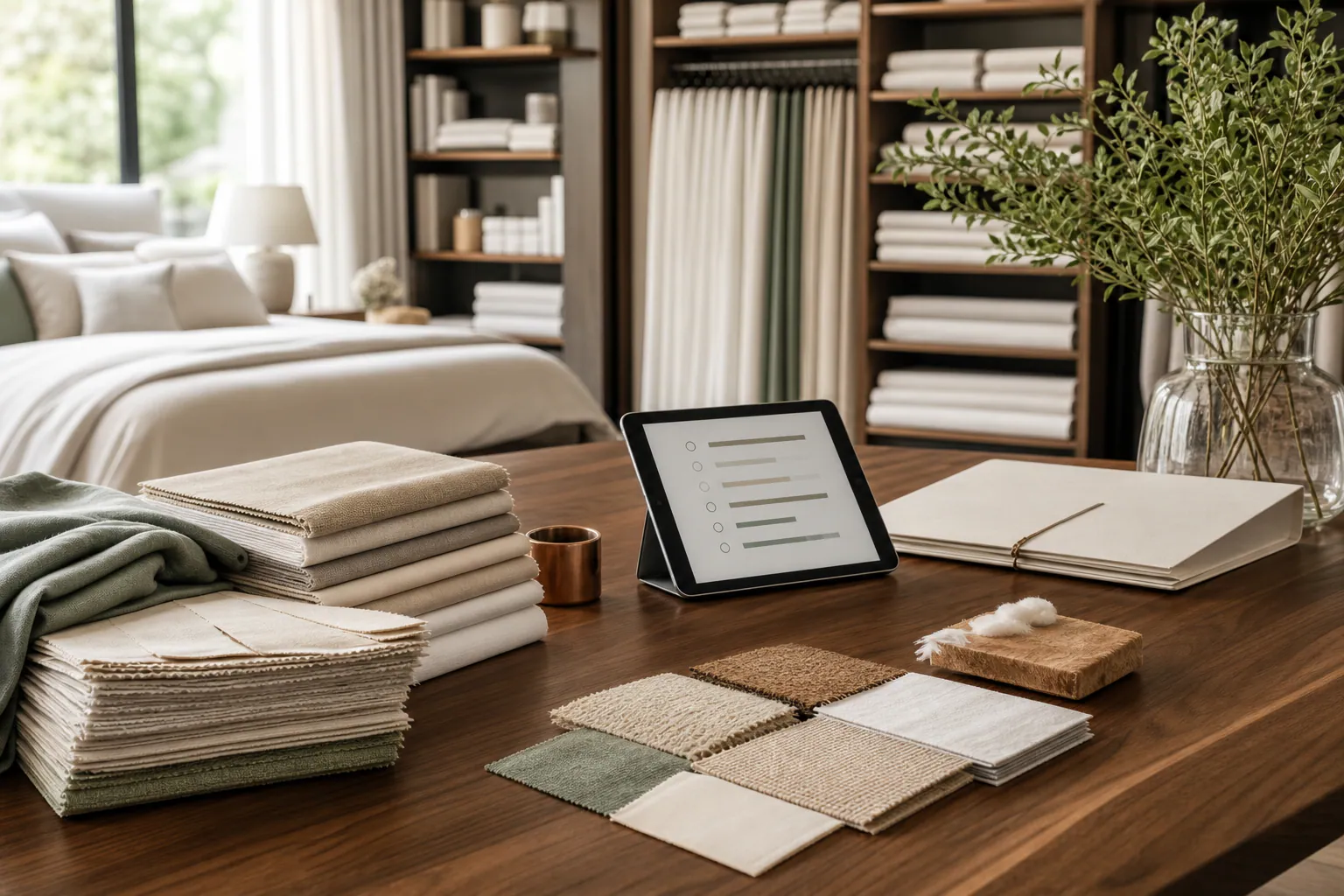
A retailer can create many cushion SKUs simply by offering every design in both a square and a lumbar shape. That does not necessarily create a better collection. The two outlines can play different visual roles, and the best assortment may deliberately avoid duplicating some patterns. Start with a small display that explains how the pieces work together, then translate that arrangement into products customers can buy individually or as a clearly defined group. Here, lumbar describes a decorative rectangular format, not a therapeutic product claim.
- 1. Choose a merchandising scene before filling a SKU grid
- 2. Edit patterns for the shape that will carry them
- 3. Give colors jobs instead of offering every possible combination
- 4. Separate the display grouping from the sellable unit
- 5. Review the display sample and delivery pack side by side
- 6. Order a range that can be replenished coherently
Choose a merchandising scene before filling a SKU grid
A sofa grouping and a bed grouping need their own review
Define the furniture and viewing distance for the first display. Sketch the overall arrangement with simple shapes before selecting detailed patterns. Decide which pieces create the background and which provide a shorter horizontal accent. The sketch is a design proposal, not a claim that a particular number of cushions is correct for every sofa or bed.
CBI's cushion-cover study lists both square and rectangular sizes and discusses complementary ranges. It supports treating shape as one assortment variable, but the source does not prescribe your store's dimensions or quantities. Review those decisions against the actual customer and channel. Keep the complete concept in the collection brief, with images of the representative furniture rather than isolated product cutouts alone.
- Name the intended display furniture.
- Give each shape a distinct visual role.
Edit patterns for the shape that will carry them
Do not crop a square design into a rectangle by default
Place the proposed motifs on full-size outlines for both formats. A centered medallion, an edge stripe and an all-over texture respond differently to a long rectangle. Decide whether the design is rebalanced, repeated or intentionally restricted to one shape. Show the reverse and closure orientation so the approved front is not the only resolved surface.
Compare the completed samples together under consistent lighting. A lumbar accent can become visually dominant even when it is the smaller item, particularly if it carries the strongest contrast. Use the product-image and sample linkage to keep approved color and motif placement connected. Do not judge proportions from images that have stretched one product to match another card's dimensions.
Give colors jobs instead of offering every possible combination
Anchor, connector and accent are useful planning labels
A buyer might designate a quiet square as the anchor, another texture as the connector and a patterned lumbar as the accent. These are planning roles, not fixed rules about cushion shape. Build a few actual combinations and remove options that repeat the same job without improving the range. A concise assortment can still offer meaningful variety through texture and scale.
Count the resulting shape, fabric, color and design combinations as separate proposed SKUs. Check minimums for the cloth and decoration as well as for the sewn product. The MOQ-focused assortment guide helps frame this commercial conversation. Do not assume that a square and a rectangle automatically share a production minimum merely because they use a similarly named color.
- Identify which combinations explain the collection best.
- Remove variants that duplicate the same merchandising role.
- Confirm minimums at fabric and finished-product levels.
Separate the display grouping from the sellable unit
Customers should know whether they are buying one cover or a set
A photograph showing several coordinated cushions must not imply that all are included in a single purchase. Define whether each SKU is a cover only, a complete decorative cushion or a multi-item set. Keep the dimensions and shape visible in the listing and pack description. Insert fit and fill specification need their own approved product work; this assortment exercise does not replace that process.
If sets are offered, list their components and decide how individual replacements will be handled. A strong lumbar accent may sell separately faster than a quieter companion. The bundle and replacement guide helps identify the operational decisions. Avoid forcing every replenishment into an original display ratio if the commercial offer allows shoppers to choose items individually.
Review the display sample and delivery pack side by side
The first unpacked view should agree with the collection story
Show the retailer a representative styled grouping and the actual proposed sales packs. Check the fold or packed outline, how a customer identifies the shape, and whether opening the pack reveals the expected design orientation. For filled products, ask the supplier to propose and demonstrate suitable packing; do not promise recovery, loft or transit performance without the required assessment.
Keep handled display pieces separate from stock intended for sale, following the display-sample control guide. Approve the pack copy and photography together so dimensions, included components and care information remain consistent. The showroom should help a buyer understand the real product, not depend on extra inserts or props that are omitted from the purchase description.
- Check the first view after unpacking.
- Use the same component description in store and online.
Order a range that can be replenished coherently
Keep the strongest visual relationships identifiable
Record the approved groupings, but place the purchase quantities against actual SKUs rather than mood-board labels. Confirm which fabric colors or designs must remain linked across repeat orders and how an unavailable component affects the range. A replacement color should be reviewed with its companions; a familiar name does not prove that the new shade gives the same visual balance.
Share the target customer, proposed square and lumbar roles, sales-unit definitions and opening quantities with FY Bedding through a collection enquiry. Request the samples needed to judge the group as well as the individual covers. Final materials, dimensions, minimums and delivery commitments should follow that project review, without inventing sales forecasts or unsupported ergonomic benefits.
A coherent assortment has a visible role for each shape, a manageable color matrix, unmistakable sale-unit descriptions and a replenishment plan that works when customers buy items separately.
Method references: CBI: cushion-cover sizes and complementary range development.