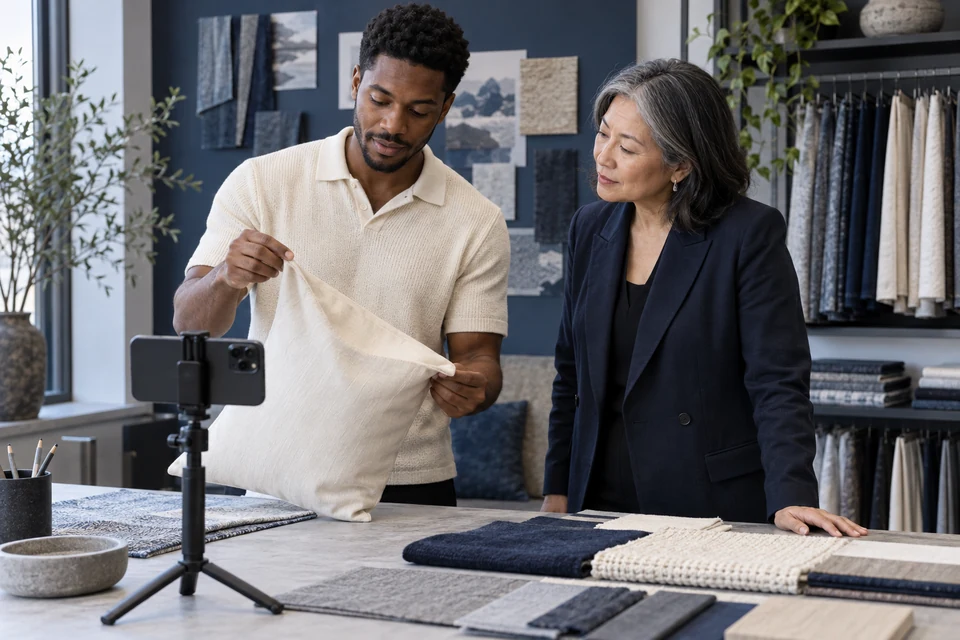
A remote sample call can make a bedding product easier to discuss, but the camera controls what the buyer can observe. A clear video of one corner does not establish the condition of the rest of the item, and a favorable screen image is not a physical color or handfeel reference. Plan the session around the decisions it can reasonably support, identify the specimen throughout and record what must remain open for other evidence.
Define the review questions
Match the medium to the decision
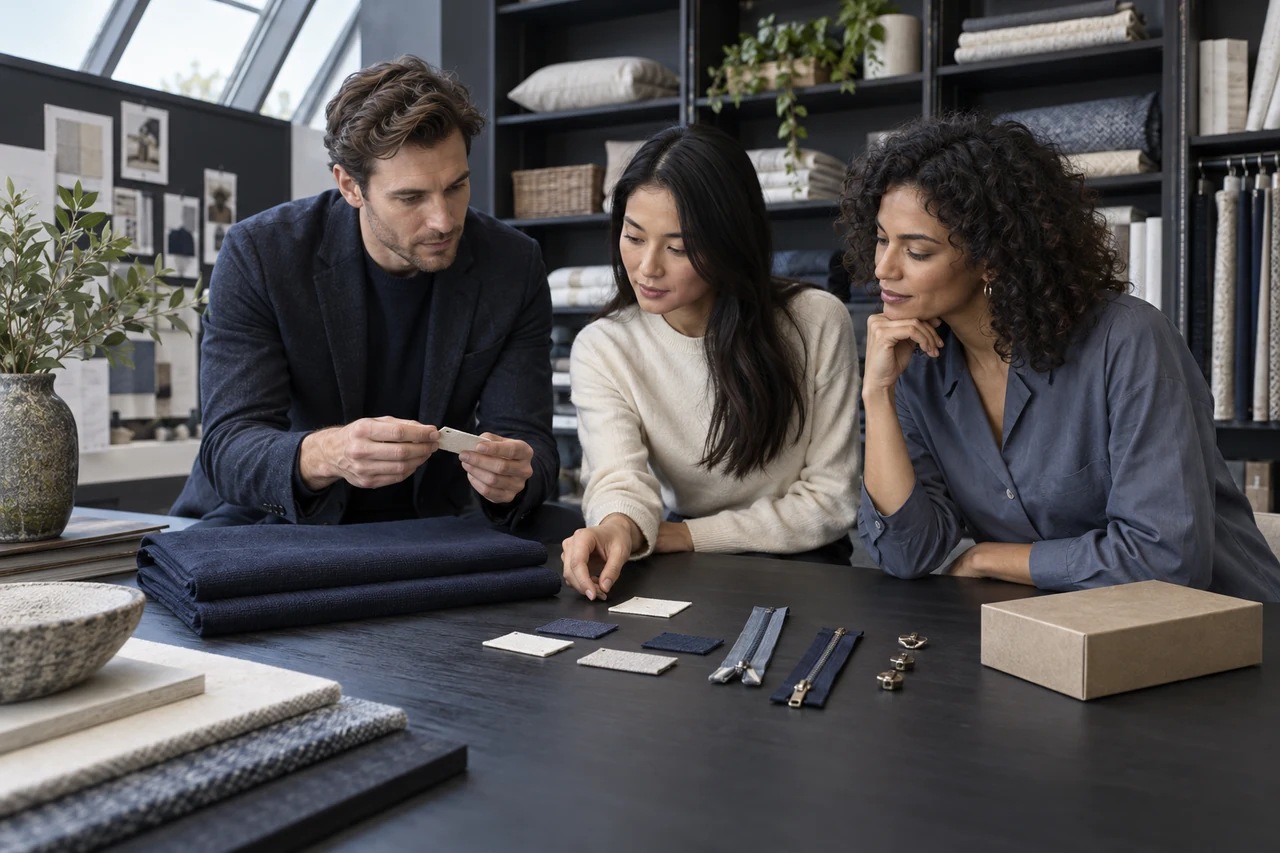
List the specific questions to be discussed during the call, such as closure access, component placement or the relationship between a sample and its drawing. Separate these from questions that require physical comparison, measurement evidence or a suitable test. The sample-stage plan should identify the purpose of the specimen so a development demonstration is not accidentally presented as a complete production-release review.
Agree the participants and who will record decisions, but do not confuse visibility on a call with approval authority. Use the sign-off matrix for that separate responsibility. If a required reviewer cannot assess a question remotely, record the limitation in advance. A useful session can close a bounded observation while leaving another gate open, rather than forcing every issue into a single yes-or-no response at the end. Before the session, agree how a disconnected call will resume and which specimen-identification steps must be repeated, so an interrupted demonstration does not lose its evidence trail.
- List the questions the session is intended to address.
- Identify which require other evidence or physical review.
- Confirm the specimen's development stage.
- Keep observation participation separate from approval authority.
Establish specimen identity
Keep the item traceable on screen
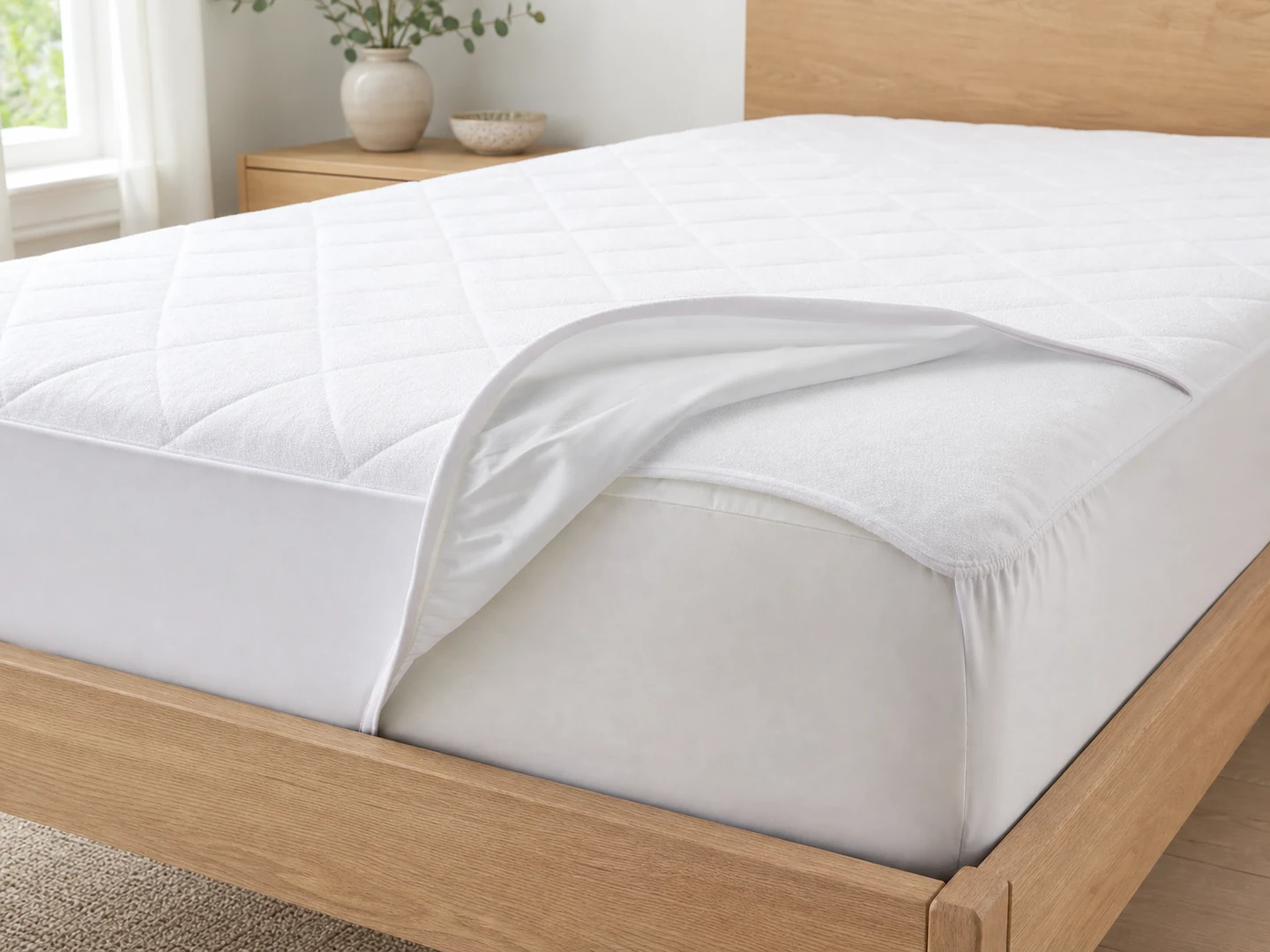
Before close-up review, show the complete sample and confirm its recorded identity, revision and condition. If several similar items are on the table, distinguish them clearly through the agreed identification method. Avoid switching specimens without stating the change. The controlled-reference approach helps establish which item the buyer is discussing, while the camera sequence should preserve that connection when the view moves into a seam or closure detail.
Record whether the sample has been washed, altered, repaired or otherwise prepared since its previous review. Those changes can affect the meaning of the demonstration even if the item retains the same informal name. Where the call is recorded, obtain the necessary participant agreement and follow the project's existing access rules. Keep confidential documents and unrelated customer materials outside the camera view rather than relying on later editing to remove them.
- Show the full specimen before detail views.
- Announce every switch to a different item.
- Record preparation or alteration since the previous review.
- Follow existing consent and information-access arrangements.
Plan the camera sequence
Coverage should be deliberate
Agree a sequence that moves from the whole item to the relevant faces, edges, closure and interior areas. Pause where the reviewer needs to orient themselves instead of moving continuously across the fabric. A stable view and an identifiable reference point are often more useful than an extreme close-up with no context. If a feature cannot be shown clearly, record that gap rather than treating an unclear glimpse as an accepted observation.
Use the image evidence naming method for any supporting stills requested after the call. Stills should identify the same specimen and feature rather than being selected from an unrelated archive. When dimensions are discussed, use the agreed measurement and conditioning method and supporting records. The video may demonstrate a measurement setup, but an obscured scale or unstable view should not be interpreted as a reliable numerical result.
- Move from complete item to identified detail areas.
- Pause long enough for orientation and questions.
- Record features that could not be shown clearly.
- Link supporting stills and measurements to the same specimen.
Handle image limitations openly
Do not infer unseen properties
Record interruptions, low resolution, inconsistent lighting or other conditions that limited observation. Do not approve a feature merely because the connection failed before the reviewer could ask about it. Screen color, compressed video detail and an operator's description of softness all have limits. The color acceptance reference should remain the controlling basis where the project requires physical or appropriately measured color evidence.
If an apparent defect is seen, request a stable view and an identified follow-up record before assigning its cause. Conversely, a defect not visible on camera is not proven absent. Keep the distinction between demonstration, inspection and testing explicit in the notes. A remote session can be valuable for clarifying a construction question while still being insufficient to establish lot-wide conformity or properties that the medium cannot show directly.
- Record technical limitations of the call.
- Leave interrupted observations unresolved.
- Do not infer handfeel or test performance from video.
- Distinguish unseen defects from verified absence.
Issue a written closeout
Convert conversation into bounded decisions
Summarize each question, the specimen reviewed, the observation and the authorized next step. Attach requested follow-up evidence and identify who will assess it. If the call leads to a revision, state which feature changes and which requirements remain unchanged. Avoid an ambiguous message saying the sample looked good when the discussion covered only one construction detail and several other approval gates were never presented on camera.
For a remote development discussion with FY, provide the review questions and available sample references through the project enquiry. Ask for a planned demonstration with a clear evidence boundary. The resulting record should show what the buyer observed, what was accepted by the authorized owner and what still needs a physical sample or other assessment. That keeps remote collaboration useful without overstating what a camera session can establish.
- Record decisions by question and specimen identity.
- Assign follow-up evidence to an owner.
- State the exact scope of any revision.
- Keep unreviewed approval gates open.
Close only the questions that the identified remote session actually supported; retain physical, measurement and testing requirements where video cannot provide the needed evidence.