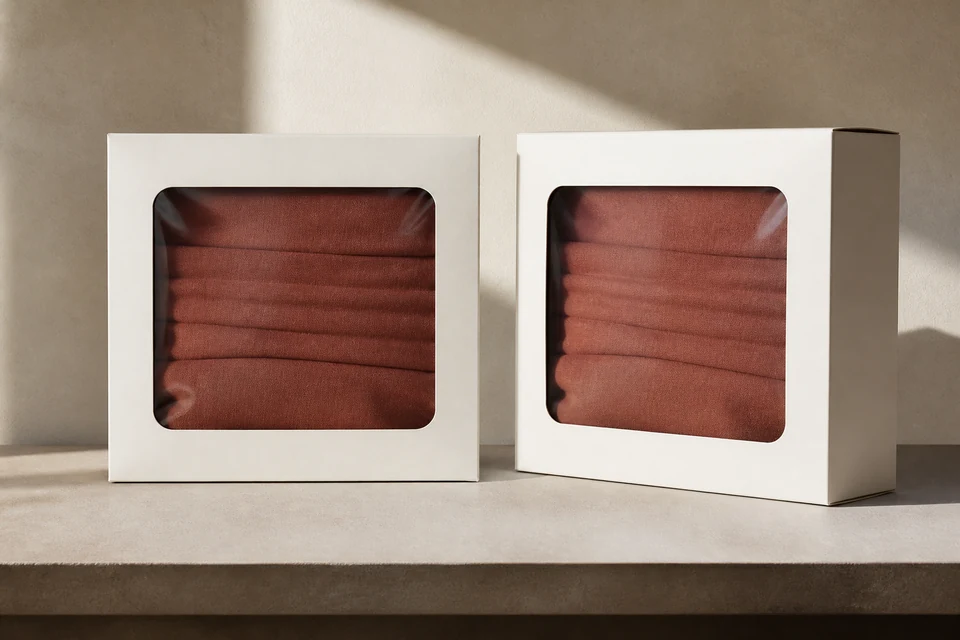
A window in a bedding pack gives the customer a direct view of the textile, but that view is part of an engineered presentation. The aperture, clear film, internal fold and pack tension determine whether the customer sees the intended colour and texture or an awkward crease and a reflective surface. Buyers should approve the window with the actual bedding inside, at the intended shelf position and after representative handling. This guide focuses on visibility and presentation while connecting those decisions to packaging integrity, sampling and the final pack-out record.
Define what the window must reveal
Choose a product feature and a realistic viewing angle
Decide whether the window is intended to show colour, weave, a decorative detail or the composition of a set. Specify the visible area that matters and identify elements that may legitimately remain hidden. The packaging approval checklist helps capture the complete pack brief. A broad window does not automatically give a better view if it exposes an unrepresentative fold or makes it difficult to position the correct textile consistently during packing.
Mock up the package at the expected shelf height and orientation. View it from the front and from ordinary approach angles, with the lighting the retailer can describe or reproduce. Consider whether packs will be stacked, hung or placed behind a shelf lip that obscures part of the aperture. Record those assumptions before choosing the final window position. An attractive studio photograph should be treated as one reference, not as evidence that the same feature will remain visible in every retail arrangement.
- Name the textile feature the customer should see.
- Record shelf height and pack orientation.
- Check ordinary approach angles and obstructions.
- Approve a repeatable visible area.
Build the prototype around actual contents
Match aperture, film and internal support
Request a prototype using the proposed board, window film, attachment and internal supports, and identify any substitute material used during development. Test with the intended bedding size and set composition. The fold and pack-dimension guide helps connect the contents to usable space. A display dummy with thinner fabric or fewer pieces can hide pressure, bulging and fold-placement problems that appear when the actual product reaches pack-out.
Inspect the film surface and the window perimeter while the package is upright and handled normally. Look for distracting glare, wrinkling, loose areas, exposed adhesive or rough edges that could contact the textile. Ask the packaging supplier to explain the construction and the relevant verification they recommend. Avoid inventing a universal film thickness or adhesive specification. The appropriate choice depends on the complete package, the product and the agreed transport and retail conditions for this programme.
- Use the intended bedding size and set contents.
- Record prototype material substitutions.
- Inspect the film and attachment perimeter.
- Agree verification with the packaging supplier.
Approve colour and texture presentation
Compare the enclosed view with the physical textile
Place the packed product beside the approved textile reference under the agreed light. Check whether film reflections, board colour or internal shadows make the visible fabric misleading. The multi-light approval guide helps structure the comparison where lighting changes matter. Record a practical acceptance boundary for the displayed view while preserving the separate physical colour standard used to approve the textile itself during production.
Review how the window appears in product photography and how that image relates to what a shopper sees. Reflections removed during retouching can make the photographed pack look clearer than the real one. The photography and sample-linkage guide helps keep the image connected to the approved pack revision. Ask for truthful representation of the visible material and retain an actual packed reference, especially when a packaging revision changes the apparent colour or texture.
- Compare the enclosed and unenclosed textile.
- Record lighting and viewing conditions.
- Keep textile colour and pack presentation approvals distinct.
- Link product photography to the approved package.
Check creases after handling and unpacking
Evaluate what the customer discovers beyond the window
Define a representative packing and handling trial with the responsible supplier, using the actual fold, contents and shipping arrangement. After the agreed exposure, inspect window alignment, internal movement and the location of visible creases. The transit validation guide can inform the outer-package discussion. A package should not pass a presentation review merely because the window still faces outward while the fabric has shifted to reveal an unintended portion of the set.
Unpack the item and assess any persistent fold marks using agreed preparation and viewing conditions. Distinguish an ordinary removable packing fold from a presentation defect the buyer considers unacceptable. Record the time and treatment used before reassessment rather than assuming every crease disappears immediately. If pressure from an insert or window edge leaves a local mark, revise that interface and repeat the relevant handling step. Keep the evidence tied to the specific package and textile combination that produced it.
- Trial the actual fold and shipping arrangement.
- Inspect movement behind the window.
- Agree how unpacked creases are assessed.
- Recheck pressure points after a packaging revision.
Release a reproducible pack-out standard
Control the window and the textile position together
The approved record should include the packaging drawing, material specifications, aperture dimensions, fold sequence, orientation and photographs of acceptable packed and unpacked products. Add the relevant components to the bill of materials. At pack-out, inspect more than carton appearance: confirm the correct SKU, visible textile area, set completeness and closure. Define what operators should do when a fold does not align rather than allowing improvised inserts or excessive compression.
Send FY Bedding a window-packaging request with the retailer's display assumptions, bedding sizes and the feature the customer should see. Ask the quotation to identify prototype work, packaging quantities and approval dependencies. A revision that changes the window or internal fold may affect packaging development even if the textile is unchanged. Keep those effects visible so purchasing can approve the complete presentation before production and avoid last-minute pack-out changes made only to meet a dispatch date.
- Release aperture, fold and orientation as one standard.
- Verify the correct visible SKU and set contents.
- Define how operators handle misaligned folds.
- Confirm development and quantity assumptions before ordering.
Does the approved pack show the intended textile clearly and consistently, while preserving acceptable condition after the agreed handling and unpacking trial?