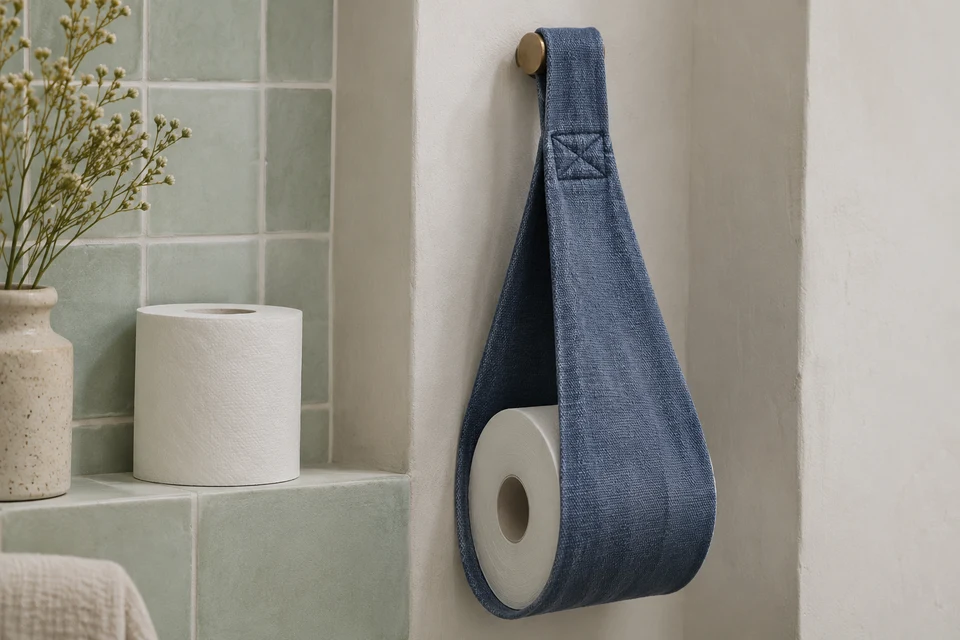
A spare-roll sling that fits the display roll in a showroom may not fit the roll that turns up on the housekeeping cart. Diameter, width and wrapping all affect whether staff can refill it neatly. This is a holder for unused stock, not a dispenser or a grab point. Start with the hotel's supply carton and the place where a spare is meant to stay dry.
Open the supply carton
Identify the delivered unit rather than the catalogue size
Ask housekeeping to bring examples from the normal order and any alternate supplier the property uses. Note the diameter across the uncompressed roll, the width across its ends and whether a paper or film wrapper remains on during storage. Leave wrapped samples wrapped for the first trial. A folded wrapper at one end can catch on a seam even though the paper core and nominal width match the reference perfectly.
Set the samples on their ends and compare them visually as well as with a rule. A roll that has been squeezed in transit can be wider in one direction. Rotate it before deciding that the sling opening is too small. If housekeeping removes the wrapper as a matter of local policy, make a second record in that condition. Do not instruct staff to remove it simply to rescue a sample that otherwise does not fit their programme.
Test sideways access in the actual alcove
The roll needs a route out, not only space to sit
Make a loose textile loop and fit it to the proposed mounting point using an arrangement approved by the property. Put the largest intended spare into it from the side. Now try from the other side. On a wide sample wall, both operations may seem easy; inside a niche one side may be blocked by a shelf return. Mark the clear approach and the direction the core should face on an installation sketch.
Watch what happens when the user takes the roll out. Does the sling follow the roll off its support? Must a hand be pushed hard against the tiles to reach the end? If a smaller roll settles deep below the opening, the larger opening may need a different sling shape rather than simply more cloth. Compare a shallow single loop against a taller body, recording which one keeps the spare visible without placing it in a splash zone.
Include housekeeping in the fabric decision
Practise removal, care and return to the room
A washable textile is only useful if staff can remove it, identify it and return it without disturbing a permanent fitting. Take the sling down using the property team's agreed method and send the sample through the proposed care routine. Measure the refill opening again and repeat the largest-roll check. A change in the opening matters more here than a small change in the length of an unused tail.
Discuss spare slings with housekeeping separately from spare paper. If a sling has to leave the guest room whenever it is cleaned, a one-per-room purchase may leave rooms temporarily without one. Conversely, a spare stock of holders is unnecessary if the property chooses a different storage method during cleaning. Quote the room issue and the agreed replacement stock separately. Ask the property to review placement, hygiene practice and accessible circulation; fitting a roll is not approval of those matters.
Write the scope around the room type
Avoid treating the mounting hardware as a textile feature
List which rooms have a suitable location, which require a different arrangement and which are excluded. On the sample record identify the wall support used for the trial and who supplied it. A soft loop that fits a particular peg is not evidence that the peg or wall substrate is suitable for installation elsewhere. Do not assign holding ratings or make accessibility claims from a photograph of the mock-up.
Keep a completed-room photograph showing the direction of access and a close view of the empty sling opening. If procurement replaces the paper contract mid-season, ask for a trial carton before placing a repeat order for textiles. A new roll may need a different opening while the visible colour and stitching remain unchanged. The acceptance record should allow housekeeping to repeat the test without bringing back the original designer.
Send the largest wrapped refill, a photograph of the dry location and the clear side approach. Request a removable textile sample; reserve installation and cleaning approval for the property team.