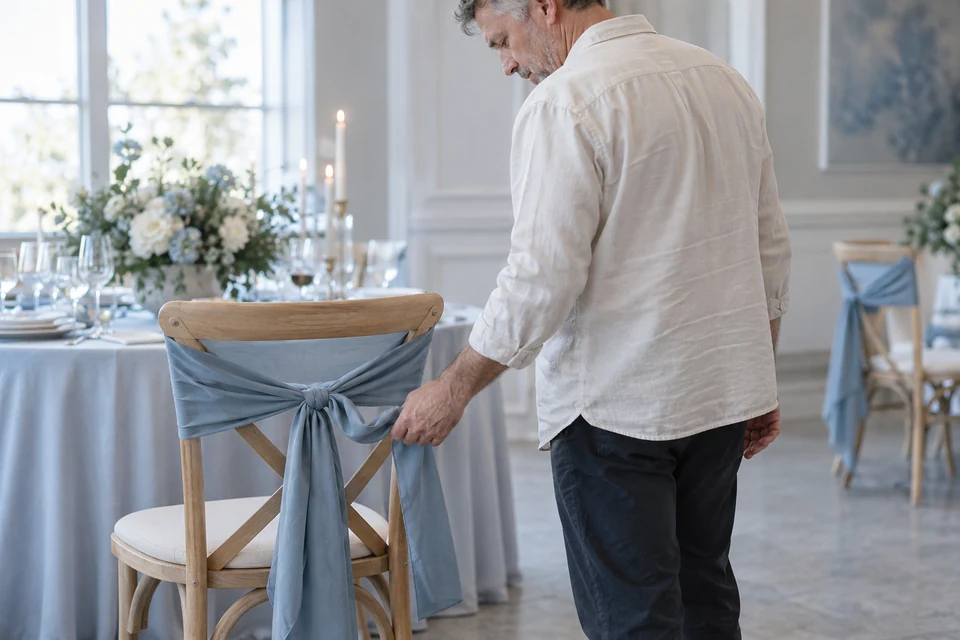
A banquet chair sash is a decorative route around a chair back, not a complete chair cover or a seat-pad attachment. Buying from an event photograph can leave the wrap length, visible face, knot position and reset method undecided. The venue needs a sample that staff can arrange on its own furniture without hidden pins, an undisclosed accessory or repeated styling by the photographer. This guide addresses an ordinary decorative sash only; it is not a restraint, a chair-support component or a load-bearing strap. Build the purchasing decision around the intended chair-back appearance and the actual supplied pieces, with material and commercial scope confirmed separately.
Map the wrap on the actual chair back
The route matters more than a generic chair width
Choose the actual chair references used for the event and show the proposed route around each back. Identify the level where the sash sits, the surfaces it crosses and the side from which it is tied or arranged. A straight horizontal wrap, a diagonal arrangement and a route through an opening are different designs. Photograph the undecorated back and mark the intended path so the supplier can understand what the fabric is expected to surround. Keep the route separate from the complete chair-cover specification, which addresses another purchased article and its overall fit.
Review the route with the chair as it will actually appear: bare, upholstered or fitted with the approved chair cover. Do not assume the sash sits identically in those states. Identify a shaped top, open back or rear handle that changes the available path, and record where the venue wants those features to remain visible or accessible. If several chair types are proposed to share one sash, demonstrate the intended wrap on each relevant type. A furniture category name and a nominal sash length cannot replace that comparison, particularly when a knot consumes part of the usable strip.
- Mark the route and tying side on a chair photograph.
- Review bare and covered states where both are intended.
- Demonstrate the proposal on the actual chair variants.
Define the finished strip and visible face
Edges, ends and two-sided appearance belong in the offer
Request the finished sash dimensions and the agreed method for measuring them without deliberately stretching the strip. Specify the proposed width, end shape, edge finish and any join that may appear along the visible route. Ask for the actual material description rather than treating satin-like sheen, organza-like transparency or a soft drape as a fiber statement. A proposal may need a dimensioned drawing in the technical brief, but the buying record should describe the finished strip that staff will receive, not only the fabric width before the edges are completed.
Turn the strip over and decide which face the venue intends to show. If tying exposes the reverse, review that appearance at the knot, bow loops and tails. Record whether both faces are acceptable for the same arrangement or whether the staff method must keep a designated face outward. Compare edge and end treatments where they fold or overlap; a neat flat strip does not settle the appearance of a tied junction. Keep requested material changes visible because another construction can alter the proposed fold and knot presentation even when the supplier uses the same color name.
- Specify finished dimensions and edge treatment.
- Identify the intended face and any exposed reverse.
- Include end shape and visible joins in the sample.
Approve a knot or bow sequence
A reproducible arrangement needs steps as well as a final image
Ask the venue's team to make the proposed arrangement from the loose sash on the selected chair. Observe the wrap, crossing point, knot or bow formation and final positioning. Record a concise sequence in photographs or drawings, including which end passes where and which face remains outward. Do not assume that a supplied strip creates the photographed bow without another component. If a buckle, ring, clip or preformed decorative piece is proposed, identify it as part of the assembly and review the whole arrangement. It must not remain an invisible prop in the buying reference.
Show the accepted knot or bow from the chair rear and the relevant side view. Note the desired position, loop outline and tail placement using recognizable chair landmarks instead of an instruction such as tie it elegantly. Decide how much variation the venue accepts in normal setup without presenting one styled example as the only achievable result. Avoid specifying extreme tightening to reproduce a photo. The purpose is decorative presentation, not fastening a person or reinforcing the chair. If the arrangement can be achieved only by hidden pins or another unapproved aid, revise the brief before comparing offers.
- Start the trial with the loose supplied pieces.
- Document the tying steps and any accessory.
- Judge knot, loops and tails against chair landmarks.
Check the room view and the reset
One finished chair does not show the event arrangement
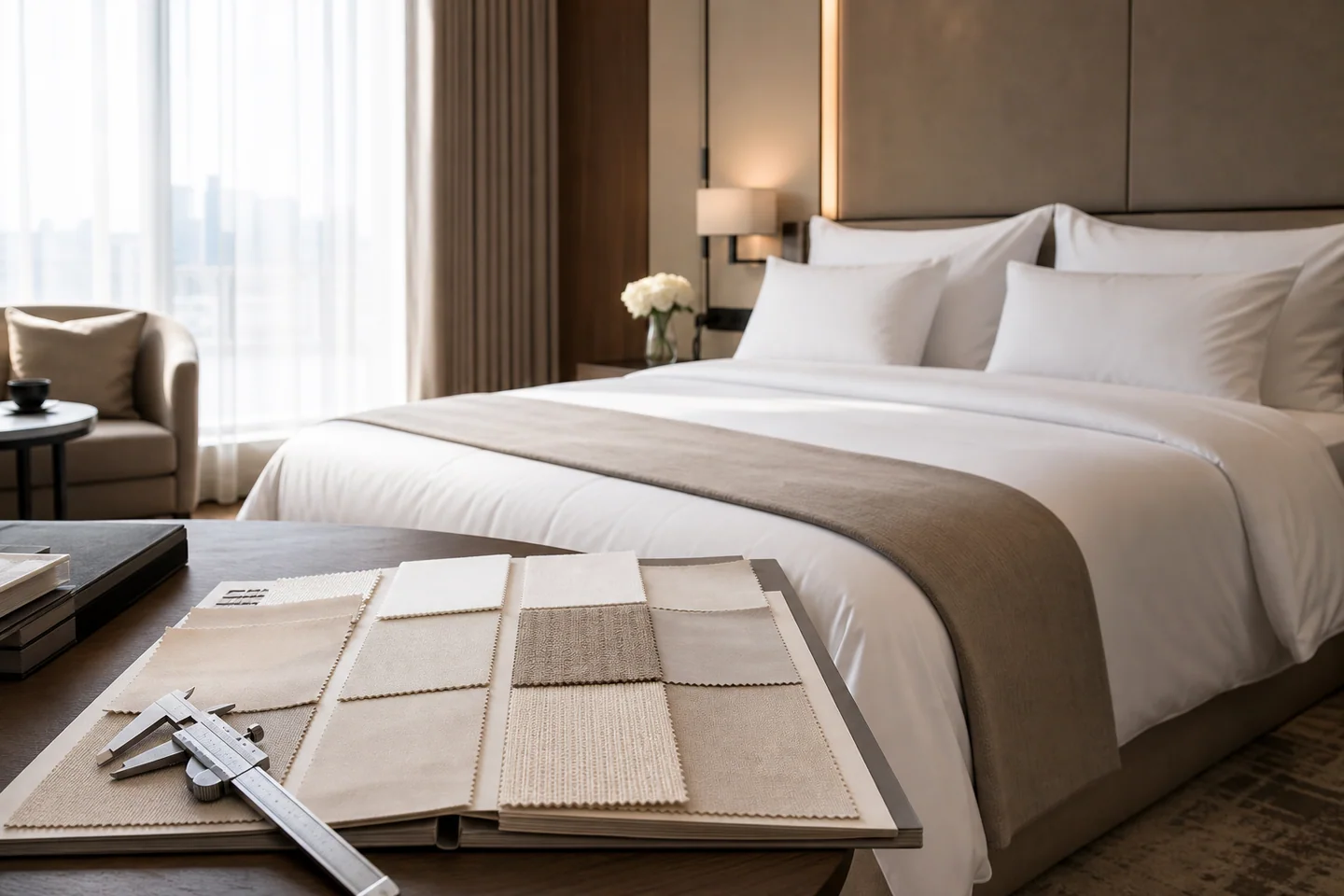
Arrange sample chairs as the venue intends to place them around tables or in rows. View the decoration from the room entrance, from behind the chairs and from the sides that guests or staff normally see. Compare whether knots align with the intended visual line and whether exposed tails produce the desired effect across the arrangement. Use the color and material board to record the relationship with other textiles, but judge the sash on the furniture rather than only beside loose tablecloth swatches. Keep lighting and viewing positions identifiable when comparing color options.
Ask more than the original sample arranger to follow the proposed instructions, then untie and reset the same pieces. Record misunderstood orientation, folds needing repeated correction and accessories that are easily overlooked. These are practical findings for revising the design or instructions, not evidence of a universal labor saving. Include the venue's normal chair movement and storage preparation where relevant, without interpreting the sash as a handling strap. A successful reset should demonstrate the actual agreed decoration; staff should not have to invent a different knot because the purchased strip cannot reproduce the released reference.
- View several arranged chairs in the intended room layout.
- Use the same instructions with another staff member.
- Record adjustment needs without claiming a productivity gain.
Review untied care and next-event presentation
The same strip must be recognizable after removal and preparation
Agree how the sash is removed, untied, sorted and prepared for the venue's proposed care route. Ask the supplier for care information belonging to the actual material and any included accessory. The responsible owner should define which parts are processed together and what finished state is expected afterward. Connect this to the property care-trial record where appropriate, but do not borrow instructions from a chair cover or tablecloth merely because all are used at the same event. Record any required preparation before the next tying trial.
Refit the processed sample on the same chair using the accepted sequence and observe knot appearance, end shape, edge finish and the visible color relationship. Record persistent tie marks or adjustments needed without immediately pressing the sample into an unrecorded ideal state. Keep the flat-strip condition and the tied presentation as separate views. If the next event uses a different chair cover or another knot arrangement, review that new combination rather than assuming the earlier result applies. A care observation supports the identified sample and conditions only; it supplies no guaranteed event count, permanent crease resistance or universal reusable-life claim.
- Identify the actual untie, sort and care sequence.
- Recreate the accepted knot on the same chair afterward.
- Keep preparation needs visible in the event instructions.
Quote and allocate the actual decoration unit
A chair photograph is not an inventory of supplied pieces
State whether the purchase contains a loose sash, an assembled decorative unit or a sash with named accessories. Keep a preformed bow distinct from a strip intended to be tied on site. Quote the released finished dimensions, material, end and edge finishes, selected colors and packing arrangement together. Ask for actual minimum and delivery conditions for the proposed variants. If the venue groups pieces by room, event palette or chair type, explain those requirements without assuming they are included in a generic sash price. Count physical pieces and accessories from the venue's plan rather than deriving stock needs from a styled photograph.
Identify the accepted sash and its tying reference so replenishment staff know what to request. Store the instructions with the chair-route photographs and keep rejected knots or accessories out of the released pack. Coordinate the discussion with the venue's table-linen direction without implying that the catalog confirms sash availability. Buyers can share a chair-back decoration sample brief containing the route and loose-piece trial, or request a scoped event-textile offer once the supplied unit is clear. The maker's availability and the venue's suitability decision still need confirmation; the event image alone settles neither.
- Identify loose, preformed and accessory-included units.
- Allocate actual pieces by the venue plan.
- Retain the tying instructions with the chair-route reference.
Approve a banquet sash as a decorative strip or named assembly on the actual chair back. Its wrap route, visible faces, tying sequence, tails and post-care reset must be understandable without hidden props or unsupported operating claims.