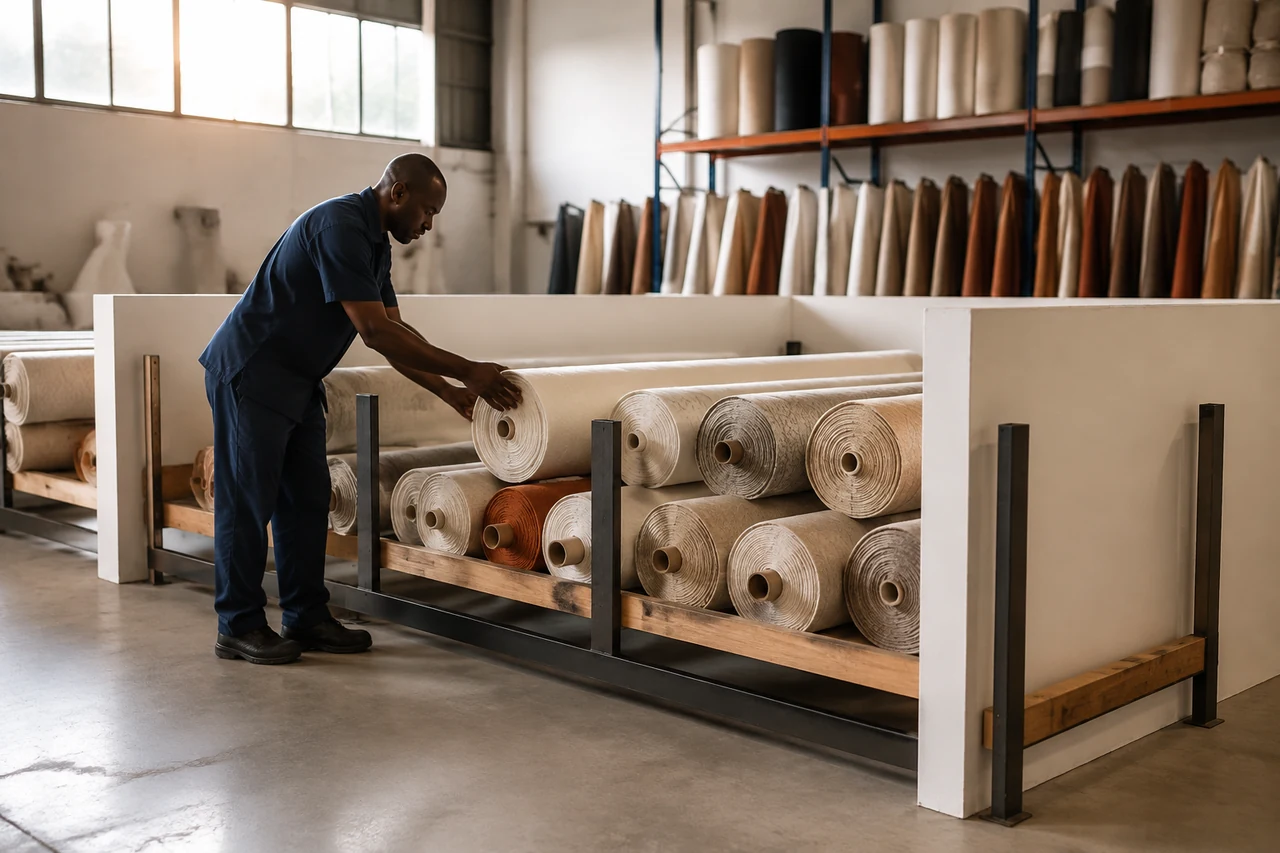
Desiccant cannot compensate for bedding packed while damp, a wet carton, an unsealed liner or a container with water ingress. It is one component in a route-specific moisture-control system. Over-simplified instructions such as add two bags ignore product mass, packaging permeability, exposure time, climate, container condition, chemical compatibility and destination handling. The buyer and supplier should document the risk basis, product release condition, packaging barrier, desiccant identity and dose, indicator role, safe placement and receiving interpretation without promising universal protection. This guide is a procurement-control framework, not a substitute for the buyer's specification, a test standard or a contract. It intentionally avoids invented factory capabilities, certificates, universal tolerances and automatic legal conclusions. The useful outcome is a repeatable approval and evidence route that lets design, production, quality, logistics and receiving teams compare the same item under stated conditions.
1. Assess route and product moisture risk
Controls must respond to the actual journey
Build the control around the real end-use sequence. Map production climate, storage dwell, stuffing location, route duration, seasonal transitions, container type, transshipment and destination warehouse conditions. This matters because A plan copied from another lane may miss condensation cycles or unnecessary chemical exposure. Refer to the packaging and carton approval guide for the wider sourcing workflow, then identify sample, method, conditions and reviewer in the feature record. Separate development exploration from the final released rule so production teams know which observations are informative and which are mandatory.
The evidence pack should make the outcome understandable without relying on memory. A documented risk review should state assumptions, responsible parties and which conditions remain outside supplier control. Cross-reference the buying brief, retain before-and-after views when a trial changes the product, and document the affected lot when a finding appears in bulk. Correction is not closure until the changed quantity is verified again under the same rule and the authorized disposition is recorded.
- Map storage and transit stages.
- Identify seasonal and route assumptions.
- Consider product and packaging sensitivity.
- Record unresolved exposure risks.
2. Release dry product and packaging
The system starts before desiccant is added
Define acceptable product condition, conditioning and moisture checks where relevant, and inspect cartons, pallets, liners and packing areas for dryness and contamination. Begin with the released buying specification and the actual sample identity; do not let a convenient workshop convention become an unstated requirement. Closing wet goods inside a barrier can trap moisture and make a desiccant appear ineffective. Buyers can place this control beside the incoming-fabric inspection guide so material, construction and inspection decisions refer to the same revision. Record who checked the point, when it was checked and what product or lot was represented.
Lot-linked product and packing-area records should precede carton sealing and container loading. The record should distinguish an observation from an acceptance decision and identify any approved deviation. Compare results with the golden-sample approval workflow, then state the hold, correction, recheck or release route. This prevents photographs and measurements from becoming detached files that cannot explain a production or sourcing decision later. Keep commercial disposition with authorized buyer and supplier representatives rather than embedding an automatic claim in the inspection method.
- Confirm product condition before packing.
- Inspect cartons and liners for moisture.
- Keep packing areas clean and dry.
- Hold nonconforming lots before sealing.
3. Engineer liner and desiccant together
Barrier performance changes the required capacity
Treat this point as a controlled handoff, not a final visual glance. Specify liner material, thickness, closure method and permitted openings, then select desiccant chemistry, package type and dose using supplier data and the approved risk model. The practical risk is specific: Loose assumptions about absorption capacity or an open liner can make calculated dosage meaningless. Use the final-inspection checklist to connect development and bulk controls, and capture the product size, color, lot, production stage and applicable revision. When the condition varies by size or configuration, show the range explicitly instead of approving one convenient specimen for every variant.
Evidence must be sufficient for another reviewer to reproduce the conclusion. Retain technical data, calculation inputs, product compatibility review and approved pack trial as project evidence. Link the result to the pre-production sample guide and preserve original measurements as well as any summary. A failed or uncertain result should remain on hold until an authorized disposition identifies affected quantity and the required reinspection. This disciplined route is more useful than adding an unsupported numerical limit after production has already begun.
- Specify liner and seal construction.
- Identify desiccant chemistry and supplier.
- Document dosage inputs.
- Review compatibility with textiles and trims.
4. Place desiccant and indicators safely
Monitoring and absorption have different functions
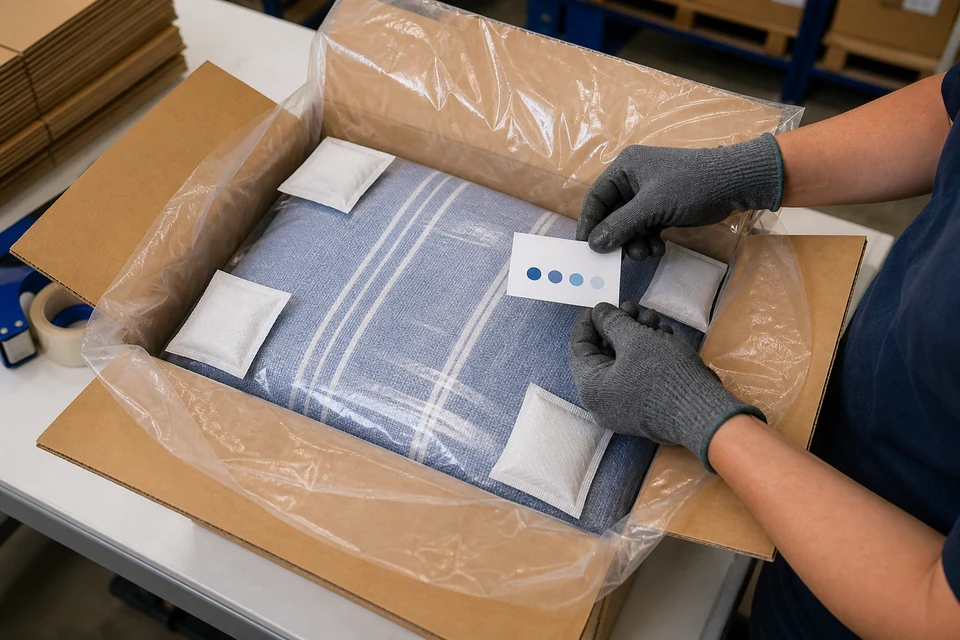
A buyer-ready specification names the reference, method and decision owner. Locate desiccant so packs remain intact, separated from direct textile contact where required, and distributed according to the plan; position humidity indicators where receiving staff can inspect them. Without that discipline, An indicator reports exposure at its location but does not prove every product is dry or identify the cause of moisture. The FY Bedding quality route can provide the surrounding approval gate, while the article-specific record captures the feature itself. Include production-representative conditions and note any substitute equipment, material or mock-up component that could affect interpretation.
Close the check with traceable evidence rather than a pass stamp. Packing diagrams, count records and sealed-carton photographs should show placement without exposing proprietary shipping data. Review it together with the AQL sampling guide, record deviations by location and quantity, and show what was reinspected after correction. If buyer and supplier have not agreed a numerical tolerance or test route, report measured findings and request disposition; do not invent a threshold that could be mistaken for a standard or contractual promise.
- Prevent pack damage and direct contact risks.
- Follow the approved distribution plan.
- Place indicators for receiving access.
- Do not treat indicators as product certification.
5. Verify loading and destination receipt
Evidence must span both ends of the route
Build the control around the real end-use sequence. Inspect container roof, walls, floor, seals, odor and visible moisture before stuffing, record loading conditions, and give destination teams a defined carton and indicator review. This matters because Opening delays or uncontrolled warehouse exposure can change findings after arrival. Refer to the sample request route for the wider sourcing workflow, then identify sample, method, conditions and reviewer in the feature record. Separate development exploration from the final released rule so production teams know which observations are informative and which are mandatory.
The evidence pack should make the outcome understandable without relying on memory. Container, seal, carton, indicator and product-condition records help investigators separate pre-load, transit and destination events. Cross-reference the lot-traceability guide, retain before-and-after views when a trial changes the product, and document the affected lot when a finding appears in bulk. Correction is not closure until the changed quantity is verified again under the same rule and the authorized disposition is recorded.
- Inspect container condition before loading.
- Record seal and loading identities.
- Define receiving inspection timing.
- Escalate findings without automatic causation claims.
Use desiccant only inside a documented moisture system that starts with dry goods, controls the barrier and placement, and connects loading evidence with timely destination inspection.