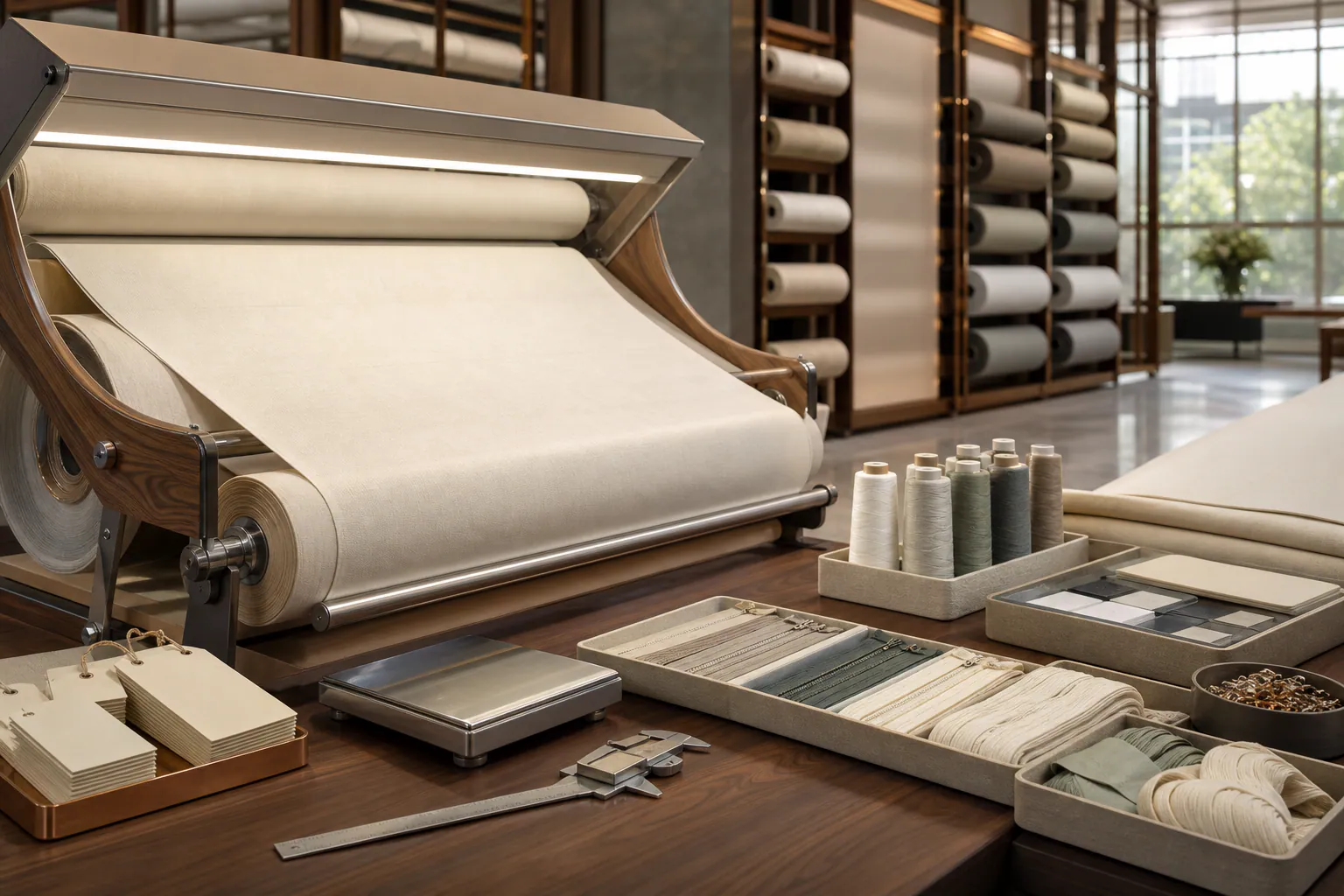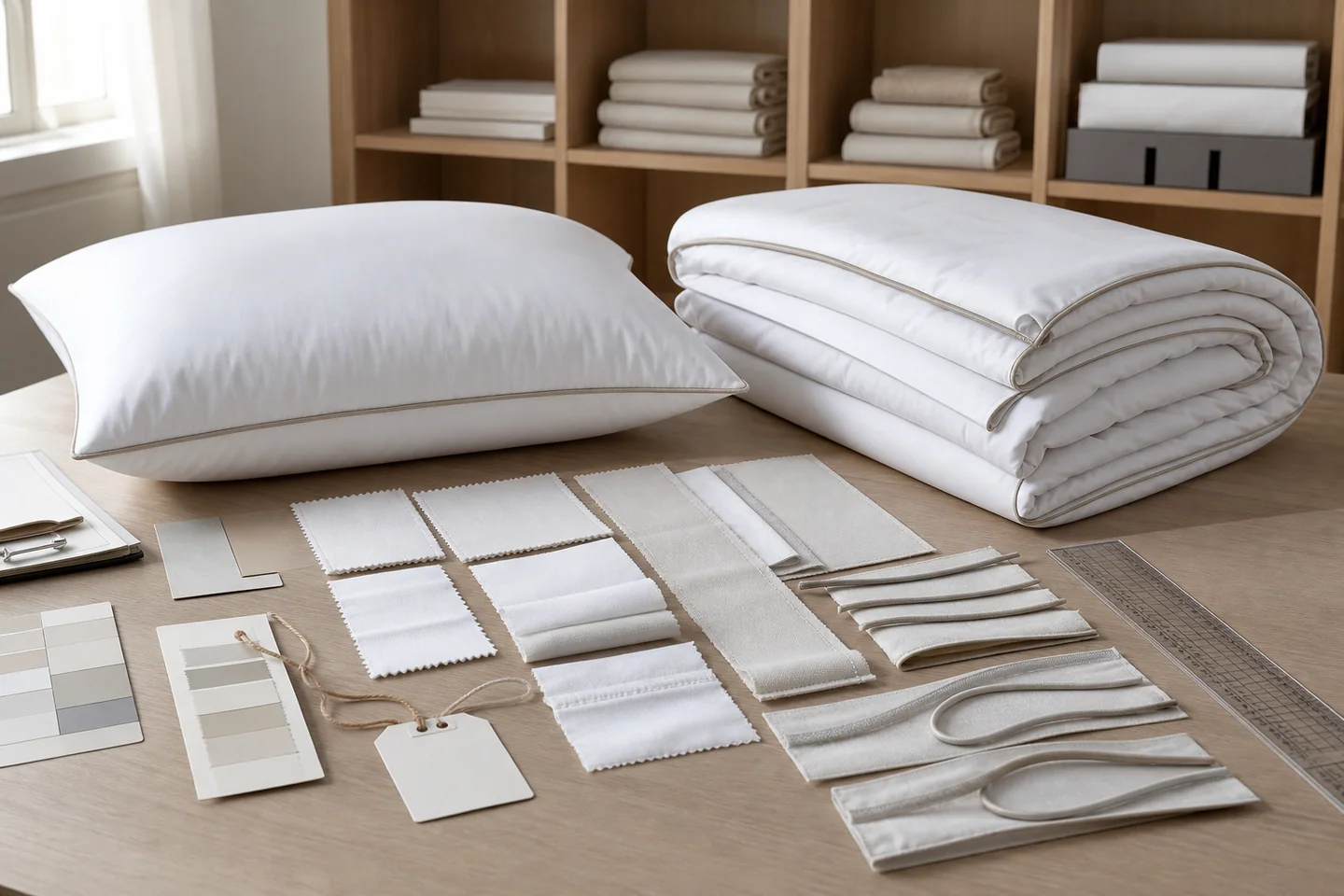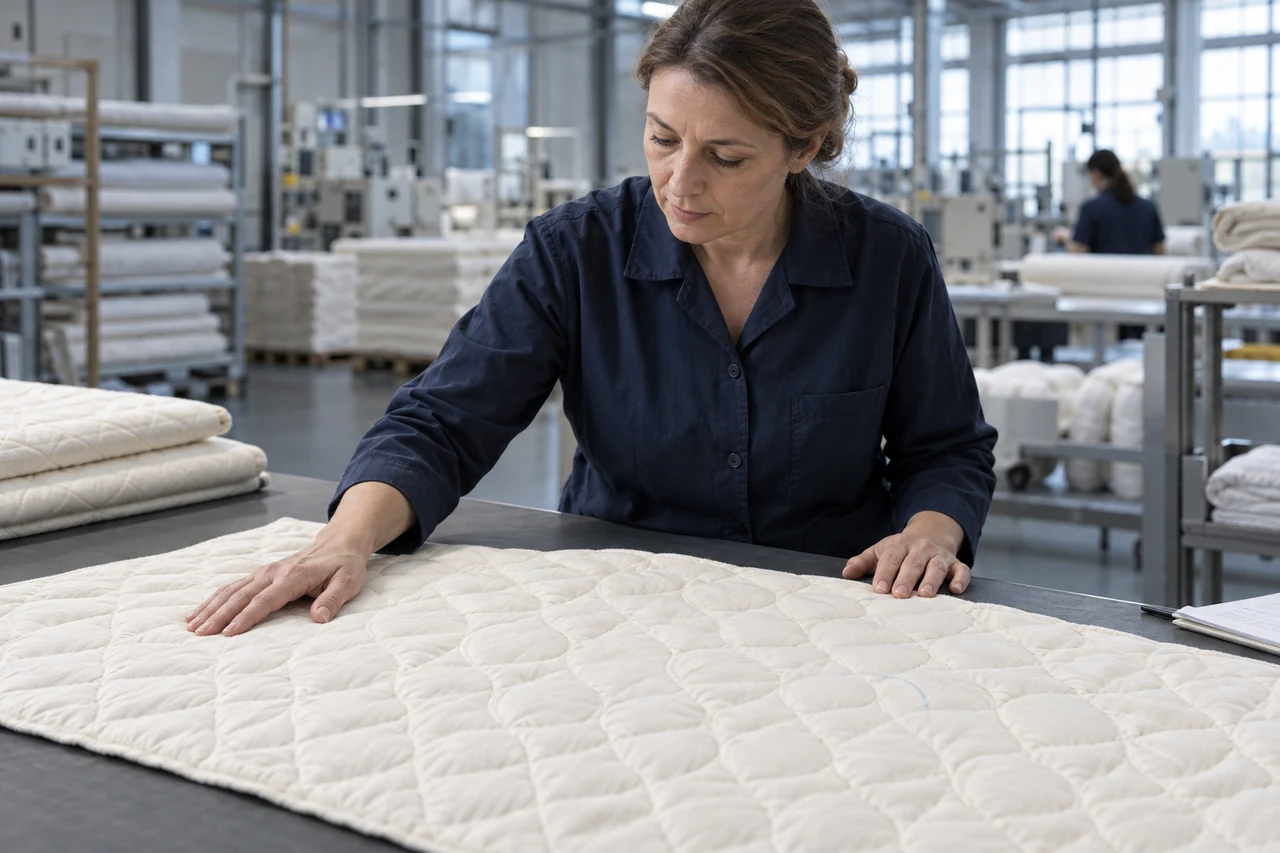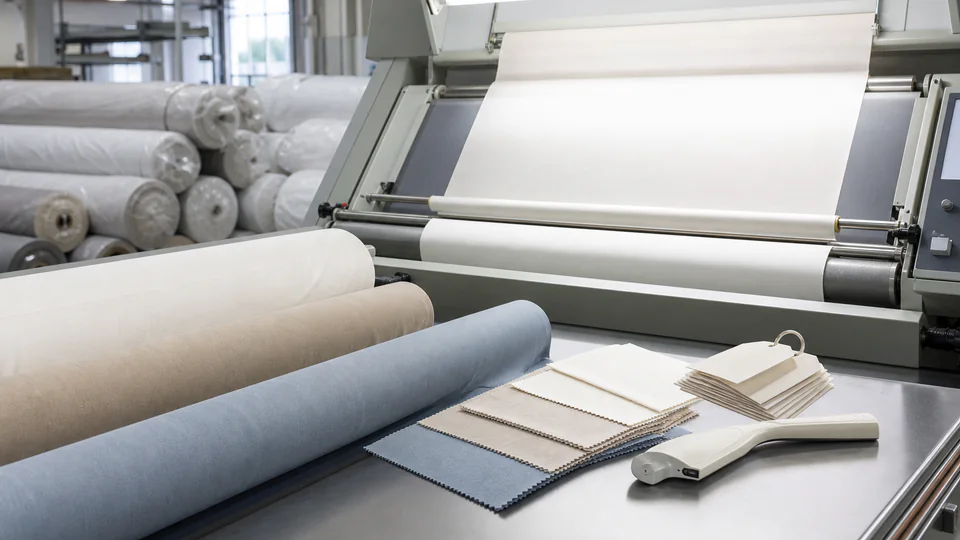
Incoming inspection prevents unidentified, off-shade or structurally unsuitable fabric from becoming thousands of finished items. The system should confirm what arrived, sample it by risk, compare it with approved standards and give every roll a clear released, held or rejected status before cutting.
Verify supplier, lot and receipt information
Reconcile purchase order, supplier, mill, article, composition, construction, color, finish, roll count, stated length, lot and delivery documents. Assign internal traceability without losing the original roll identity. Segregate unknown or damaged rolls immediately.
Check packaging, moisture exposure, contamination, crushed edges and transport damage before opening. Record photographs and receiving conditions. A quantity received transaction should not automatically change material status to released for production.
Set roll and length sampling from material risk
Define how many rolls, how much length and which positions are inspected based on lot size, newness, supplier performance, color sensitivity and product risk. Include random selection and rules for extending inspection when defects or inconsistent results appear.
Separate roll visual inspection, shade grouping and laboratory sampling because each may use a different plan. Document the rationale and use the sampling guide carefully; an AQL table does not replace a suitable fabric-roll inspection method.
Check width, weight, construction and shade
Measure usable and total width, finished weight, density or other specified construction values at representative positions. Confirm face, direction, finish, hand and color against approved standards under controlled conditions. Record actual values rather than only pass or fail.
Build shade continuity using the shade-band control method. Identify roll groups that may be cut together and protect them through storage and spreading. Average lot color cannot prevent panel mismatch between rolls.
Record visual defects by roll and position
Use a defined fabric inspection system to identify and score holes, stains, slubs, streaks, creases, barre, print defects, selvedge damage, bow, skew and other relevant conditions. Record distance from the roll start so cutting can avoid or manage known defects.
Apply the defect classification framework to connect findings with product visibility and risk. Do not allow inspection speed, lighting or machine settings to hide defects that will be obvious after cutting.
Control testing, status and production release
Take traceable samples for required dimensional, colorfastness, strength, chemical or performance tests and link results to the exact lot. Define when conditional use is allowed, who approves it and which cutting or product restrictions apply.
Physically and digitally mark released, held and rejected rolls. Investigate recurring issues through the CAPA process. Preserve inspection data, retained samples and final disposition so supplier performance and finished-product complaints can be traced accurately.
Control partial releases carefully. Identify the exact rolls, shade groups and quantities allowed for use, then prevent held material from being selected by mistake. Reconcile remaining stock after cutting and close the disposition rather than leaving an indefinite hold in the warehouse.
Review incoming results against cutting defects, sewing problems and final inspection. This feedback tests whether sampling and limits are protecting the finished product. Update inspection depth when field evidence shows that a risk is being missed or over-controlled.
No roll should reach cutting without confirmed identity and visible release status. Tie inspection values, shade group, defects, tests and concessions to the original material lot.