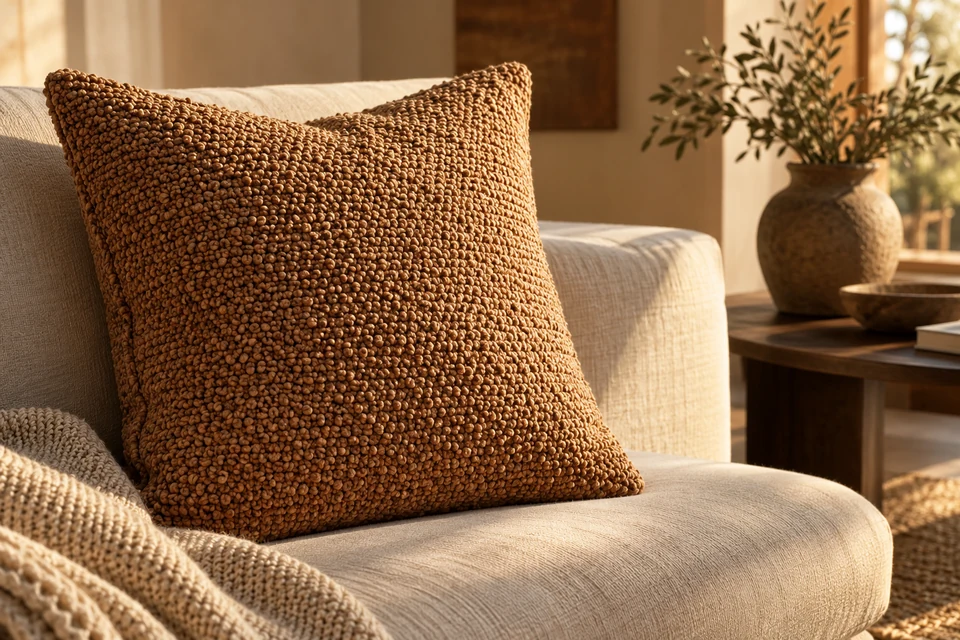
Bouclé is often selected from a close-up photograph, precisely where its texture looks most dramatic. Buyers then discover that the chosen loops disappear from across the room, compete with another upholstery surface or sit in a contact environment that was never discussed. The useful procurement decision is not whether bouclé is fashionable. It is which offered looped construction belongs in a particular decorative cushion, how that surface should be represented and what evidence is needed for the intended setting.
Separate the bouclé name from the offered construction
Looped texture does not identify one fiber recipe
Kvadrat's published collection notes describe both an irregular bouclé yarn in Encircle and regular loop size in Vidar. These are examples of different surface approaches within the same broad family, not interchangeable performance specifications. Its Elle description also identifies a particular fiber blend, which should not be transferred to another fabric. Ask each supplier to identify the actual yarn, fiber composition, base construction and any backing used in the proposed cushion cover.
Begin with a physical reference that everyone can recognize. If using the bouclé product direction as an enquiry starting point, attach the selected photograph and request a current sample rather than assuming the pictured surface proves composition or stock availability. Describe loop size, density and visual irregularity separately. Terms such as teddy, nubby or chunky can help convey mood, but do not make a complete technical brief.
- Record the exact sample identity and proposed fiber statement.
- Ask whether the front and reverse use the same construction.
Judge the loops at three viewing distances
A cushion is seen as a silhouette before it is seen as yarn
Place a filled sample in the proposed room arrangement. Assess it first from the room entrance, then at ordinary seated distance and finally close enough to see individual loops. Record which level matters to the collection. A quieter surface may sit comfortably beside patterned upholstery, while an emphatic loop texture may need an otherwise restrained setting. Neither direction is inherently superior; the choice depends on the composition being built.
Use the same light and viewing position when comparing candidates. A close-up with strong side lighting can exaggerate relief, while a distant front-lit image can hide it. Compare a full-size cushion with the surrounding decorative pillow range, not just loose swatches against white paper. Include the actual insert because the cover-to-insert relationship changes curvature and the way the surface is presented.
- Photograph the full cushion as well as the texture detail.
- Keep the same insert and lighting when comparing loop scales.
Map contact conditions before discussing durability
Decorative use still involves clothing, hands and nearby objects
Ask where the cushion will actually live. An occasional bedroom accent, a busy lounge cushion and a decorative item on a retail display have different patterns of handling. Note contact with textured clothing, exposed fasteners, jewellery or pets where relevant. These are questions for product selection and testing, not a reason to claim that every visible loop will snag or that one compact-looking fabric is pet-proof.
Describe the contact concerns to the supplier and testing provider before selecting an evaluation. The snagging and surface-damage guide helps separate a defined assessment from casual pulling at a loop. Do not deliberately hook a sample with a sharp object and present the result as a standardized test. Keep photographs of normal-handling observations clearly labeled as observations and retain the candidate identity.
Request evidence that matches the surface and use
A large abrasion number is not a complete cushion approval
If the buyer requires test evidence, identify the exact fabric variant, color, backing and preparation to which the report relates. Ask what property the method measures and what acceptance rule the buyer has adopted. The contact-zone evidence guide is useful when deciding how abrasion information supports the room brief. An abrasion result should not silently become proof of snag resistance, washability or performance in every setting.
Treat material changes as questions requiring review. A supplier may propose a different backing, yarn source or blended composition to achieve an appearance or commercial target. Ask which previous approvals remain applicable and which need repeating. Document any limits in the approval record. Avoid promising a service life or care outcome unless the relevant evidence and intended conditions actually support it.
- Match reports to the exact offered fabric and preparation.
- Keep abrasion, snagging and care claims separate.
Show the buyer the same surface the customer will receive
Photography, packaging and quantity planning must agree
Approve a representative full-cover image, a room view and an unretouched detail showing the loop structure. The photography approval guide can help record lighting and color limitations. Do not smooth away irregularities that are part of the accepted yarn character, or use a dramatic macro that suggests a much coarser surface than the actual product. Clearly state whether the sellable unit is a cover or a filled cushion.
Review the finished sample under its proposed care instructions and confirm that the care wording belongs to the complete cover rather than a fabric swatch alone. Request minimums by fabric, color and sewn size, with any insert and packaging quoted separately. Ask whether repeat orders can be matched to the retained reference and what variation needs a new approval. Send FY Bedding the room context, candidate texture and quantities through a sample enquiry; the final offered construction must be confirmed before ordering.
- Keep a retained physical surface reference for replenishment.
- Include a complete care-reviewed cover in the approval set.
Choose the looped surface against real room distance and contact conditions, retain a full-size reference, and limit retail claims to the exact construction and evidence reviewed.
Method references: Kvadrat: Encircle and Vidar examples with differing bouclé yarn and loop descriptions; Kvadrat: Elle construction example; its composition is product-specific.