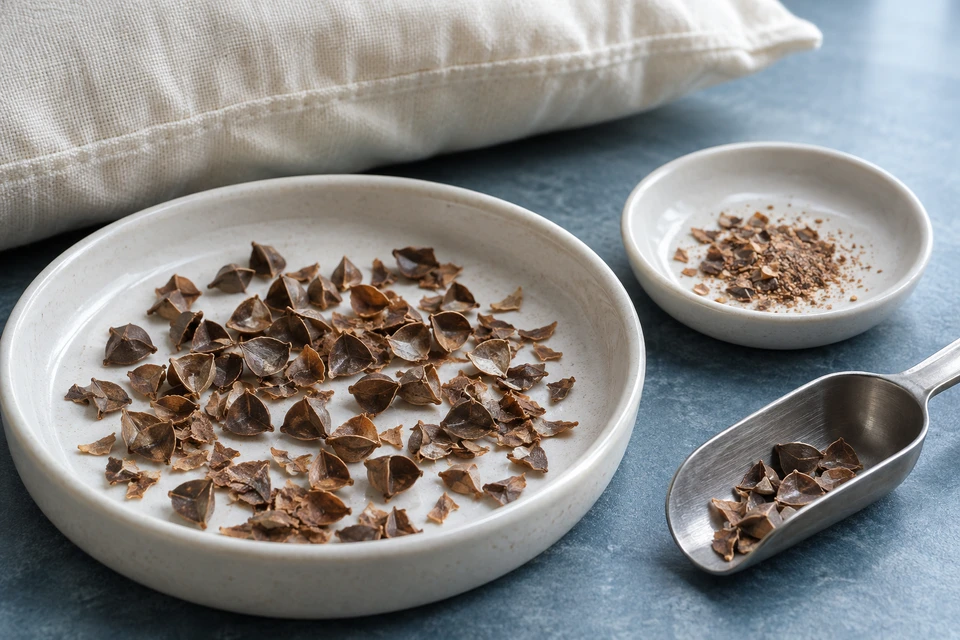
A description such as buckwheat hull filling identifies a material, but it does not describe the pieces inside a delivery bag. A buyer may receive cupped shells, flattened pieces, small fragments and fine material in different proportions. The purchasing question is how to define that physical grade clearly enough that a sample-room approval and a later bulk delivery refer to the same thing. This is separate from the pillow's refill opening, filling weight or adjustable height.
- 1. Define the material before naming a grade
- 2. Agree what counts as whole, broken and fine
- 3. Choose the reporting basis before comparing offers
- 4. Protect the sample's original condition
- 5. Keep grade approval separate from cleanliness and performance
- 6. Link the quotation to an accepted grade reference
Define the material before naming a grade
Hulls are not a finished-pillow specification
Ask the proposed supplier to describe exactly what is being offered and which processing stage the sample represents. A raw agricultural by-product, a prepared filling material and filling recovered from an assembled pillow are different sample identities. Record the declared source and preparation information without inventing a universal meaning for terms such as premium, selected or pillow grade. If the supplier uses a named grade, request its written definition and the physical sample associated with it.
Hullo's account of selecting hulls distinguishes intact shells from flattened pieces and describes differences among the samples it received. That is a manufacturer-specific observation, not an industry grading standard or evidence for an FY Bedding product. Use it to recognise that material name alone leaves physical form unresolved. Do not adopt another brand's performance, origin, treatment or certification claims as specifications for a new project.
Agree what counts as whole, broken and fine
Use examples that two reviewers can classify
Request close photographs and retained examples of the proposed categories. Define whether a partly cracked shell that retains its cupped shape belongs with intact hulls or with fragments. Decide how to treat a flattened but otherwise large piece. These boundary cases matter because two people can sort the same material differently while both believe they are counting whole hulls correctly. Keep the reference examples with the buying specification, not only in an informal messaging thread.
The term fines also needs an operational definition. Ask the supplier or competent testing partner to propose a suitable separation method and report what it actually measures. If a screen is used, record its opening and the agreed procedure; if a visual classification is used, say so. Do not publish a screen size or acceptance percentage as a recognised universal limit without supporting evidence. The buyer and supplier must agree project-specific criteria before applying them to an order.
Choose the reporting basis before comparing offers
Count share and mass share answer different questions
A percentage is incomplete unless its denominator is stated. A count of selected pieces and the mass of separated material are not interchangeable. Fine particles may be impractical to count individually, while counting only conspicuous large pieces can conceal what was excluded. Ask each supplier to show its calculation, the amount examined and the treatment of material that cannot be confidently classified. Avoid ranking offers using percentages produced by incompatible methods.
For a proposed mass-based review, define the initial sample quantity and how the separated fractions are recovered and weighed. Record any unrecovered amount rather than quietly distributing it across the reported categories. This is a proposed purchasing comparison, not a claim that a particular laboratory method or balance resolution is mandatory. Where a result will determine acceptance, ask a competent technical partner to confirm that the method can distinguish the differences the contract intends to control.
Protect the sample's original condition
Preparation must not create the result being measured
Agree how bags will be selected and how representative portions will be obtained. Do not take only attractive whole hulls from the top of one bag and call them the bulk reference. Record the supplier lot, container and sampling location or procedure. Keep the sampling plan proportionate to the order and risk, with technical input where needed. A single demonstration tray is useful for explaining categories but is not automatically representative of an entire shipment.
Handle the retained material consistently. Record whether a sample was screened, shaken, compressed or otherwise prepared before its appearance was photographed. If the purpose is to compare the received grade, an undocumented cleaning step changes the question. Keep an untouched retained portion alongside the portion used for the agreed assessment. Use appropriate contained handling procedures; creating a visible cloud of dust is neither necessary evidence nor a sensible photographic demonstration.
Keep grade approval separate from cleanliness and performance
A neat tray proves only what was examined
Hull fragments are pieces of the declared material; unrelated foreign matter is a different finding. Do not combine the two into one vague reject percentage. Likewise, an attractive sample does not establish chemical conformity, microbiological suitability, pest control, organic status or freedom from allergens. Request the evidence appropriate to the actual material, destination and proposed claim through the responsible technical review. No visual sorting exercise can substitute for that evidence.
Physical grade also does not by itself establish comfort, noise, temperature behaviour or service life of a finished pillow. If these characteristics matter to the intended retail proposition, evaluate the offered assembly through an appropriate separate plan. Keep the shell, filling quantity and construction consistent when comparing filling alternatives, and report the limits of the comparison. Do not infer a medical benefit or a guaranteed durability outcome from the proportion of cupped shells in a small sample.
Link the quotation to an accepted grade reference
Resolve substitutions before the filling is purchased
Send FY Bedding the intended pillow project, a description of the physical grade sought and the evidence required for material review. Ask whether a suitable supply can be evaluated, and request a quotation that identifies the proposed grade reference. Confirm sample quantities, minimum order conditions and delivery planning rather than assuming that an editorial example represents available stock. Any proposed substitution should identify what changes in the material and which approvals need repeating.
Before purchase release, retain the agreed category examples, reporting method and accepted sample identity together. Ask the supplier to state the remedy or review process if delivered material differs from that reference; settle commercial terms through the normal agreement rather than relying on an article as a warranty. The useful outcome is a reproducible description of what is being bought. It is not a universal ranking of natural fillings or a promise that one grade suits every pillow project.
Before comparing two hull-filling quotations, confirm that whole pieces, fragments and fines use the same category definitions, sample condition and percentage basis; otherwise the figures are not comparable.
Method references: Hullo: manufacturer observations of differing hull forms, not a grading standard.