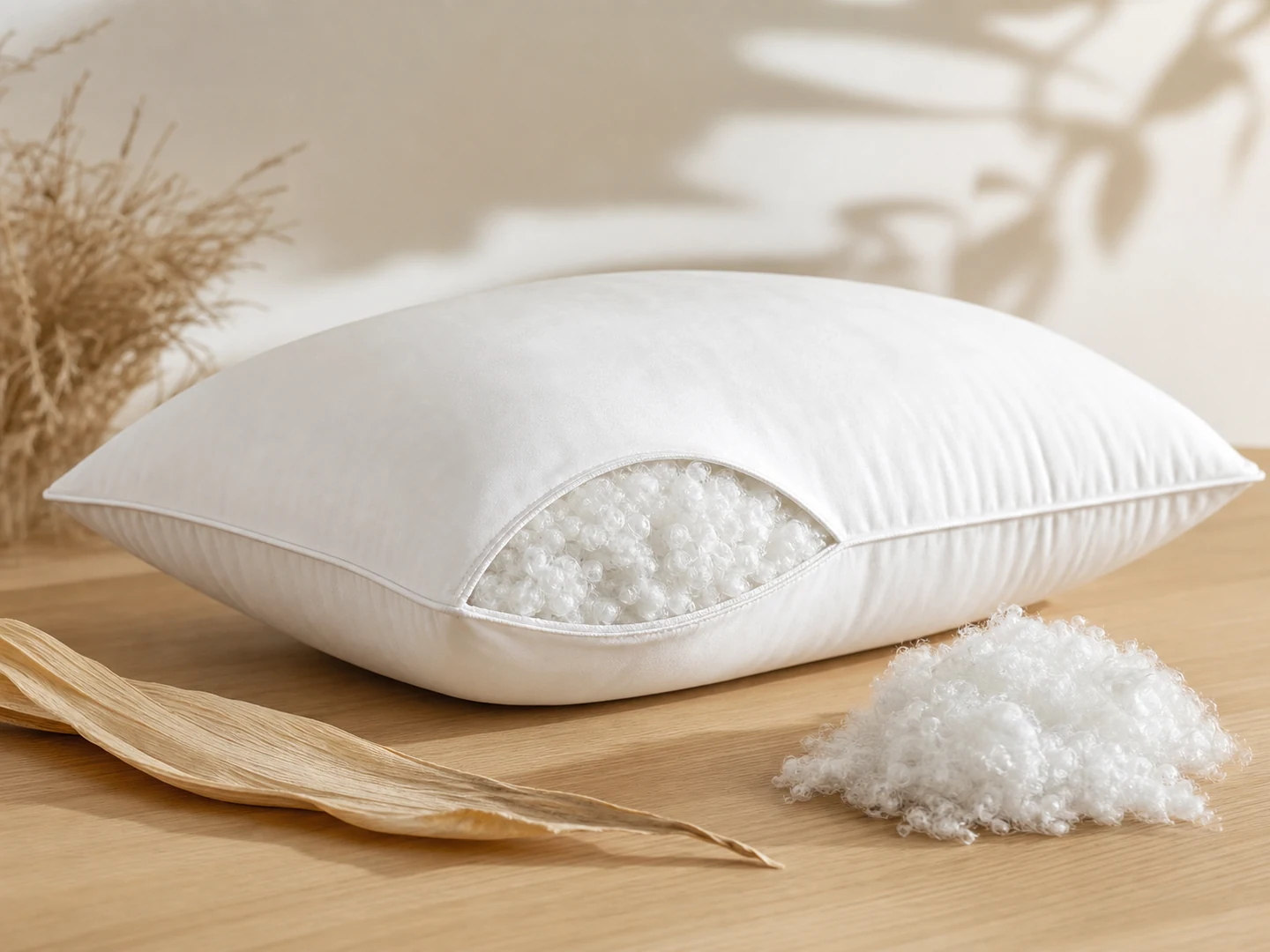
A pillow fill blend is more than two percentages on a bill of materials. Fiber type, denier, cut length, crimp, finish, color, opening and recovery can all influence the finished feel. Even when the intended ratio is correct, poor staging or carryover from a previous material can produce uneven loft, visible specks or inconsistent performance. Buyers need a control plan that follows the material from incoming identity through blending, filling and finished-pillow evaluation.
Define the approved blend and its evidence
Control material identity before debating uniformity
State every blend component by an approved material description, supplier or source reference where applicable, nominal ratio, permitted process tolerance and relevant physical attributes. Connect the values to the bedding bill of materials. A ratio such as 50/50 is incomplete if either component can change denier, finish, color or recovery without review.
Separate composition evidence from performance approval. Supplier documents, incoming records or test reports should be read by scope and product identity. The textile certificate scope matrix helps buyers avoid turning a material document into a blanket finished-product claim. Where the blend supports a marketing statement, confirm the wording and evidence through the responsible review route.
- Name each component and approved material revision.
- Define nominal ratio and process tolerance.
- Record denier, length, finish and visual identity.
- Keep composition and performance evidence separate.
Stage, identify and clear materials before blending
Prevent the wrong fiber from entering a correct recipe
Verify incoming labels, lot references, packaging condition and visual identity before material reaches the blending area. Store different fibers in clearly separated, covered locations and control partial containers. The product traceability and lot-coding guide provides a route for linking incoming lots to finished production without exposing confidential supplier information on the consumer product.
Define line-clearance steps when changing fiber type, color or blend. Residual fiber in bins, ducts, feeders and collection points can create carryover even if the new recipe is weighed correctly. Cleaning evidence should identify the equipment zone, prior material, new material, time and checker. Avoid compressed-air practices that spread loose fiber into the room; use the site's approved safe collection procedure.
- Verify material labels and lot identity before opening.
- Separate and cover partial material containers.
- Clear bins, ducts and collection points at changeover.
- Record prior and next materials in the clearance log.
Sample the blend across time and equipment stages
Look beyond one convenient surface sample
Take controlled samples from defined points such as pre-blend staging, blender discharge and the feed supplied to filling stations. Sample across the run, including start-up and after interruptions. If components can be distinguished visually, use reference trays or controlled photographs to compare distribution. If they cannot, rely on the approved process inputs and suitable analytical evidence rather than subjective color sorting.
Record actual component issue quantities or feeder settings, but do not present a machine setting as proof of every finished unit. Review variation trends and investigate sudden changes in texture, clumping or color. The pilot production approval should demonstrate that the selected equipment and batch size can reproduce the approved blend before full-volume release.
- Define sampling points before the run begins.
- Include start-up, stable running and restart periods.
- Retain identified blend references by material lot.
- Compare process inputs with observed output trends.
Control foreign fiber, debris and unintended carryover
Use containment and investigation rather than cosmetic removal
Set rules for visible foreign fibers, hard particles, packaging fragments, oil marks and other unintended material. Use clean tools, covered sample containers and controlled garment or cleaning practices appropriate to the area. If a restricted-substance or material-safety concern arises, follow the evidence request principles in the restricted-substance guide rather than assuming appearance proves chemical conformity.
When contamination is found, identify the affected time, equipment path and material lots. Do not simply pick visible pieces from a few pillows and release the remainder. Contain the suspected window, sample it using an agreed plan and decide whether cleaning, reprocessing or rejection is appropriate. Keep any claim about root cause provisional until the process history and retained samples support it.
- Define visible and non-visible contamination routes.
- Use clean covered tools and sample containers.
- Contain the production window around a finding.
- Document investigation, disposition and recheck.
Verify the blend through finished-pillow behavior
Combine material control with weight, distribution and recovery checks
Inspect finished pillows for fill distribution, corner coverage, clumps, visible foreign material, odor and consistency across sampled units. Compare net fill records with the fill-weight station verification, while remembering that correct weight does not prove correct blend. Condition pillows before loft and sensory comparison so temporary compression does not dominate the result.
Review recovery and shape using the pillow fill recovery guide. If a blend or source changes, repeat the evidence needed for the affected characteristics instead of assuming the same ratio guarantees the same product. Final inspection should link sampled pillows to filling time and material lots so a deviation can be contained without treating the entire order as one indistinguishable population.
- Check distribution, clumps and visible foreign material.
- Keep fill weight separate from blend identity.
- Condition pillows before loft comparison.
- Trace finished samples to time and material lots.
Trace one finished pillow back through fill weight, filling time, blend sample, equipment clearance and incoming material lots; a missing link makes it difficult to contain or explain a uniformity problem.