Chambray is often selected for a quiet, mixed-colour surface, but a colour name alone is a weak purchasing specification. A buyer should establish the actual weave and the colour in each yarn direction, then keep that material identity connected to the approved bedding sample and quotation.
- 1. Write the yarn-direction description explicitly
- 2. Distinguish the intended structure from similar appearances
- 3. Mark sample direction before comparing colours
- 4. Connect the fabric direction to the bedding layout
- 5. Keep shade differences tied to their source reference
- 6. Release one complete material and order record
Write the yarn-direction description explicitly
Do not make blue warp and white filling a universal rule
CottonWorks identifies chambray among its plain-weave fabric examples. Its shade-change reference also describes a chambray specimen with natural warp and dyed filling. These examples are useful reminders to inspect the offered construction rather than assume one fixed allocation of colour. Ask the supplier to identify the warp and filling, also called weft, on the proposed fabric reference and to state the intended colour in each. A general blue chambray description does not resolve those details.
Keep the declaration precise without inventing a fibre composition from the weave name. Ask separately for composition, yarn information and relevant finishing on the offered material. A blue-and-white photograph cannot establish those facts. If the supplier uses an internal colour code, connect it to an identified physical reference rather than expecting receiving staff to interpret the code visually. The objective is a shared description of the actual material, not a rule that every fabric sold under the same commercial name must look or behave identically.
Distinguish the intended structure from similar appearances
A mixed-colour effect can come from different routes
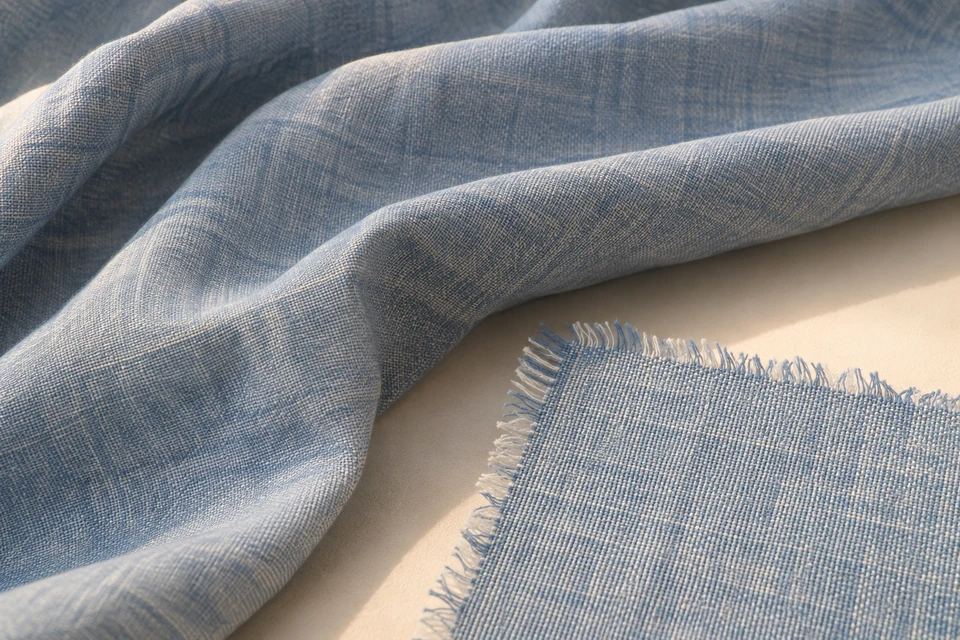
Ask for a clear construction statement and a sample large enough to examine the intersecting yarns. A plain-weave chambray proposal should not be silently substituted with a twill fabric, a printed imitation or a different yarn-colour arrangement merely because the overall shade is similar. Such alternatives may be worth considering, but each needs its own name and approval. A buyer can choose a look first while still requiring the supplier to identify how the chosen sample actually creates that look.
Review any heathered or mixed-colour yarn proposal separately from a fabric whose appearance comes from contrasting yarn directions. Do not infer the production route from a softly blended photograph. Where the structure is difficult to resolve, ask the supplier or qualified textile reviewer for clarification before accepting the description. Keep the commercial discussion on the specific offered reference. This avoids a dispute in which the buyer expects one construction while the maker has priced another surface effect under an informal styling term.
Mark sample direction before comparing colours
A rotated swatch can confuse an otherwise useful review
Identify the warp and filling directions on the sample record, using the supplier's confirmation where necessary. Keep that orientation consistent in review photographs and when comparing a proposed alternative. Label the sample through its accompanying record rather than relying on memory of which edge was uppermost on the table. If the submitted piece lacks a useful identification edge or other clear reference, request confirmation instead of guessing. This is especially important when the two yarn directions use close tones rather than a strong contrast.
Assess the overall surface under consistent viewing conditions as well as inspecting the component yarn colours. Record which physical sample represents the accepted combined appearance. A yarn colour reference alone does not capture every aspect of a finished fabric surface, while an overall fabric shade alone leaves the component description incomplete. Keep both parts of the approval linked. Do not claim that one viewing exercise establishes colourfastness, fibre quality or performance; those are separate requirements for the proposed bedding programme.
Connect the fabric direction to the bedding layout
The material brief should survive conversion into a set
Ask how the identified fabric directions will run in each proposed component, including duvet covers, pillowcases or sheets within the actual programme. Review the assembled sample where the layout affects the intended visual relationship. Do not prescribe a universal cutting orientation without considering the supplied width, component dimensions and maker's construction proposal. The buyer needs an agreed arrangement that can be repeated, not an unexplained instruction carried from a small swatch to every size in the range.
Where a set combines chambray-look fabric with a solid reverse, border or another material, identify each component separately. State which sample governs each face and how the combination should appear together. A matching colour name is not enough to show that two materials have been approved as a pair. If the maker proposes a change to use available fabric more efficiently, review the resulting layout and material identities before release. Do not allow a cutting adjustment to conceal an unapproved change in the supplied fabric.
Keep shade differences tied to their source reference
Diagnose a discrepancy before accepting a substitute
CottonWorks' chambray shade-change example attributes the visible change in that specimen to filling shade variation. For buyers, the practical lesson is to preserve enough information to investigate a discrepancy, not to assume that every shade difference has the same cause. Retain the approved fabric, direction record and relevant material references. If a submitted lot looks different, ask the supplier to compare the actual yarn and finishing records and explain the difference against the agreed specification.
Use the programme's defined shade-review process rather than creating a new tolerance from this article. Distinguish an approved alternative from an unexplained variation and keep any concession specific to the affected material or order. A revised photograph should not erase the original reference. If the supplier offers a different warp or filling colour to achieve a similar overall effect, treat that as a material revision requiring review. The useful control is traceable identity and a clear decision, not a promise that a commercial colour name will eliminate variation.
Release one complete material and order record
A chambray label should not carry unsupported promises
Bring together the declared weave, yarn-direction colours, composition, finish, sample orientation and approved component layout. Link the quotation and order to that complete reference, with any accepted alternatives recorded separately. Confirm minimum quantities and sampling arrangements for the actual colour combination instead of assuming that an existing-looking shade is stocked. Ask the supplier to identify dependencies that affect the proposed delivery plan. Neither a swatch nor the word chambray establishes availability, production capacity or a guaranteed dispatch date.
For a FY Bedding enquiry, share the intended bedding items, dimensions, quantity mix and the physical colour direction you want to develop. Request confirmation of the proposed material and sample route before making consumer-facing claims. Keep performance and compliance evidence tied to the finished programme where required, rather than borrowing it from another fabric or source. A clear warp-and-filling brief gives the buyer a practical foundation for comparing offers while leaving unsupported composition, stock and quality claims out of the decision.
Record plain weave, warp and filling colours, composition and finish separately. Keep sample orientation and the complete fabric reference attached to the set layout, quotation and any later shade decision.
Method references: CottonWorks: chambray shade-change specimen with natural warp and dyed filling; CottonWorks: a plain-weave chambray specimen.