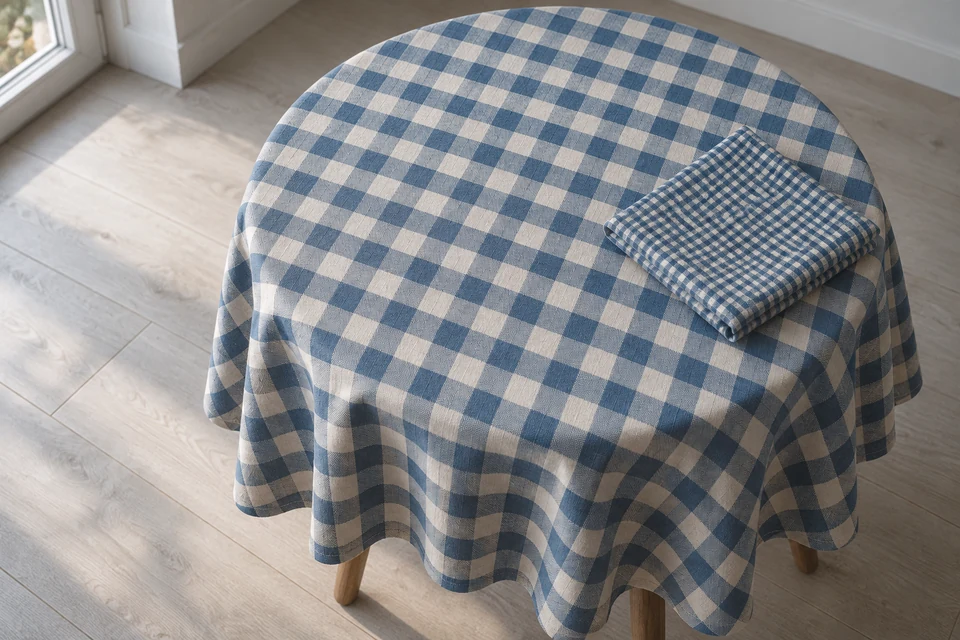
A gingham tablecloth can be attractive as a small swatch yet feel quite different when its grid covers a dining table. The buyer must decide how much of each check should remain visible around dishes, what the alternating colors should look like together and where the grid may finish at the perimeter. This guide addresses those decisions for a proposed yarn-dyed gingham cloth. It does not treat a checked appearance as proof of a manufacturing route, and it does not replace the broader tablecloth size and seam brief. The objective is a repeatable visual approval of the actual finished table textile, not a generic promise attached to the word gingham.
- 1. Identify the offered check before comparing its appearance
- 2. Measure a visible cell and its larger color rhythm
- 3. Lay the grid on the table before approving the colorway
- 4. Judge the finished perimeter as part of the gingham design
- 5. Compare colorways in use and in the agreed care state
- 6. Quote the approved grid, not an interchangeable check
Identify the offered check before comparing its appearance
Separate the fabric description from the pictured grid
Ask the source to identify the fabric reference, declared fiber composition and actual coloration route proposed for the order. A photograph cannot establish whether the supplied material uses colored yarns, a printed design or another route. If the brief specifically requests yarn-dyed material, obtain confirmation against the offered reference and keep any alternative clearly named. Do not infer better color retention, laundering behavior or construction quality from that description alone. Those questions need evidence relevant to the material rather than an attractive product name.
Create a color key that names the constituent yarn or design colors and the intersecting areas visible in the sample. Put the physical reference next to the key so that a supplier can identify the intended combination without guessing from a monitor. The color-and-material board approach can organize this record, but the tablecloth must retain its own fabric identity. Ask whether the quoted option is stock material, an available color combination or a proposed development; these are different starting points for purchasing.
- Record the offered fabric reference and confirmed coloration route.
- Name the colors and keep the physical grid beside the color key.
Measure a visible cell and its larger color rhythm
Agree what the buyer means by check scale
Spread an identified sample without stretching it and define the landmarks used to describe a cell. Record the distance between corresponding color boundaries in each direction, rather than writing small check or large check. Include a photograph with a scale reference and enough surrounding pattern to show the alternation. If the pattern contains more than one band width, map those widths individually. This prevents two sources from quoting a nominal check size while presenting different visible grids.
Compare candidate scales at the distance from which a diner or server normally sees the cloth. Place the same plate and napkin beside each candidate so the team reviews the relationship rather than an isolated textile preference. A very close image can make a modest grid look dominant; a wide room photograph can hide it entirely. The pattern-repeat guide handles general repeat control. For gingham, add the specific decision about visible cells around the actual dining objects and the desired color rhythm across the table.
- Define cell landmarks in both directions.
- Compare scales with the same tabletop objects and viewing distance.
Lay the grid on the table before approving the colorway
Use a full surface rather than a folded corner
Request enough material or a finished trial cloth to cover the representative tabletop in the intended arrangement. Identify the table used and show how the grid runs relative to its edges. Review the open cloth before adding the centerpiece, then build the usual dining display. A color combination that works beside one plate may read differently across a broad uncovered area. Keep photographs of both arrangements, because decorative styling can conceal the very grid relationship the team is being asked to approve.
Ask the buyer to choose whether a dominant line should pass through the visual center or whether the grid may be positioned within an agreed range. There is no automatic correct arrangement for every table or check. Describe the accepted look with an overhead view and a diner-level view, then show which differences would need another decision. Use the table-linen collection as a category reference only; the source still needs to confirm that the particular checked material and finished configuration are available.
- Photograph the unobstructed tabletop as well as the dressed setting.
- State the intended relationship between the grid, center and table edges.
Judge the finished perimeter as part of the gingham design
A straight edge and a straight-looking grid are separate observations
Inspect the check lines along each finished edge and at the corners. Record whether a hem exposes a narrow fragment of one color, follows an agreed grid landmark or intentionally cuts across the check. A photograph of the center cannot approve these decisions. Ask the maker to explain the proposed cutting and finishing route for the offered cloth, including any construction limitation that affects the visible edge. Do not ask production to hide a mismatch by pulling the material into a temporarily favorable position.
Where a seam is needed, review the joined check at normal tabletop distance and then examine the local transition. Keep the project-specific seam and cloth dimensions in the separate tablecloth seam-and-drop record. This article adds the gingham decision: whether the agreed color sequence and line relationship remain acceptable across that join. A decision for a seam underneath a serving arrangement should not silently approve a different join in an exposed dining area.
- Show all corners and edge-facing color fragments.
- Approve visible check relationships across each proposed join.
Compare colorways in use and in the agreed care state
Keep a brighter palette from becoming an unsupported performance story
Review candidate colorways on the same table under the venue lighting that matters to the purchase. Name the lighting and sample identities in the comparison record. If the venue changes its dining palette between breakfast and evening service, photograph both actual arrangements instead of assuming one presentation represents the other. The shade-reference guide can structure a later production comparison; it does not make a new color combination automatically interchangeable with an existing one.
Agree how the finished cloth will be prepared and cared for during approval, then repeat the relevant grid, edge and tabletop observations on the identified sample in that condition. Connect dimensional questions to the dimensional-stability review, while asking the technical owner to choose an appropriate procedure for this textile. Note any pressing or arrangement needed to obtain the accepted look. Do not advertise easy care, stain release or lasting color merely because the trial cloth looks satisfactory at one stage.
- Use the same tabletop and lighting for colorway comparisons.
- Record the preparation required to reproduce the accepted grid appearance.
Quote the approved grid, not an interchangeable check
Link the purchase scope to the complete gingham reference
Prepare the request with the named material, color key, check landmarks, finished size, edge treatment and table presentation photographs. Distinguish mandatory elements from alternatives the supplier may propose. Ask which color or material decision determines the actual minimum order and what sample stage can demonstrate the complete cloth. Record packing by identified colorway rather than grouping several checked fabrics under a generic gingham description. The technical-pack essentials provide a place for these connected references.
Before confirming an offer, reconcile the reference shown in the quotation with the physical cloth that received approval. A supplier change of material or check scale needs an explicit decision, even if the replacement uses similar colors. Buyers can send a gingham tablecloth brief with tabletop photographs, intended quantities and the grid questions still unresolved. Ask FY Bedding to confirm the suitable sourcing route, sampling scope and delivery proposal against that specific request. Retain the approved complete cloth and color key together for later replenishment conversations.
- Require the quotation to identify the approved material and check scale.
- Keep proposed substitutions separate until the tabletop appearance is reviewed.
Approve a gingham tablecloth only when the source identifies the offered fabric route and the buyer accepts its named colors, visible cell scale, full-table presentation and finished perimeter. A checked photograph or a yarn-dyed description cannot stand in for the complete sample or for separate performance evidence.