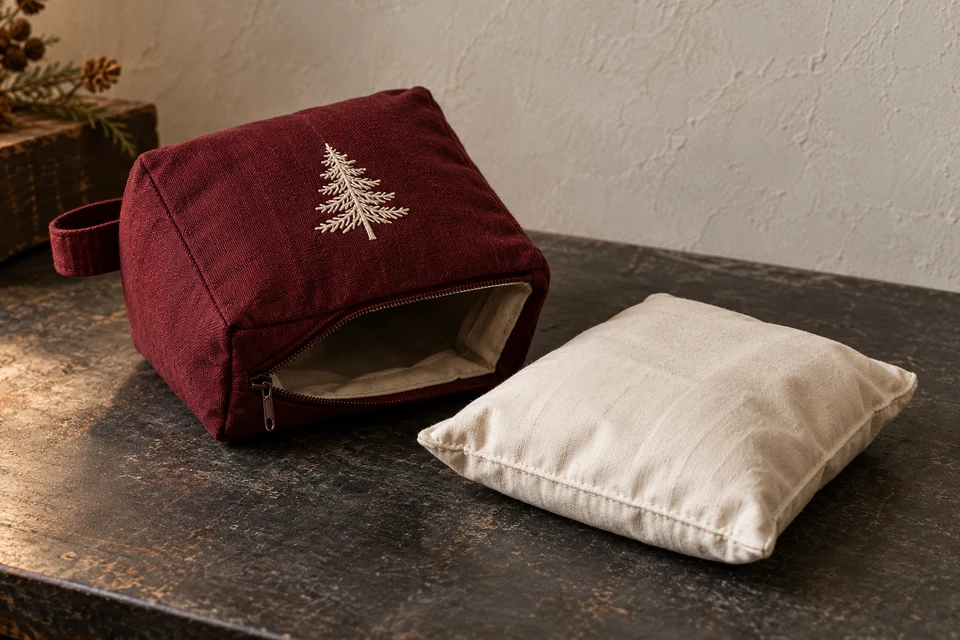
A decorative Christmas doorstop can be quoted as an empty cover, a cover with an inner pouch or a complete weighted unit. Those are materially different purchases. Before comparing prices, decide who supplies the inner weight and who approves the assembled product. The festive shell should not obscure the construction, intended use or evidence needed for the final unit. Start with a component boundary that both the buyer and supplier can explain.
Choose the purchased configuration
Do not compare a shell price with a complete-unit price
Write a supplied-component list for each quotation. Name the decorative cover, inner containment pouch, filling, closure and any removable base or handle. Mark each as included, buyer-supplied or excluded. If the buyer intends to fill the product locally, identify the party responsible for selecting the filling, assembling the unit and approving the finished item. An empty-cover sample cannot approve those later operations.
Ask for quotation units that follow the same configuration. Record whether packing is for a flat shell or an assembled unit, because the logistics brief will differ. Use the bill-of-materials guide to prevent an apparently minor component from disappearing between quotation and order. Do not infer a standard fill weight, load capacity or door suitability from a product photograph.
- List the configuration on every sample request and purchase line.
- Assign ownership of final assembly and finished-unit review.
Make the inner pouch removable as intended
Review the opening with the actual proposed insert
Specify the position and usable length of the cover opening. Then insert and remove the representative inner pouch without forcing it through a narrow route or pulling on decorative seams. Check the corners, zipper ends and internal seam allowances for catching. If the project requires removable filling for care or local assembly, a cover that closes successfully once is not enough; the intended removal action must also work.
Keep the inner pouch distinct from the decorative shell. If the proposal relies on loose filling directly inside the outer cover, it is a different construction and should be reviewed as such. The zipper approval guide helps document the closure identity, while the project review must address its actual use and contents. Record any change to the opening or pouch size before approving another sample.
- Demonstrate insertion and removal with the representative pouch.
- Keep loose filling out of the shell unless that configuration is explicitly assessed.
Inspect the decorative shell in its filled shape
Check seams and floor-contact details together
Place the assembled sample on the intended type of surface and review its shape without pulling it square for photography. Examine the base, corners and motif alignment. Identify what touches the floor, whether hardware is exposed and whether a decorative trim trails beyond the footprint. Any concern about marking, surface interaction or use conditions should be evaluated by the responsible reviewer using the proposed complete construction.
A top loop may be decorative or intended for carrying; specify which. Do not treat the presence of a loop as proof that it can safely lift an unspecified weighted insert. The structured textile construction guide provides useful questions about shape and seams, but its subject is not a doorstop rating. Keep the functional review specific to the assembled doorstop and its intended conditions.
- Record the floor-contact material and exposed components.
- Distinguish decorative loops from approved handling features.
Write care instructions around component separation
Do not imply the whole unit can be washed
If the shell is intended to be cleaned separately, show the removal sequence clearly and establish care instructions for that exact shell construction. Clarify what should happen to the inner pouch during cleaning and whether the pouch has its own care limitations. Do not copy care wording from the decorative fabric alone when embroidery, lining, reinforcement or closures are also present.
Review a shell after the agreed care process and refit it around the same representative pouch. Look for changed opening access, distorted corners and a base that no longer sits as intended. The care-label checklist helps connect instructions to the approved component set. The product should not be described as washable in a way that leaves customers guessing which part the statement covers.
- State exactly which component the care instruction applies to.
- Refit the cared-for cover before approving its final dimensions.
Release the assessed product, not just the Christmas motif
Keep use restrictions and evidence with the order
Have the responsible technical team review the intended market, user, contents and use conditions of the complete product. Keep the resulting requirements and evidence in the release file. Do not advertise the item as a toy, child-safe accessory or substitute for a door-safety device without appropriate substantiation. A seasonal shape or friendly motif does not settle the assessment of a weighted household object.
Bring the shell sample, inner-pouch specification, approved instructions and retail contents statement together before ordering. Use claim substantiation planning to keep promotional wording within the reviewed scope. Send FY Bedding the intended configuration, dimensions and assembly responsibility for discussion. Any ability to supply a particular filling or complete unit, and any delivery commitment, must be confirmed for the project rather than assumed.
- Identify the exact assembled configuration covered by the review.
- Keep unsupported safety and performance claims out of the listing.
An approved festive cover does not approve its inner weight or the finished doorstop. Release only when the component list, assembly owner, removal route, care wording and final-product review all refer to the same configuration.