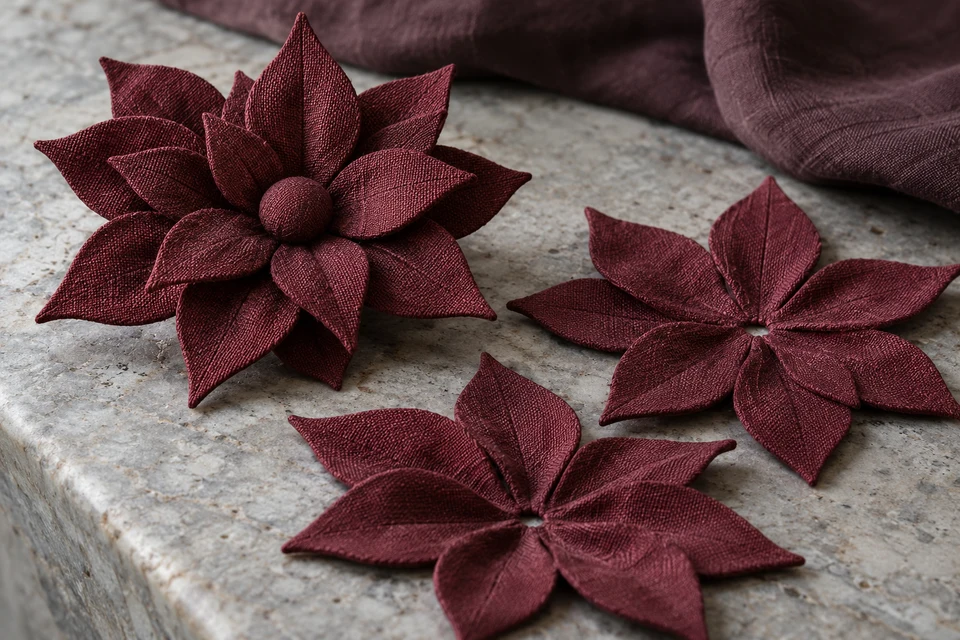
A fabric poinsettia is assembled from textile components, not judged only by resemblance to a flower. The pointed layers, offset between them and central connection determine the finished decorative form. A buyer ordering an assortment needs a clear answer to what is supplied: a loose textile flower, an attached display accessory or another specified assembly. Treat the illustration as a development reference, not proof of fiber content, handmade production or a particular mounting performance.
Map the stack from the bottom layer upward
Layer count and rotational offset are separate decisions
List every petal layer in assembly order, with its size, material and intended face. Draw the relationship between the points of adjacent layers rather than asking only for a full-looking flower. A small rotation can expose the lower points or hide them behind the upper layer. Put the stack drawing in the technical pack and connect it to a photograph of the accepted assembled sample.
Ask for an unassembled set beside the finished flower during development. This allows the buyer to confirm that the proposed number of layers and shapes actually creates the approved appearance. Decide whether the lower layer is intended to remain visible around the whole flower or only in selected gaps. Avoid adding extra layers simply to make a sample look fuller if the quotation and packing proposal still refer to a lighter construction.
- Number the layers and show their intended faces.
- Record the offset between adjacent petal points.
Define how each pointed edge is made
Cut, turned and finished edges produce different profiles
Identify whether the proposed petal is cut from a stable material, made from joined layers or finished by another stated method. Review the point and the inward valley between petals, where the edge treatment may change the silhouette. A crisp cut felt profile should not be used as the acceptance reference for a turned woven version. Request the maker's actual edge construction, not a material assumption based on a studio photograph.
Examine the accepted edge before and after the agreed handling and packing trial. Note any visible change in the point, local thickness or exposed fibers without assigning an unsupported durability rating. The seam specification method can help document joined layers. If a finish or adhesive is proposed, identify its role and ask what evidence is relevant to the intended application and market.
- Match the acceptance sample to the offered edge method.
- Inspect both outward points and inward petal valleys.
Specify the center as an assembly connection
A covered center can conceal important construction
Describe how the layer stack is connected and how the decorative center is attached. A fabric-covered dome, stitched center or separate ornament represents a different component arrangement. Show the reverse so the buyer can see which joins are present and where the mounting interface begins. Do not infer that a neat front surface proves the layers are secure for every use or handling condition.
Keep the center's size and coverage in the drawing: too large a cover can hide the petal roots differently from the accepted design. Ask for any connection evaluation to be included in the product evidence plan, with a defined sample, method and decision owner. A visual assembly review is useful, but it is not a substitute for application-specific evidence or an authorization to describe the accessory as suitable for children.
- Record the connection method and the reverse appearance.
- Separate visual approval from any required attachment evidence.
Choose the mounting scope before the quotation
A loose flower is not automatically a clip or wearable pin
State whether the order contains only the textile flower or also a backing, loop, clip or another attachment. Show the intended display location and any contact surface that the accessory will touch. Keep a wearable pin proposal separate from a home-display component; its use and supporting requirements must be reviewed independently. Do not let a supplier add a generic fixing merely because it is convenient for a sample photograph.
If the same flower is proposed for several placements, identify which parts remain common and which require separate approval. The product brief should describe the actual offered assembly, including the reverse. Ask the supplier to itemize changes caused by the mounting option so price comparisons do not mix loose flowers with complete installed accessories. Retain the approved mounting variant as its own identifiable sample.
- Make included attachments and exclusions explicit.
- Review each mounting variant against its intended use.
Protect the layer arrangement during packing
The received form matters as much as the studio view
Agree how the flower is nested, supported or separated in its selling pack. Check whether the lower points become trapped beneath another piece and whether opening the pack requires extensive reshaping. A buyer may accept a stated simple arrangement step, but it should be shown and agreed rather than hidden in the production assumptions. Inspect the unpacked sample under the same viewing conditions as the approved flower.
For mixed colors or sizes, reconcile the number of complete flowers rather than counting loose layers. Apply the assortment verification approach to the actual selling units. Align layer count, edge method, center, mounting and pack when requesting MOQ, sample cost and lead time. Request a confirmed schedule only after these choices are settled; a Christmas theme alone does not establish stock or delivery availability.
- Review a packed and unpacked flower against the same reference.
- Quote complete assemblies with the agreed layer count and mounting.
Share the intended display, layer drawing and color direction with FY Bedding. Request a loose layer set, one assembled flower and its proposed pack so petal geometry, center construction and supply scope can be approved together.