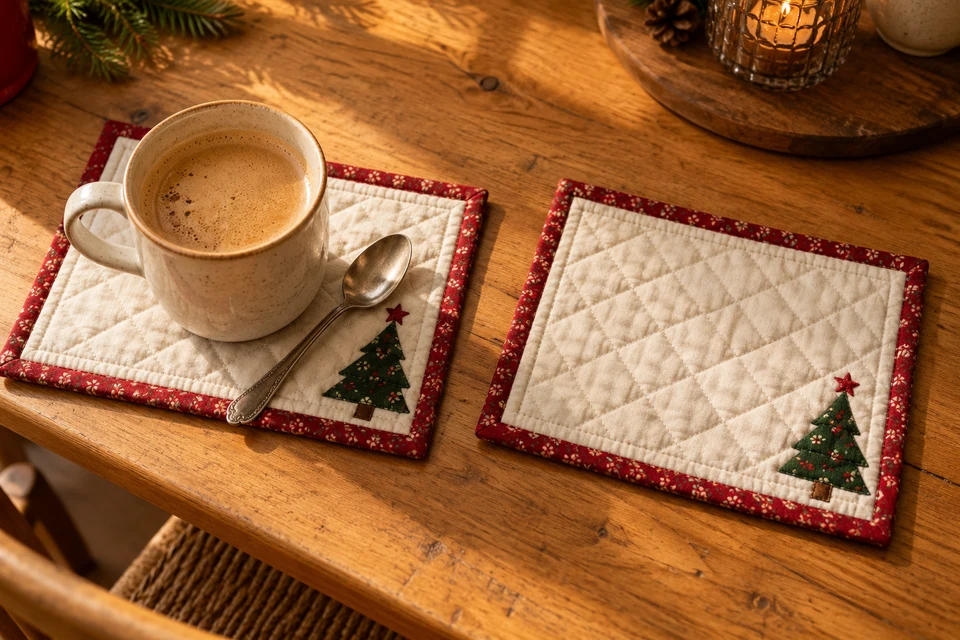
A mug rug is a small textile setting, not simply a dinner placemat reduced until it fits a gift sleeve. The cup base, spoon and decoration compete for a limited area. A raised Christmas tree or thick bound edge can make an attractive photograph while leaving little useful flat space. Build the brief around representative tableware, then approve the quilted construction and seasonal motif without making unsupported heat-protection or spill-control claims.
Reserve the cup footprint before placing decoration
Use representative tableware rather than a generic circle
Choose the mug or cup types relevant to the intended retail presentation and place them on a plain size mock-up. Include the handle orientation and the spoon if the product is presented as a cup-and-spoon setting. Mark the area that must remain comfortably within the textile edges. A large decorative border should not quietly reduce the usable center after the overall dimensions have been approved.
Record this layout in the product specification pack. State whether the mug, spoon or any gift accessory is included or only shown for styling. Review more than one representative cup where the offer is intended for a broader assortment, but do not turn a few examples into an unsupported fits-all claim.
- Show the cup base, handle direction and spoon on the layout.
- Separate overall dimensions from the intended usable center.
Choose where quilting may cross the cup zone
The stitch pattern is a construction decision
Ask for the proposed face fabric, filling or interlining, reverse and quilting path. Compare the assembled sample on a level surface with the representative cup resting normally. Look for unintended ridges, local puffiness or decorative attachments under the base. The aim is a clearly defined product sample, not a photograph in which the cup is balanced over a raised motif.
Use the quilting construction guide to frame questions about the layers and stitch layout. Do not assume a thicker filling automatically creates a better product. If a design needs a raised corner decoration, keep its location explicit and review whether it affects the intended tableware arrangement after the textile has been handled.
- Approve the assembled layer stack and stitch route.
- Keep raised decoration outside the agreed cup footprint.
Check the binding as part of the small format
Corner bulk can consume a useful proportion of the piece
Inspect all corners and edges with the rug laid freely on the table. Compare the visible binding width, corner turns and any hanging loop or label. In a compact product, a small construction difference can change the usable area noticeably. Record dimensions using a consistent method rather than pulling curled edges flat until the sample matches the drawing.
The binding and edge-finish checklist provides questions for the supplier. Review the reverse as well as the decorated face, especially if the product will be described as reversible. If only one face is intended for display, state that scope and still inspect the reverse construction rather than leaving it outside the approval.
- Check all corners without stretching the textile into position.
- Record whether the reverse is a display face or a backing only.
Ask for evidence appropriate to the intended use
Seasonal appearance does not establish heat protection
Describe the intended domestic or hospitality setting and request the relevant assessment of the complete construction. Do not market the piece as a trivet, protective hot pad or spillproof barrier solely because it is quilted. A decorative mug rug, a heat-protection product and a liquid barrier are different offers with different evidence needs. Keep the final claim scope tied to what has actually been established.
The claims substantiation matrix helps organize that distinction. Agree care information for the actual layers and decoration, and review a sample after the proposed care trial. Record any edge curl, stitch distortion or color change as observations requiring a decision, not as results that this article assumes in advance.
- Do not substitute a decorative sample for performance evidence.
- Review the complete layered product after the agreed care process.
Pack a gift without hiding the practical surface
Let the customer understand the supplied piece
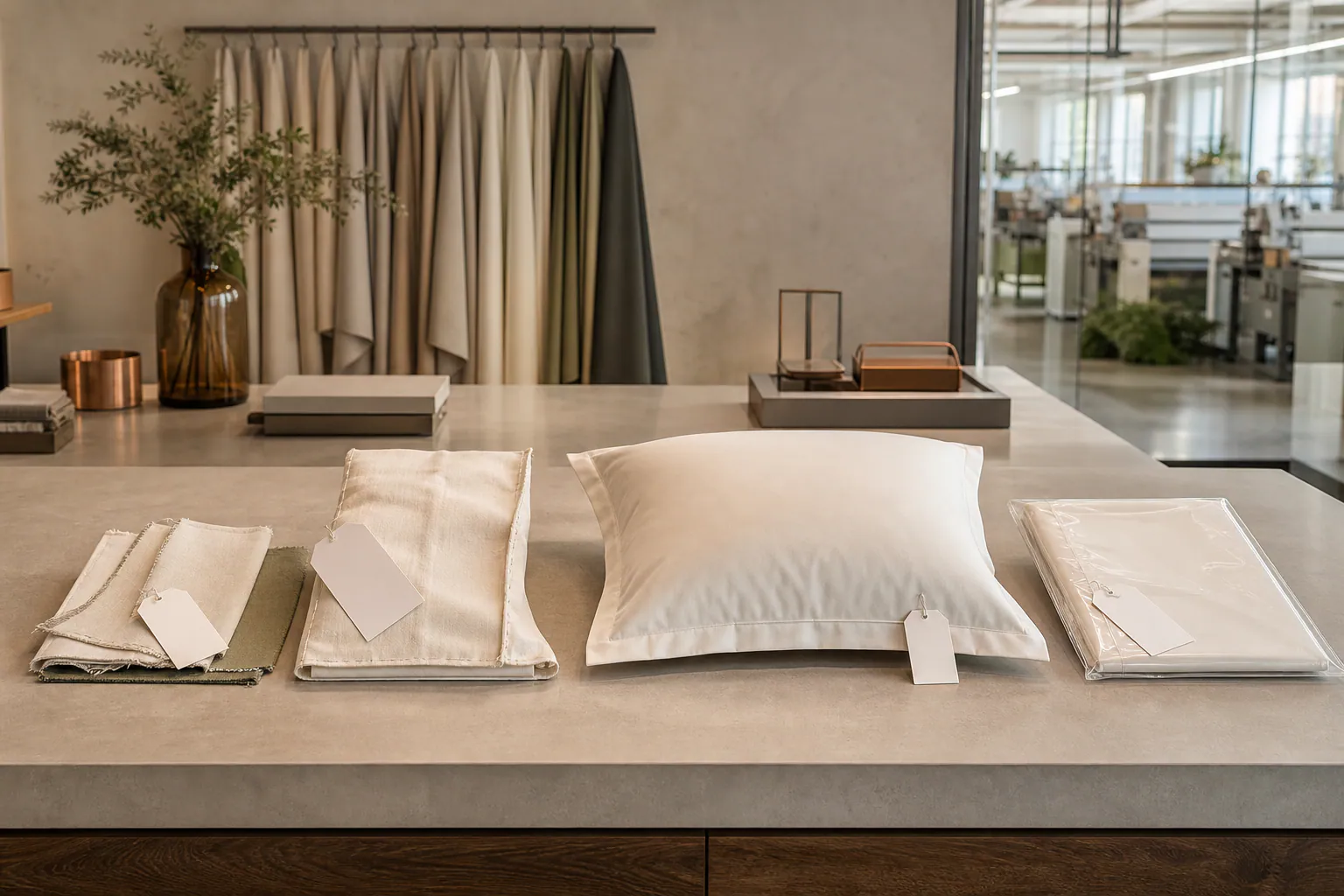
Compare a flat pack with any folded presentation proposed by the supplier. A fold through the center may change the immediate tabletop appearance, so open the actual trial pack before approval. Keep the Christmas motif visible without allowing an insert card to cover every construction detail. State the number of textile pieces and whether matching designs or mixed motifs make up the set.
Use the set packout checklist to verify those counts. Ask how custom quilting, motif changes and mixed packs affect minimums and sampling. Confirm the development sequence before assigning a campaign launch date. The compact size is not evidence that production or delivery can bypass normal approval steps.
- Inspect the rug after opening the proposed retail pack.
- Declare piece counts, accessories and mixed-design scope.
Give FY Bedding the representative cup footprint, target rug dimensions and Christmas motif. Request an assembled sample with its layers, edge construction and packaging. Approve the useful surface and evidence scope before treating the design as a seasonal gift product.