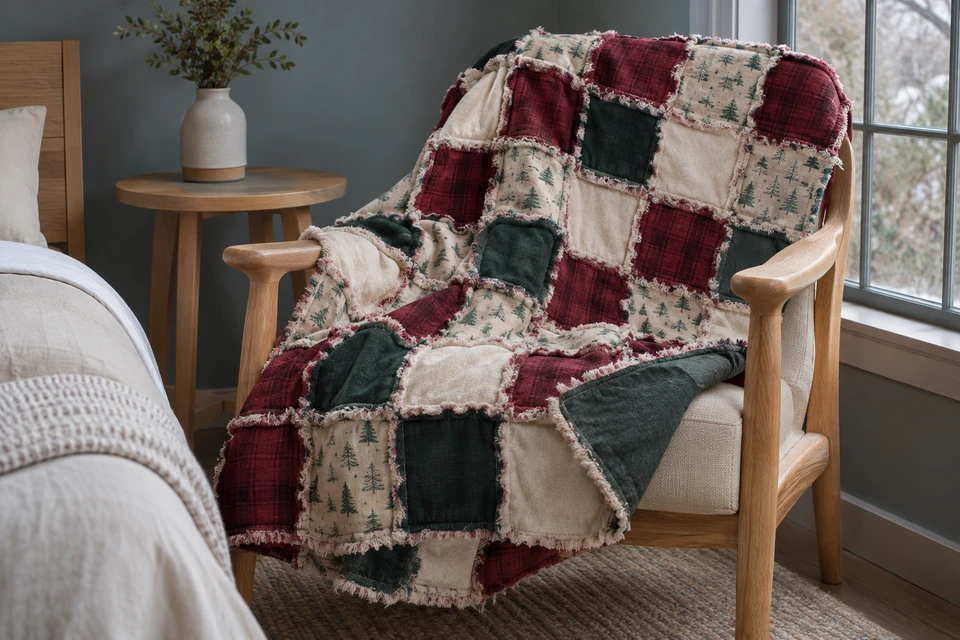
The deliberately frayed joins of a rag quilt can be mistaken for unfinished workmanship when the purchase specification shows only a festive patchwork layout. The opposite mistake is also possible: calling every loose thread intentional because the design has a ragged surface. A Christmas retail buyer needs a finished-state reference that separates the desired exposed seam texture from an unapproved construction or incomplete finishing.
Name the rag finish in the construction brief
Do not buy ordinary patchwork with an unclear edge instruction
Ask the maker to identify which seams are deliberately exposed and which remain enclosed or otherwise finished. The Nancy Zieman Productions rag-quilt tutorial demonstrates a construction with exposed allowances developed into a frayed effect. That is a useful reference for the distinction, not a production specification for every textile or evidence that FY Bedding offers the same fabrics and process. The actual project still needs its own materials and approved sample.
Show the face and reverse of the proposed throw, including a corner and an intersection between several blocks. State whether the ragged effect runs between all blocks, only selected sections or the outer perimeter as well. A drawing of red, green and ivory squares cannot answer those questions. Keep the layer arrangement, block construction and finished edge description together so a quotation for a smooth-seamed patchwork throw is recognised as a different proposal.
Judge the Christmas print after the seams are finished
The visible block is smaller than its cut piece
Place important seasonal motifs within the area that remains visible after sewing and developing the exposed allowance. A small evergreen or snowflake near a cut edge may be partly concealed by the finished seam ridge. Decide whether that is acceptable for the selected print. Compare actual finished blocks rather than calculating the visible effect from an unsewn square alone, because the surface texture may obscure a little more of the design from an oblique view.
Prepare a layout using the proposed mix of plain and printed blocks. Look at the overall rhythm from the distance at which the throw will be displayed, then examine the crowded intersections more closely. A dense small print may become visually busy beside a broad frayed ridge. The buyer can change block size, print allocation or the desired finish, but each is a design decision that should be carried through to the sample and quote.
Agree the state in which the throw will be supplied
Before and after finishing are not interchangeable references
Identify the finishing steps represented by the submitted sample and the state intended for shipment. Ask whether the exposed allowances will already have the accepted developed texture when packed or whether the buyer is being shown a sample that has received additional treatment. Record any departure from routine production. A sample that has been repeatedly prepared for photography cannot silently become the acceptance reference for units shipped in another state.
Retain close photographs of the accepted seam texture, but include a complete throw as well. Local texture can look satisfactory while the piece has changed shape or its edges no longer lie as intended. Define the measurement basis and review both faces without stretching the throw into position. Do not promise a particular amount of softening, fraying or dimensional change after customer care without evidence for the actual finished construction and stated care route.
Establish a boundary for loose material
An intentional frayed allowance is not unlimited tolerance
Describe the expected exposed fibres and the surrounding seam condition against the retained reference. Record long free thread tails, detached fragments, areas where the join is visibly open and differences between blocks as separate findings. Inspection staff need to know which observation can be compared visually and which requires a technical hold. Do not instruct them to trim everything that protrudes: indiscriminate cutting can change the intended finish or affect a structural thread.
Ask the responsible production team to propose the finishing and checking method appropriate to the chosen materials. Any care or handling assessment should identify the sample, procedure and observations, including the effect on the reverse and adjoining blocks. A decorative surface approval does not establish strength, shedding performance or suitability for every user. Keep those evidence questions explicit and avoid turning a single attractive sample into a general quality or compliance claim.
Test the folded retail presentation
Show the texture without hiding the supplied condition
Fold the actual finished throw into the proposed pack and decide which block and seam areas the shopper will see. A packaging window that reveals only plain fabric may fail to communicate the rag-quilt construction, while a tightly compressed fold can disguise the texture that made the item appealing. Review the pack with its true contents and reopen it before approving the presentation photograph.
Compare the unpacked throw with the retained finished-state reference before brushing, shaking or arranging it. If an ordinary preparation step is expected, specify it and trial it with someone outside the sample team. Check whether the pack keeps variants identifiable and whether surface fragments create a receiving concern that needs another finishing review. Do not solve a material or construction issue only by changing the camera angle or removing visible evidence from the photograph.
Make the offer comparable at release
Tie the festive layout to a finished article
Request quotations against the same block layout, materials, layer arrangement, exposed-seam scope, finished size and pack. Ask suppliers to identify any alternate finish as a separate option. Minimums and sampling stages should refer to that complete proposal, not simply to the number of printed colours. If the seasonal layout changes late, confirm whether the existing block sample still represents the new arrangement.
An FY Bedding enquiry should include the intended rag texture, the Christmas print references and the state expected on receipt. Request feasibility confirmation and a production-intent throw with its proposed pack. Keep delivery planning separate from design approval and confirm any required dates through the actual order process. The buyer's final reference should explain both why the seams look deliberately frayed and where that deliberate effect stops being the agreed product.
Approve the exposed-seam map, remaining visible print area and supplied finished state, with clear boundaries for loose material and an unpacked retail comparison.
Method references: Nancy Zieman Productions: exposed rag-quilt seam construction.