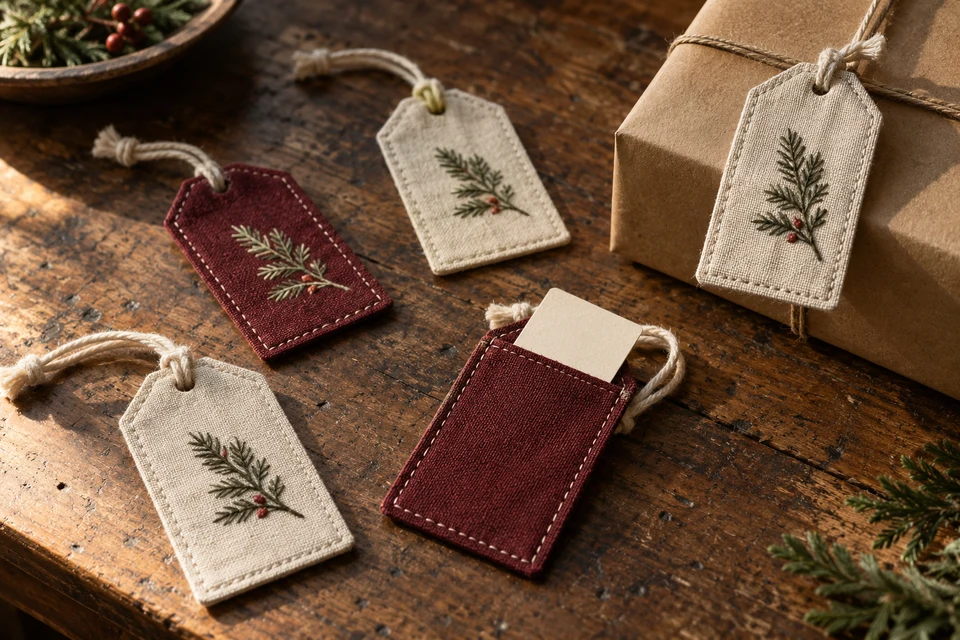
A small embroidered fabric tag can remain with a gift after the Christmas message has become outdated. That is useful only if the message area and attachment can actually be refreshed. Decide whether the name is permanent, written on the cloth or held on a removable insert. The answer changes the construction, selling pack and reuse explanation. These decorative gift accessories are not substitutes for required product labels or traceability information.
Choose how the message will change
Reusable decoration needs a workable message plan
Compare a permanent embroidered name with a blank cloth panel and a removable paper insert. Each creates a different product and customer expectation. If an insert is selected, define its dimensions and how it can be replaced without taking apart the textile tag. If writing directly on cloth is proposed, ask what writing and cleaning method the supplier has actually evaluated rather than advertising that any pen will wash away.
Use the reusable presentation brief to distinguish a plausible second use from a broad sustainability claim. The decorative textile face can remain attractive while the message component is replaced, but that mechanism does not by itself prove environmental superiority or a particular service life.
- Select permanent, writable or replaceable message construction explicitly.
- Avoid promising erasure or cleaning without the relevant sample evidence.
Keep the seasonal motif away from the working area
Decoration and message have different jobs
Place the Christmas sprig, star or other motif where it does not obscure the message opening or make the insert difficult to read. Review both faces at actual size. An embroidered border can consume more space than a digital layout suggests, and a thick seam may reduce the clear pocket opening. Decide whether the tag will hang vertically or horizontally before approving the relationship between the loop and motif.
Use the embroidery sample review for stitch appearance while keeping the tag's message function separate. Inspect the reverse where backing, thread ends or a seam may contact the insert. Do not infer that a decorative embroidery sample demonstrates the finished pocket's fit or the attachment's suitability.
- Approve the actual-size front and reverse faces.
- Measure the usable message opening between finished seams.
Trial inserting and removing a message
A replaceable part should be easy to handle
Prepare the intended insert and ask a person unfamiliar with the prototype to place it in the pocket and remove it. Observe whether the corners catch, the card buckles or the visible message area changes as the tag hangs. Compare the smallest and largest insert thicknesses that the offer intends to support. Do not rely on a carefully trimmed photography insert when the retail pack will contain a different stock.
The insert contact checklist helps document contact points, although this small message pocket needs its own sample. Decide whether replacement inserts are supplied, sold separately or cut by the customer. If a template is provided, verify it against the finished pocket instead of copying the nominal artwork dimensions.
- Trial insertion and removal with the actual supplied insert.
- Define how a recipient obtains a correctly sized replacement.
Define the attachment as part of the accessory
A loop is not automatically a carrying handle
Record the loop or tie material, finished length and attachment position. Trial it on the proposed gift wrap, ribbon or box arrangement, keeping the tag face visible. Ask whether the accessory can be removed without tearing the message panel or dismantling the gift packaging. Any intended strength or other functional claim needs its own applicable evidence; this handling exercise only helps describe the presentation and removal sequence.
Use the hangtag attachment workflow for documenting routes and included components. Keep the decorative tag distinct from the product's required identity and care labels. A recipient may remove or reuse the gift tag, so essential product information should not depend on it remaining attached forever.
- Approve the removal route as well as the displayed position.
- Keep required product information on its appropriate controlled label.
Count tags and inserts separately
The advertised set should match a complete gifting task
Specify the number of textile tags, ties and message inserts in one selling pack. If extra inserts are included for future use, list them clearly rather than implying that extra tags are supplied. Review a complete assortment of motifs and colors, checking that the selected pack can be counted without opening every message pocket. A set photograph should not contain accessories that are absent from the delivered unit without a clear explanation.
Use the set-completeness record to lock those counts. Ask the supplier for actual minimums for each embroidered motif and cloth color, plus any packing or personalization stage. Compare a stock motif range with a custom assortment as distinct options. Confirm the development schedule before advertising seasonal availability or an unlimited personalization service.
- Count textile bodies, ties and replacement inserts independently.
- Quote stock motifs and custom variants on separate lines.
Approve a complete tag with an actual message insert, a demonstrated removal route and a counted selling pack. FY Bedding can review the accessory specification; any reuse or environmental claim should remain limited to what the finished product and supporting evidence establish.