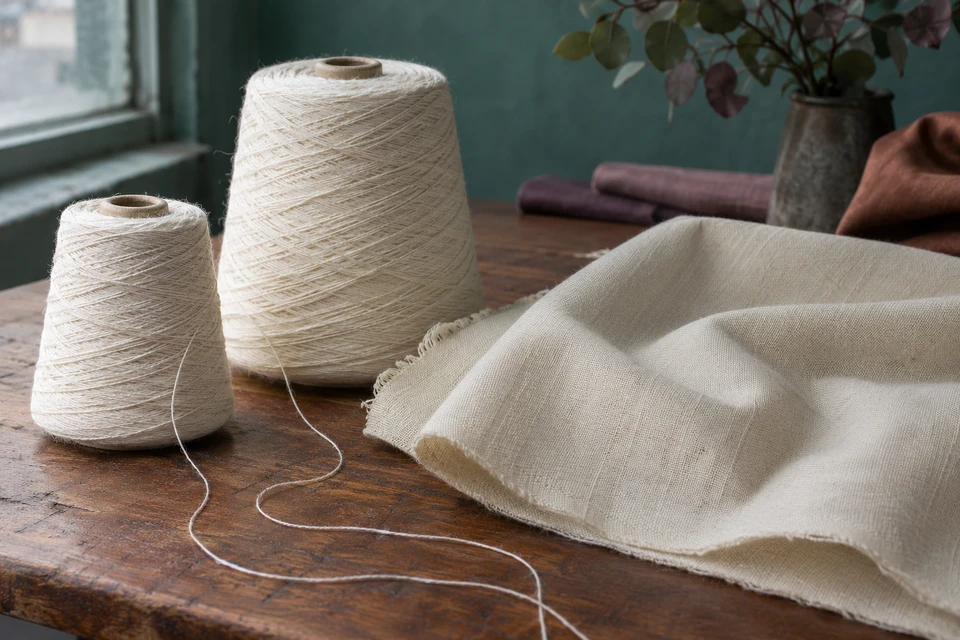
The word compact can describe different operations in textile sourcing, so a compact-cotton claim is not yet a clear bedding specification. Buyers should ask what was compacted, at which stage, and how that declaration connects to the yarn and finished fabric actually proposed.
Locate the operation in the production route
Yarn compaction is not finished-fabric compacting
Rieter describes compact spinning as condensing the fibre bundle before twist is introduced, reducing the spinning triangle. That is a yarn-production concept. It should not be confused with a later fabric-compacting operation or a general description of a dense-feeling cloth. Ask the supplier to name the process they mean and identify the stage at which it occurs. A quotation that simply says compact cotton leaves room for incompatible interpretations across the buyer, fabric supplier and yarn source.
Record the proposed yarn route separately from the fabric construction and finishing route. If the supplier uses an internal product name containing the word compact, request its technical meaning rather than assuming it refers to a particular spinning system. Do not require a named machinery brand unless that is a justified and agreed project requirement. Equally, do not repeat a brand name in marketing merely because it appeared in a technical discussion. A process explanation does not establish a verified supply-chain relationship.
Keep combing as a separate question
Compact and combed are not interchangeable approvals
Rieter's compact-spinning description includes applications involving both carded and combed cotton. For procurement, the important distinction is that preparation and spinning are separate parts of the yarn route. Ask whether the proposed cotton yarn is carded or combed and whether it is compact spun. Do not infer one answer from the other. A buyer who intended combed compact yarn could otherwise approve a quotation that answers only the compact-spinning part of the requirement.
The same discipline applies to fibre composition and yarn construction. Ask for the declared cotton content, count system, ply information and other attributes needed for the intended fabric. The word cotton in a sample label should be supported by the appropriate material information; a cream-coloured cone cannot establish its composition. Keep the supplier's confirmed fields and any pending evidence visible in the specification. Unresolved details should not disappear when a sales description is shortened for a collection page.
Request evidence tied to the supplied yarn
A machine brochure is background, not lot identification
A machinery-maker's technical page can explain a process, but it cannot prove how a particular yarn lot was made. Ask the supplier what traceable documentation is available for the proposed material and how the yarn reference links to the fabric sample. The appropriate evidence may differ with the supply arrangement. Agree what is needed before the order rather than accepting a generic brochure as a substitute for project-specific identification or demanding unrelated confidential records without a defined purpose.
If a claim names a proprietary system or particular source, ask for support for that exact statement. Do not expand a limited supplier declaration into a blanket assertion about every FY Bedding product. A change in yarn source should be visible in the approval process even where the nominal count and composition remain unchanged. The buyer needs to know whether a replacement preserves the agreed route and material attributes, or whether it is a proposed alternative requiring review.
Compare yarn options without changing the whole fabric
Isolate the purchasing question where practical
When evaluating a compact-spun option against another yarn route, ask for a comparison that keeps the other relevant attributes as consistent as practical. Record any differences that cannot be held constant, including count, ply, composition, fabric construction or finishing. If all of these change, the buyer may still choose between two finished fabrics, but cannot confidently attribute the observed result to compact spinning alone. Be explicit about whether the exercise is a process comparison or an overall material selection.
Use physical fabric samples and the required test evidence rather than relying only on yarn-cone photographs. The finished bedding hand and appearance reflect more than the spinning route. A visually tidy yarn does not automatically establish superior pilling behaviour, strength, comfort or service life in the final product. Equipment manufacturers may publish benefits for their technology under stated conditions; those figures should not be transferred to a supplier's fabric or FY Bedding article without corresponding evidence for the actual material.
Approve the finished product requirement independently
A process preference does not replace performance criteria
Define what the buyer needs from the bedding item: the intended use, appearance, hand, dimensions, care conditions and relevant performance evidence. Then assess whether the proposed yarn and fabric satisfy those requirements. If compact spinning is a mandatory process attribute, record it as such, but keep the finished-product acceptance criteria separate. A correctly declared route can still produce a fabric that does not meet the buyer's chosen specification, while a different route may deserve consideration as an openly identified alternative.
Discuss test methods and acceptance levels with the supplier and a competent testing party where needed. Do not invent a universal advantage or percentage improvement from the process name. Keep test reports tied to identified samples and ensure their scope matches the claim being considered. A result for one construction, finish or care condition should not be used to describe a whole collection. This prevents a technical yarn preference from becoming an unsupported promise in retail, hospitality or private-label marketing.
Control substitution through a clear order record
Ask the same question at replenishment
The order record should connect fibre declaration, preparation route, spinning route, yarn specification, fabric reference and approved finished sample. Ask the supplier which of these may change without altering the commercial product and agree the notification process. Where the buyer requires compact-spun yarn, a substitute should not be accepted solely because its finished sample looks similar. Review the declared change, supporting evidence and effect on the approved product before authorising it.
FY Bedding enquiries can include the intended bedding construction, quantity, preferred yarn route and the evidence required for approval. Minimum quantities, sample availability and timing depend on the actual proposal and should be confirmed rather than inferred from a technology description. At receiving or replenishment, use the agreed identification and inspection plan to compare the supplied material with the approved reference. The useful outcome is a precise, supported specification, not a longer marketing label built around an ambiguous word.
Ask whether compact refers to fibre-bundle control during spinning, confirm carded or combed preparation separately, and connect the yarn declaration to the finished fabric. Keep process evidence and finished-product performance evidence distinct throughout approval and replenishment.
Method references: Rieter: compact spinning and fibre-bundle condensation.