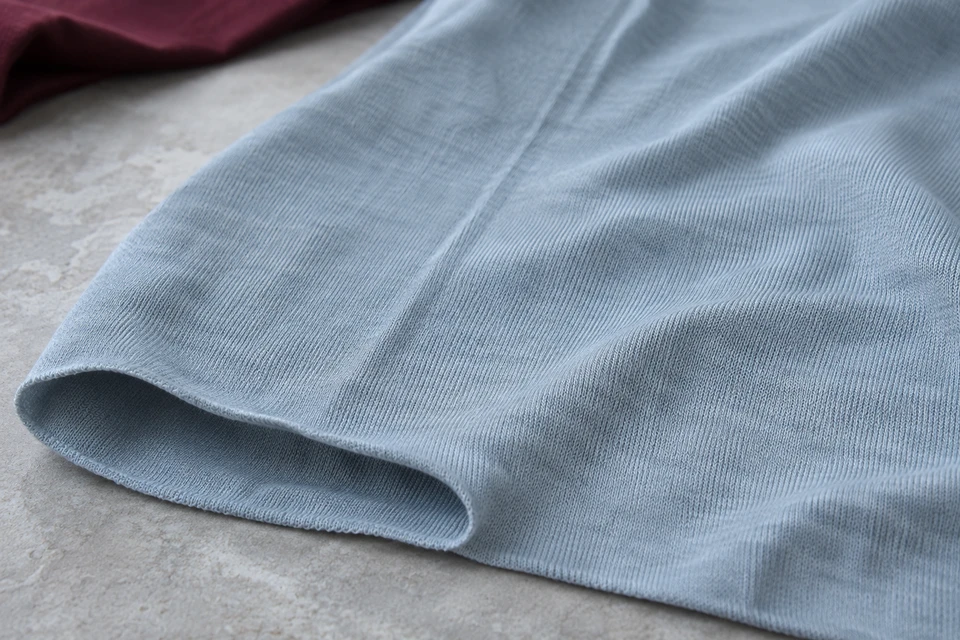
A narrow line along a flattened tubular knit can look like an ordinary packing fold until the fabric is opened for cutting. If the line remains conspicuous after the agreed preparation, it may enter the visible face of every piece cut across it. Buyers should locate and document the observation before conversion, then ask the supplier to establish its cause and disposition. Naming every fold a compactor defect is no more useful than dismissing every persistent line as temporary packaging.
Confirm the fabric route before assigning a defect name
A similar line can have another origin
CottonWorks' compactor-crease example describes wrinkles at the folded edges of a flattened knit tube being pressed into hard creases during compaction. This is a specific documented defect mechanism, not proof that any line in your delivery has the same cause. Ask whether the offered fabric was processed in tubular form, when it was compacted and how it was subsequently opened, folded or rolled. Keep the process account connected to the received lot.
Distinguish this investigation from woven reed lines and from a finished fitted sheet that rotates after care. Those are different observations and require different evidence. Here the first question is whether a persistent line follows a former tubular fold before the fabric is cut. Record what can actually be seen and felt, and allow the supplier's technical team to evaluate the cause using the process history and representative material.
Preserve the fold location during opening
Do not lose the reference while making the fabric easier to inspect
Identify the package, roll or piece before unwrapping. Photograph how the fabric arrives and mark the former fold positions in the inspection record. Open a representative section without pulling it flat aggressively or applying heat to make the line disappear. If the fabric has already been slit, ask how the original tube and fold locations relate to the current width. A line measured from the wrong edge can be difficult to trace back through production.
Record the observation's direction, approximate extent and position relative to those references. Note whether it appears on one fold, both folds or elsewhere. Include unaffected neighbouring fabric in the photographs and retain a physical section where appropriate. A tight crop of a crease alone may show its severity but conceal the location information needed to decide whether a cutting layout is affected. Keep both close and wider views.
Use agreed preparation before judging persistence
Exceptional treatment can conceal an unresolved receiving issue
Allow the specimen to reach the agreed review condition and apply only the preparation selected for the comparison. Record the handling and timing. Do not steam one sample heavily while judging another directly from the pack, then conclude that their surfaces are equivalent. If a proposed recovery treatment is part of the supplier's corrective route, evaluate it as a separate identified trial rather than quietly incorporating it into routine inspection.
Look under ordinary lighting and a consistent low-angle light that helps reveal the line. Check both faces and avoid stretching the knit merely to improve the photograph. Describe whether the observation remains a visible line, a raised or depressed ridge, or another surface difference. Do not infer a numerical strength loss or permanent damage from appearance alone. If the intended product needs additional assessment, agree the relevant evaluation with a qualified provider.
Relate the affected strip to the actual cut panels
Usable width is not just the delivered width
Place the proposed cutting layout against a documented map of the fabric width and fold-line locations. Determine which finished panels would include the observation and where it would appear after assembly. A line near an apparent edge can still enter a visible pillowcase face if the cutting plan uses that area. Conversely, a genuinely excluded strip may not affect the selected product, but that exclusion should be explicit rather than assumed.
Ask the supplier to quantify the commercial consequences of any proposed exclusion or recut route using the actual layout. Do not invent a waste percentage or accept a price comparison based on nominal width when the usable material differs. Keep the decision tied to the agreed appearance standard and quantities. A revised cut plan may change consumption, panel orientation or seam placement, each of which should be reviewed before production continues.
Choose a documented disposition with a verification point
A verbal promise to press it out is not a release record
Possible responses depend on the actual material and investigation: a representative reprocessing trial, replacement material, an approved exclusion or another agreed route. Ask the supplier to propose and substantiate the option rather than instructing an unqualified operator to change compactor settings. Hold affected conversion while the decision is unresolved. The purchasing record should identify the lot and the scope of the hold, not imply that every unrelated delivery is defective.
After a corrective trial, compare the treated material under the same review conditions and inspect a representative finished sample if the use warrants it. Confirm that solving the visible crease has not created an unreviewed change elsewhere in the specification. Keep earlier observations and the accepted disposition together. If a concession is approved for a defined quantity, make its boundaries explicit so it does not become an undocumented default for later orders.
Share the received fabric information, fold map, intended cut panels and photographs with FY Bedding when discussing a knit bedding project. Ask for a scoped material review and an identified sample route before committing the full quantity to cutting. Keep dimensional stability, care performance and the visible crease decision as related but separate approvals. This prevents a general statement that the fabric was compacted from obscuring the specific surface condition the buyer will receive.
Has the persistent line been mapped to the actual former fold and finished cut panels, with a documented supplier disposition verified before affected material is released for conversion?
Method references: CottonWorks: compactor crease in flattened tubular knit fabric.