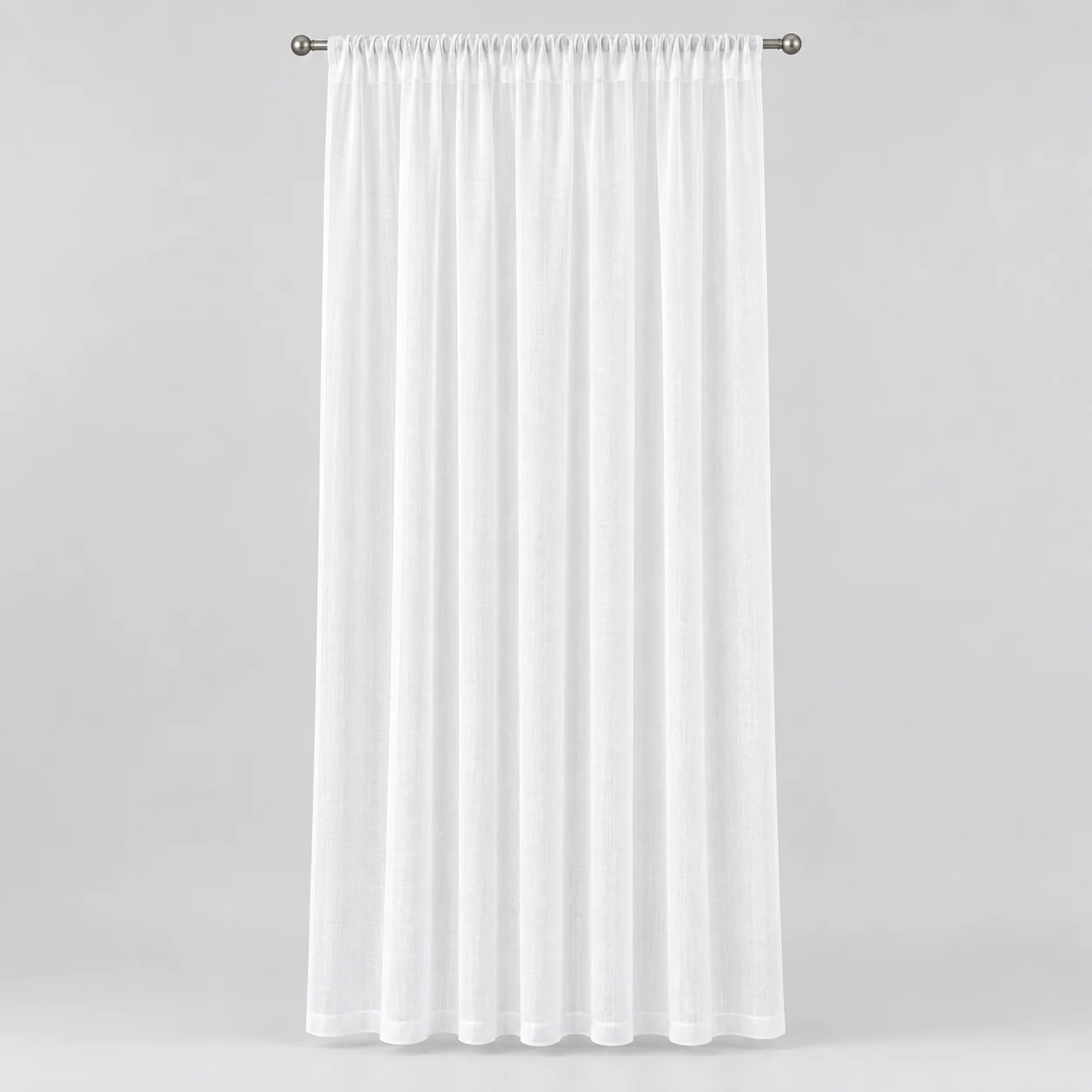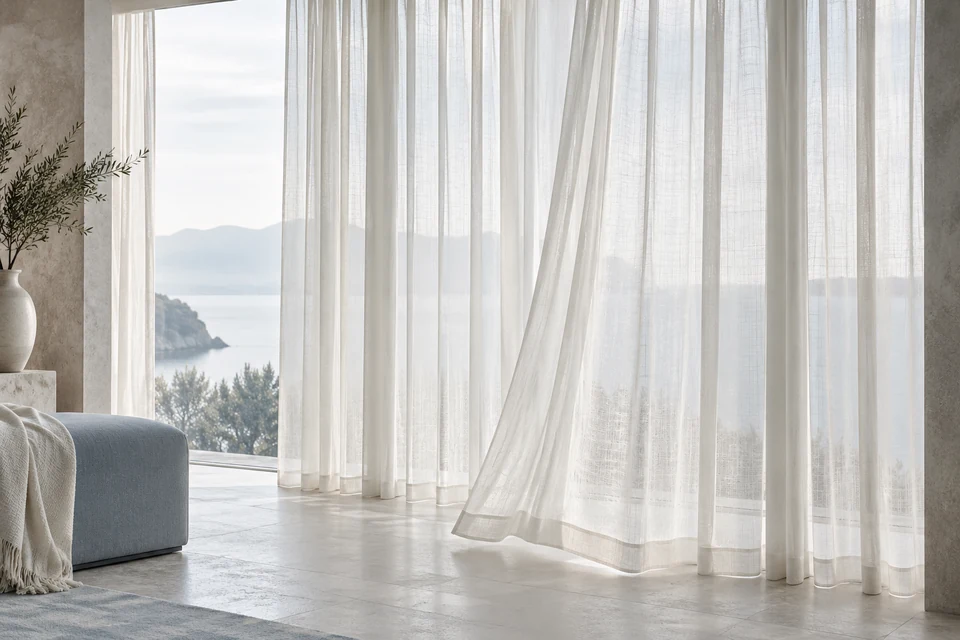
A sheer curtain selected on a sample card can present quite differently across a window. The background, room lighting, folds and panel overlaps all become part of the view. For a cotton voile project, the buyer's first job is to describe the intended visual filtering clearly. That is a narrower and more useful task than calling the fabric private, light-blocking or suitable for every hotel room without examining the complete arrangement.
Start with an identified cloth, not the word sheer
Separate product naming from the approved material
Rijs Textiles describes its own cotton voile range as lightweight and semi-transparent and lists curtain uses. This provides a commercial example, not a universal weight, finish or specification for all voile. Ask for the composition, usable width, fabric reference, finish and proposed colour of the actual offered material. If a supplier presents several qualities under the same voile label, identify each separately before the visual review.
Keep the fabric-selection decision distinct from the full window survey. The hotel curtain specification guide covers the complete installation brief. Here, the priority is what the chosen sheer looks like between the viewer and the room background. Neither a fibre name nor an attractive room photograph establishes a privacy, UV, thermal or fire-performance claim for the finished curtain.
Describe the views that the curtain must handle
Review both sides under relevant lighting
List the actual viewing situations: looking toward a bright exterior from inside, viewing the window from an adjacent occupied area, and using the room with interior lights on. Use representative objects and backgrounds at realistic positions during the mock-up. Do not declare a privacy result from a daylight-only photograph. Record the conditions and the buyer's visual observations so a later sample can be compared without recreating the room by memory.
Place the material in a documented room mock-up where possible. Assess appearance from the normal seated and standing positions, not only with the camera pressed against the cloth. If the operational brief requires reliable visual screening, the design team must assess the full treatment and appropriate evidence. A decorative sheer may need to work with a separate layer; adding more fabric is not an automatic substitute for that decision.
- Record lighting, background and viewing position.
- Separate preferred visual softness from a measurable performance requirement.
Compare the panel flat, gathered and overlapped
The installed folds are part of the appearance
Suspend enough cloth to show several representative folds rather than judging a narrow strip. Compare the open areas, the deeper folds and the overlap between adjacent panels. Ask whether the resulting changes in visual density belong to the design or look accidental. Review each proposed colour independently: approval of an undyed-looking sample should not silently approve the look of every dyed option in the same construction.
Choose the proposed fullness with the complete heading and track arrangement in mind. More gathering affects how the sheer is presented and stored; it should not be chosen from a universal multiplier alone. Use the pleat and stackback review for its physical consequences. Keep the visual-density decision and the hardware-clearance decision linked but separately recorded, so changing one does not accidentally invalidate the other.
Make joins and edges part of the sample
A small swatch cannot show every visible line
Ask where the intended panel width requires a join, and request that construction in the hanging sample. Look at the seam, side hems and lower edge against the same light background used to judge the main cloth. Identify lines that are acceptable within the design and lines that distract from it. If a wider fabric is offered as an alternative, compare its actual construction rather than treating width as the only changed variable.
Keep panel orientation and paired-panel appearance explicit. A heading change can alter how the cloth gathers and where prominent lines appear. The heading-tape guide addresses the hanging-height details, while the hem-presentation guide covers the finished lower edge. Refer to those decisions instead of repeatedly adjusting the sample during photography until a different, undocumented curtain is being shown.
- Show any required vertical join in the sample.
- Label orientation, heading revision and the approved hem treatment.
Review care and quantity against the accepted treatment
Quote the curtain that was actually approved
Run the agreed care route on a representative assembled sample, then repeat the hanging observations after the defined preparation. Look for changes in panel shape, the relationship between seams and surrounding cloth, and the visual density of the folds. Do not infer ongoing service life from one short trial. Keep the post-care sample identity and any re-pressing or dressing steps in the record used for approval.
Submit a panel schedule showing sizes, pair quantities, colour references and the accepted fabric and heading revisions. Ask which material or finishing commitments control minimums and replenishment. Record any separate lining or privacy layer as a distinct component, not an assumed feature of the voile. Use the specification toolkit to organize the evidence, then request a hanging sample for FY Bedding's project review. The manufacturing route, price and delivery plan need confirmation against that complete scope.
Approve the cotton voile only after the identified cloth has been viewed with representative folds, joins, backgrounds and lighting, and the complete panel schedule points to that same sample. Keep privacy and other performance requirements separate from visual preference.
Method references: Rijs Textiles: its cotton voile fabric range and curtain applications.