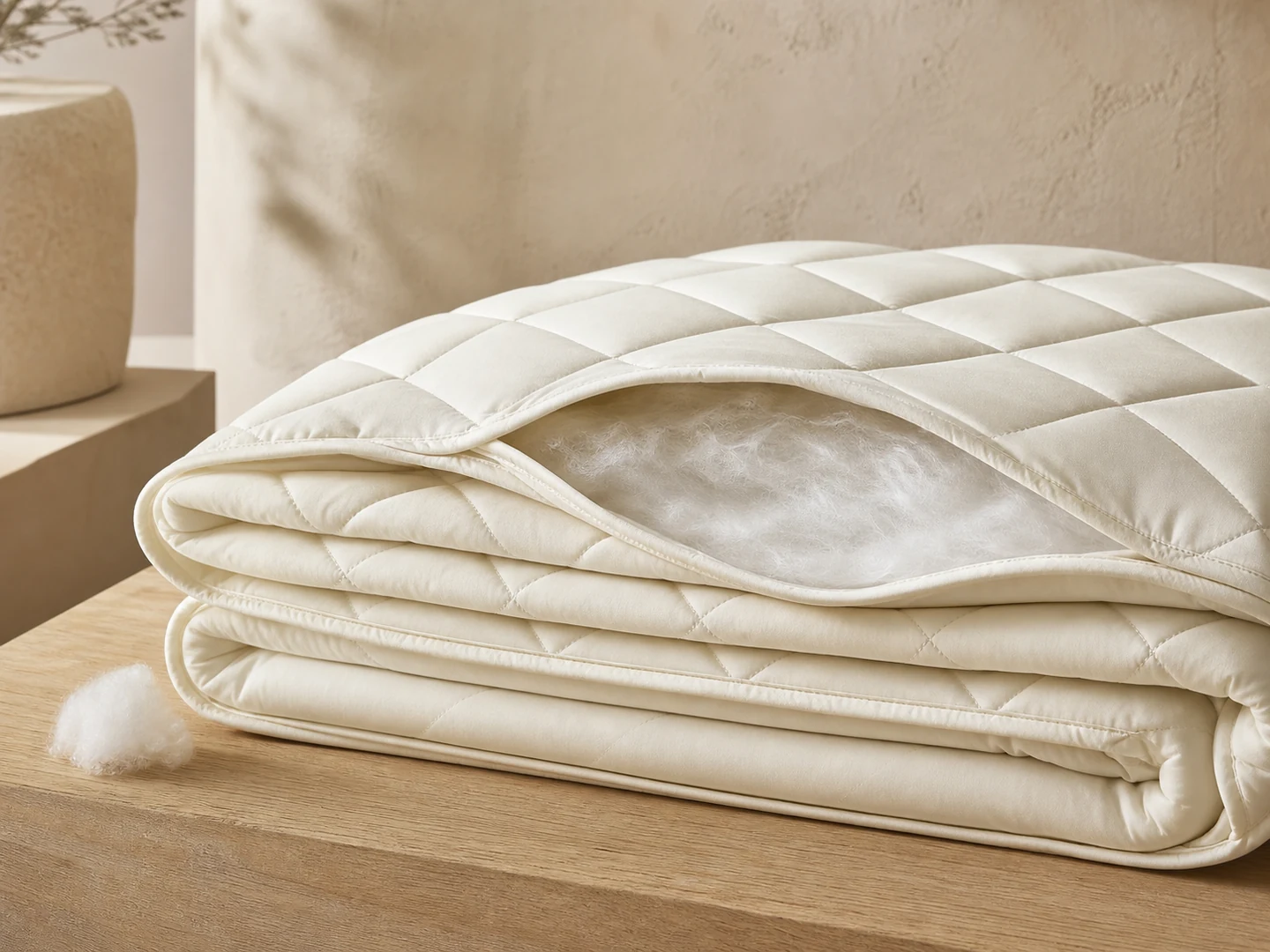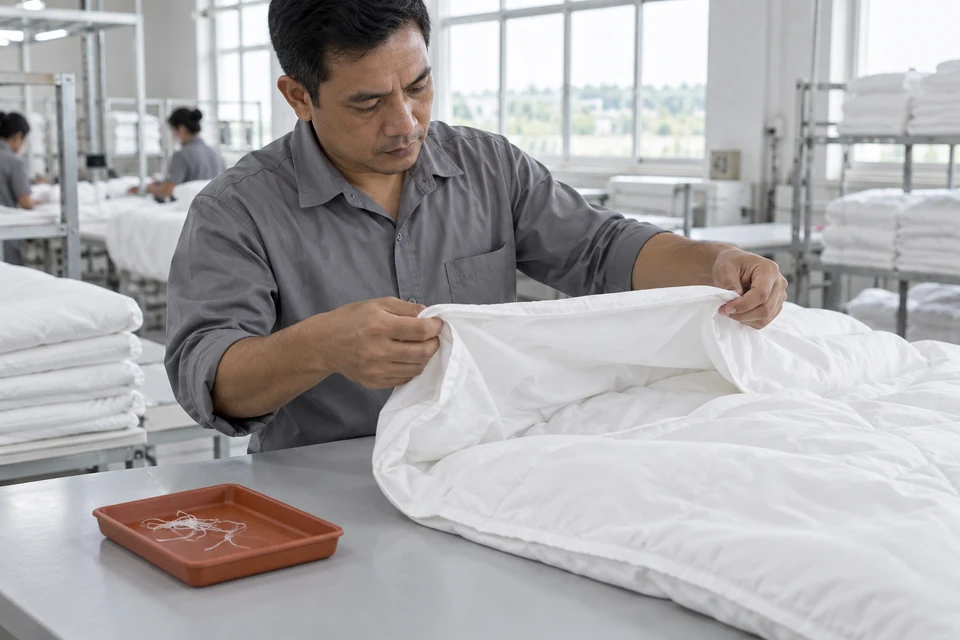
Loose thread offcuts inside a duvet cover can remain invisible through a tidy exterior inspection and appear only when housekeeping inserts the duvet. The buyer needs a cleanout requirement that distinguishes removable debris from structural sewing threads. An instruction to cut every visible thread is not a safe substitute for that distinction. Define the interior review, authorized cleanout method and final check before the product is folded into its retail or hotel delivery pack.
Define the interior scope
Exterior appearance is not enough
Show which parts of the duvet cover must be opened or turned for review, including interior corners, the closure area and seam intersections. Different closure constructions offer different access, so the inspection instruction should match the actual product rather than a generic bedding photograph. Link this scope to the closure construction specification and identify any areas that cannot be examined without a different approved handling method.
State the sample condition and inspection stage. An interior check before closure completion does not prove the item remains clean after subsequent sewing, finishing and packing. The inspection-stage plan can assign responsibility at the point where loose offcuts are generated and again before packout. Buyers should require a clear handover between those stages so the final checker is not expected to compensate for an undefined upstream process.
- Identify corners, seams and closure zones in scope.
- Match access instructions to the actual construction.
- Record when the interior check takes place.
- Assign responsibility for later contamination risks.
Distinguish loose debris
Protect structural stitching
Prepare close reference images showing detached offcuts and the intentional stitching or thread ends that belong to the construction. If a checker cannot tell whether a thread is structural, the item should be referred to an authorized sewing specialist rather than pulled or cut on guesswork. The purchasing requirement is a clean finished interior, not permission for untrained staff to alter a seam in order to improve appearance.
Use the approved seam and stitch reference to make that boundary explicit. Where a questionable thread occurs at a repair, record the location and review the repair against the appropriate instruction. This cleanout check does not replace needle and metal control, which requires its own process and evidence. Combining these topics into a vague cleanliness promise would obscure different risks and responsibilities.
- Provide examples of removable detached offcuts.
- Protect intentional backtacks and structural stitching.
- Refer uncertain cases to authorized technical staff.
- Keep foreign-object controls separately documented.
Agree the cleanout method
Avoid introducing new damage
Ask the factory to describe its proposed method for removing detached threads from the interior and how it prevents damage or recontamination. The method must be appropriate for the fabric and construction and carried out under the site's authorized work instruction. Buyers should not prescribe improvised compressed-air use, sharp-tool actions or other equipment procedures from a distance. Instead, request a demonstration on a representative sample and examine the resulting condition.
After cleanout, look for snagged yarns, altered stitches, marks and debris moved into a different corner rather than removed. A white cover on a cluttered or contrasting work surface may pick up unrelated fibers during handling, so record the inspection surface and segregation of cleaned pieces. Connect visible yarn damage to the surface-damage review rather than calling it acceptable simply because the original loose thread is gone.
- Use an authorized method suited to the material.
- Demonstrate the process on representative construction.
- Inspect for damage introduced during cleanout.
- Separate cleaned pieces from unreviewed stock.
Verify before final folding
Preserve a traceable packout boundary
Define how the final interior result will be checked before the cover is folded and packed. The agreed inspection plan should specify the population, selection approach and recording method without assuming that one opened sample represents every packed item. If loose debris is found repeatedly, record the affected work period or lot and decide whether containment or additional review is necessary before the packing team continues with the same stock.
Keep the cleanout record linked to the packout completeness check. A cover opened for inspection must return to the correct size and assortment, with its required components accounted for. The checker should not create a clean interior at the cost of mixing products or losing closure accessories. A short first-pack review after the process changes can help establish that cleanliness and product identity are both preserved.
- Record the inspection population and selection method.
- Link findings to the relevant lot or work period.
- Reconcile components after opening a packed sample.
- Escalate recurring findings before continuing release.
Translate findings into a buying decision
Require evidence of closure
An acceptable response to a cleanout issue should show the original finding, the affected scope, the action taken and the result of the agreed follow-up review. A statement that workers were reminded to be careful does not demonstrate the condition of the held stock. Equally, a single clean photograph without sample identity cannot establish that the questioned covers were examined. Ask for records proportionate to the scope and severity of the actual finding.
For a new order, include interior access photographs and the required handover stage in the FY project brief. This allows the supplier to discuss construction and inspection practicality before price and delivery assumptions are finalized. Keep the release decision with the authorized buyer or quality owner. The useful outcome is a repeatable interior-cleanliness requirement, supported by identifiable sample evidence, rather than an unsupported claim that every shipment will be entirely defect-free.
- Retain original and follow-up findings together.
- Verify that the questioned stock is covered.
- Separate corrective action from release authorization.
- Carry the approved cleanout instruction into reorders.
Release the reviewed lot only after interior cleanliness, intact structural stitching and correct packout identity are all confirmed within the agreed inspection scope.