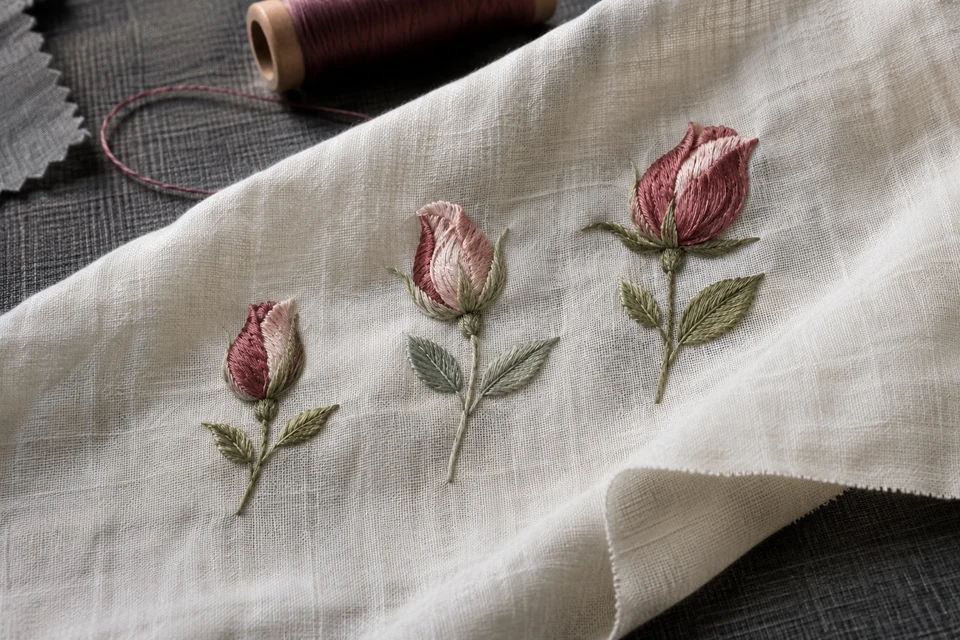
The largest flower often receives the most attention in a floral embroidery proposal, yet the smallest bud can reveal whether the design has been translated successfully. A narrow petal gap may disappear, a short stem may become visually heavy, or a tiny leaf may no longer read as a separate shape. For a bedding buyer, approving that small element early can prevent a much larger bouquet sample from repeating an unresolved problem. The decision is not simply whether the embroidery looks detailed. It is whether the intended botanical character remains clear at the proposed finished scale.
Choose the smallest meaningful motif
Establish what the bud must communicate
Identify the smallest bud that matters to the composition and mark its finished size in the artwork. Explain whether it should appear closed, partly open or simplified into a decorative accent. Those interpretations can require different outlines even when the overall colour palette remains unchanged. Include its relationship to the nearest stem and leaf. A bud viewed alone may seem clear while becoming crowded when placed back inside the bouquet.
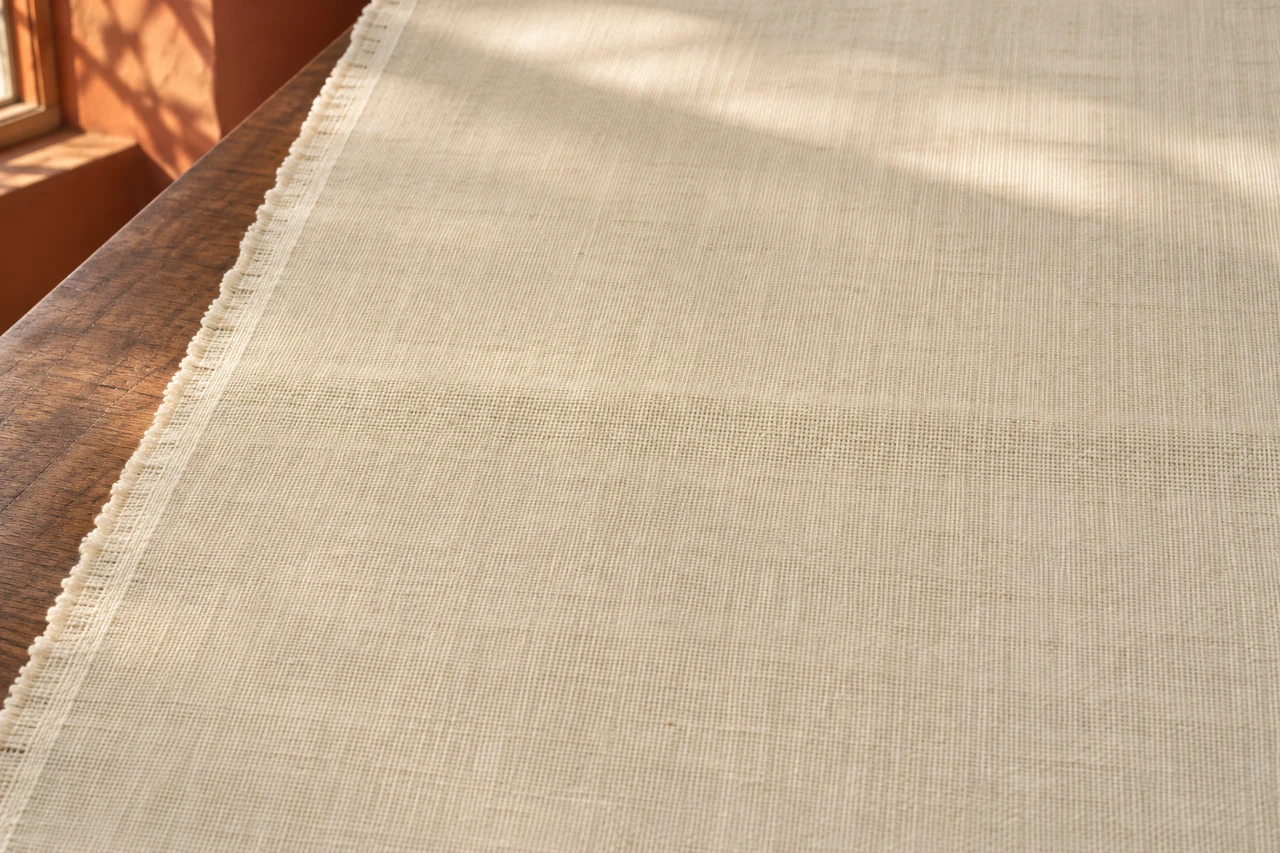
Use a visual reference from FY Bedding's floral series, including FR-01 where relevant to the desired mood, only as a starting point for a new brief. Do not describe the referenced product as embroidered unless that construction is independently confirmed. The proposed embroidery artwork, materials and sampling route must be agreed for the actual project, not inferred from the reference photograph.
Compare stitch interpretations before full placement
Ask for a controlled sample panel
Request several interpretations of the same bud on the proposed ground fabric. Keep finished size and thread colours constant when comparing outline simplification, stitch direction or the treatment of an internal petal gap. A panel that changes every variable at once is attractive to browse but difficult to approve. Label the alternatives in the internal record and identify which single decision each sample is intended to resolve.
Review the panel at normal viewing distance before using magnification. The small bud needs to read as part of bedding, not only as a technical close-up. Then examine the details that explain any difference in appearance. Note whether the petal gap remains open, whether the stem seems proportionate and whether the leaf still separates from the flower. Avoid demanding invisible detail simply because it exists in the original digital artwork.
Inspect the ground and reverse together
Surface appearance is not the whole construction
Turn the sample over and examine the reverse treatment proposed for the finished article. Ask the supplier to identify any backing, supporting layer or finishing step included in the sample. Keep this information with the material specification. Do not assume that a clean face means the reverse is suitable for every bedding application, particularly where the embroidered area may contact skin or remain visible on an open edge.
Place the sample on a flat surface without stretching it into position. Observe the fabric around the bud and along the adjacent stem. If the ground pulls or gathers, document the appearance and ask for a revised construction proposal. A temporary pressing improvement should not be treated as proof of durable performance. Agree the relevant care and handling evaluation for the intended article, then review the same motif again after that procedure has been completed.
Decide what to simplify, enlarge or omit
Preserve the design rather than every line
If the smallest bud cannot be translated clearly at the requested size, consider three separate options: simplify its internal detail, increase its finished size or remove it from the composition. Each changes the design in a different way. Simplification may preserve spacing; enlargement may crowd neighbouring motifs; omission may make a branch appear empty. Review the alternatives within a complete bouquet layout rather than selecting a technically tidy sample in isolation.
Ask the design owner to approve the chosen interpretation explicitly. Do not allow a production technician's sensible simplification to become an undocumented artwork change. The revision record should show the original element, the approved replacement and the affected repeat or placement. Where several buds share the same drawing, confirm whether the decision applies to all of them or only to a particular size. This avoids inconsistent interpretations across pillowcases, cushions and duvet panels.
Release a placement sample after the motif decision
Link the small test to the whole article
Once the bud is approved, request a placement sample that shows it in the full embroidered arrangement. Check its relationship to seams, hems and neighbouring flowers at the finished article dimensions. The successful small panel proves only that one motif interpretation has been accepted; it does not resolve placement, complete workmanship or all product performance requirements. Keep those approvals distinct so the sample sequence remains understandable.
For a development enquiry, send FY Bedding the authorised artwork, the smallest motif size, the proposed bedding components and the intended ground fabric. Request confirmation of sampling stages, revision allowances, minimum quantities and schedule implications. Retain the approved motif panel alongside the final placement sample. Bulk review should refer to both, allowing the team to distinguish a small-detail translation problem from a change in placement or overall colour balance.
Approve the smallest bud on the actual proposed ground before multiplying it across a bouquet; retain the face, reverse and full-placement references together.