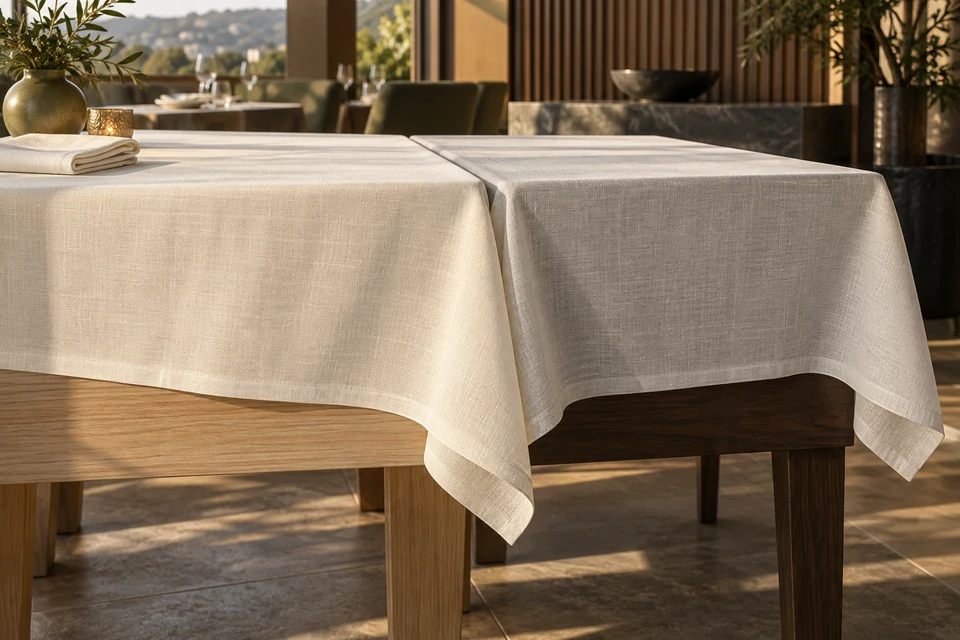
A pale hotel tablecloth can look consistent on a sample table yet reveal an unexpected surface pattern in the restaurant. Opacity approval therefore needs the intended tabletop, any underlay and the actual lighting arrangement. The purchasing decision is whether an identified cloth-and-support combination gives an acceptable presentation, not whether a supplier describes the fabric as heavy or premium. Keep this review separate from finished size, seam placement and stain-removal performance, which need their own evidence.
Map the visible support
Record more than the table dimensions
List the table finishes used across the restaurant and banquet configurations. A pale top, a dark top and a patterned laminate should not automatically share the same appearance approval. Note joins, extension leaves and protective pads that sit below the cloth. The table-linen procurement guide provides the wider furniture matrix; add the support surface as a specific field rather than relying on a room photograph.
Identify whether the property intends to use an underlay every time or only for selected events. A cloth approved with a pad has not been assessed without it. Separate presentation differences attributable to the support from shade differences in the textile itself. Record which setup is representative of ordinary service and which is an exception needing another arrangement.
- Identify each tabletop finish.
- Include extension leaves and joins.
- Record the proposed underlay.
- Flag setups outside the normal arrangement.
Assemble comparable samples
Keep the cloth identity attached to the trial
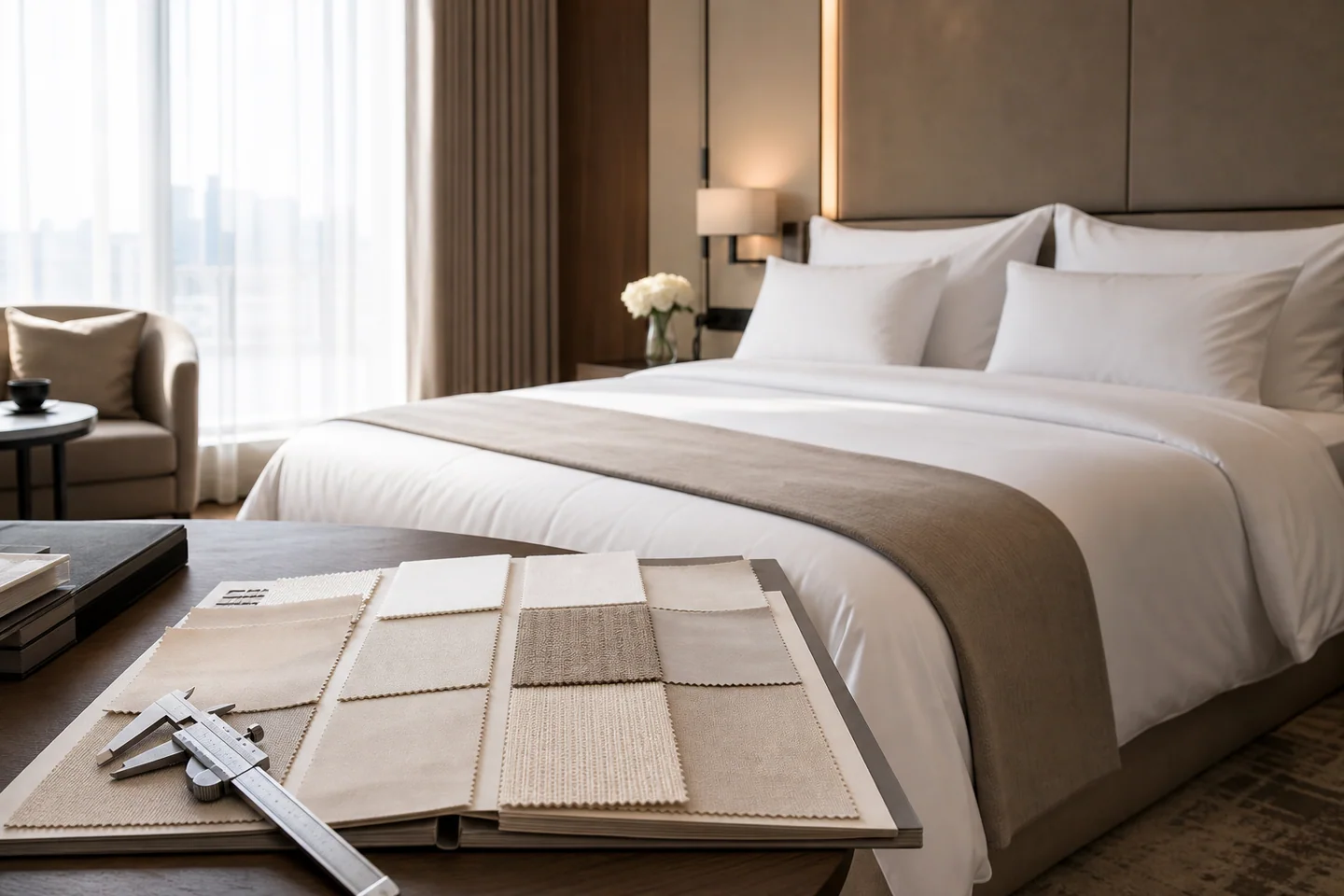
Use finished, identified samples of the proposed fabric and construction. Record the material reference, colour, finish, lot and care state. A loose showroom swatch may help screen possibilities but cannot show the presentation of a full tablecloth over joins and edges. Connect its identity to the approved sample record so later comparisons do not drift toward an unrelated fabric.
Compare candidates over the same support and under the same viewing conditions. Avoid stacking one candidate on another unless that layering is the intended service arrangement. State whether each sample is new or has followed the proposed care route. An apparent improvement achieved by an unrecorded extra layer is not evidence that the single cloth is suitable for the room.
- Use production-intent finished samples.
- Keep colour and lot references visible in records.
- Separate new and care-trial observations.
- Exclude unplanned layers from the comparison.
Review the room presentation
Use operational viewpoints before close-up photographs
Ask the property team to view the dressed table from normal seated and standing positions. Include relevant daytime and evening lighting rather than judging only under a bright inspection lamp. The mock-up approval record can hold the identified setup and viewpoints. Note visible table pattern, contrast at joins and changes near the edge without inventing a universal acceptable opacity percentage.
Photographs should document the comparison, not replace the physical decision. Keep framing and camera settings consistent when possible, and record lighting changes. Automatic exposure can conceal or exaggerate differences. If a numerical material requirement is necessary, have a competent testing provider agree the appropriate method and scope; this room review alone does not establish a laboratory performance rating.
- Review seated and standing views.
- Include intended lighting arrangements.
- Record visible support patterns consistently.
- Distinguish photographs from measured evidence.
Compare the purchasing options
Change one part of the arrangement deliberately
If the support shows through unacceptably, compare a revised cloth, an approved underlay or a restricted use allocation. Each option changes the operating package. A thicker candidate may affect handling, folding and the care process, while an underlay adds another item to store and prepare. Review care consequences through the hotel wash-trial framework instead of assuming that appearance improvement has no operational cost.
Keep the rejected arrangement in the record with its reason. That avoids accepting the same combination later under a different sample name. Compare revised candidates at the actual finished size, because an alternative material may also affect the approved drop and seam position. Refer to the tablecloth seam and drop review when those features change. Treat the review as a purchasing comparison with named options. For example, if one cloth works over pale tables but the restaurant also uses dark extension leaves, the buyer can restrict that cloth to an identified setup or request another combination. Neither decision requires pretending the two surfaces look identical. Record which locations remain covered by the choice and which require separate samples. This helps the quantity plan follow the approved usage instead of ordering one undifferentiated tablecloth stock and discovering the exception during event preparation. Keep that allocation decision with the appearance record so later staff can understand it.
- Compare cloth and underlay options separately.
- Record additional operational items.
- Retain the reason for rejection.
- Recheck size and seams after material changes.
Release the approved combination
Make the scope usable during replenishment
The release should identify the cloth revision, support finish, underlay requirement, care state and accepted viewing conditions. State where the cloth may be used and where it still needs review. Include an appearance reference showing the whole dressed table and a close view of the relevant support area. A general approval email without the setup can be misapplied to another restaurant or event.
Carry this combination into the reorder specification. A changed tabletop or omitted pad is a reason to revisit the presentation, even if the textile code has not changed. Share the actual table setup with the sourcing team when requesting samples, so the proposal addresses the decision rather than a vague request for better opacity.
- Identify the complete approved combination.
- Define locations and exceptions.
- Preserve whole-table and detail references.
- Recheck changed support or underlay conditions.
Release opacity approval only for the identified cloth, support and underlay arrangement; do not convert a room appearance review into a universal material performance claim.