A floral print can lose its identity without becoming obviously the wrong colour. When neighbouring petals are merged into one colour group, a delicate open flower may become a solid shape; when every painted variation is retained, the production proposal may become more complex than the buyer intended. The purchasing question is which boundaries carry the design. Start with authorised artwork and identify the petal relationships that must survive translation. The objective is not to preserve every screen pixel, but to agree what makes the chosen floral direction recognisable on the finished bed linen.
Mark the design-defining boundaries
Separate identity from decorative variation
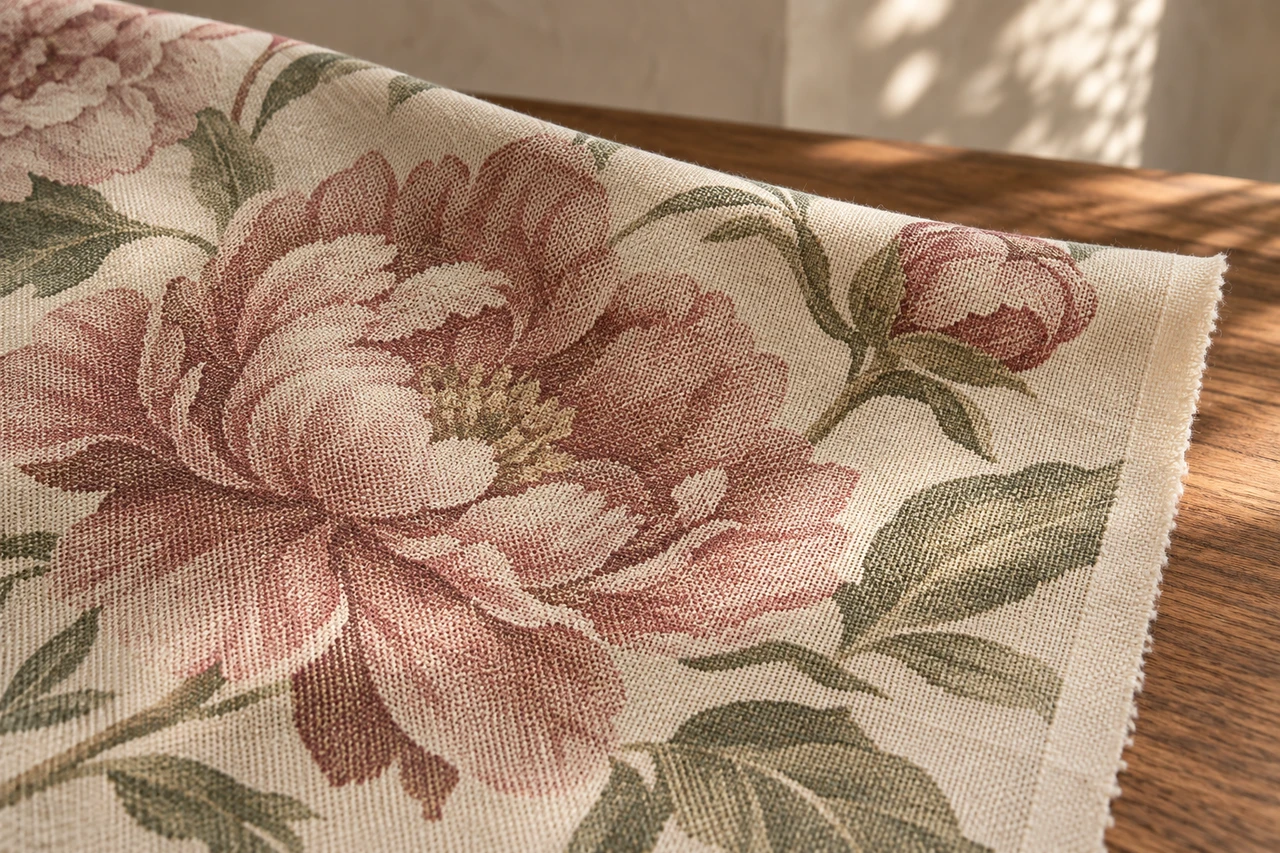
Choose several representative flowers from the repeat, including a large open bloom, a small bud and an overlapping pair. Mark the petal edges that explain their structure. Then distinguish those edges from subtle shading that adds richness but does not change the flower's silhouette. Give the supplier this hierarchy before requesting a reduced-colour proposal. Otherwise, the technician may simplify a visually quiet boundary that the designer considers essential.
Use FY Bedding's floral collection and a reference such as FR-01 to identify a visual direction for discussion, not to establish a production specification. A published reference image does not confirm the printing method, substrate or number of colour separations for a new project. The buyer's authorised artwork and approved technical proposal must define those details independently.
Request alternatives with a clear purpose
Compare the same flowers at the same scale
Ask for a small set of artwork alternatives that changes one decision at a time. For example, one version can combine two background petal tones while another preserves that distinction but simplifies a leaf detail. Keep the flower scale and crop consistent across the comparison. If each proposal also changes colour, repeat size and layout, the team cannot identify which change caused the preferred result. Record the purpose of each alternative rather than naming them only by revision number.
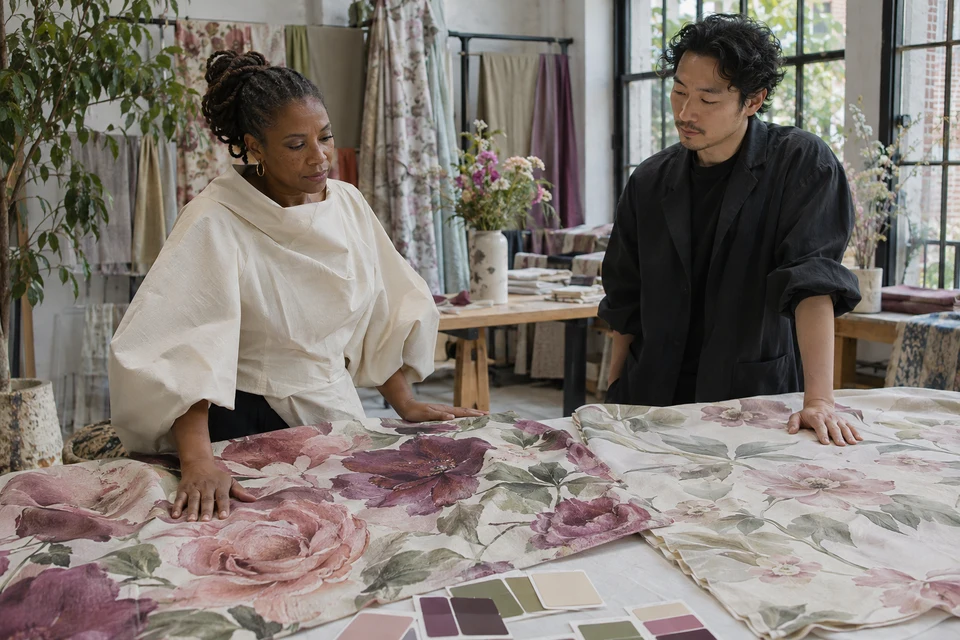
View the alternatives at the intended product scale, not only enlarged on a monitor. A boundary that looks convincing in a close crop may disappear when the complete duvet is viewed from across a room. Conversely, a sharp separation that helps a small bud may make a large flower look outlined. Note which version works for each motif group and ask whether the final artwork can incorporate those choices coherently.
Link the artwork to a fabric proposal
Digital approval is only one stage
Confirm the proposed printing route and fabric specification before evaluating a physical strike-off. Ask the supplier to explain how the artwork will be prepared for that route, including any relevant constraints on fine edges or tonal transitions. Do not assume that a successful digital preview can be transferred unchanged to another substrate or process. Keep the technical explanation attached to the sample request so later quotations are based on the same development route.
Review the strike-off with the approved artwork reference under an agreed viewing setup. Check the selected petal boundaries first, then the overall colour balance. This order prevents an attractive general impression from concealing a lost detail that was central to the brief. Record both acceptable interpretation and unacceptable merging. Photographs can document the discussion, but retain the physical approved sample for decisions that depend on actual colour and fabric appearance.
Resolve disagreements through explicit priorities
Avoid an unlimited revision loop
When the designer prefers a subtle tonal transition and the buyer prefers stronger separation, describe the trade-off in product terms. Is the print intended to read as a soft all-over field, or should individual blooms remain clear in a styled room? Those are different visual objectives. Ask the team to choose a priority before the next sample. A request to make the print both softer and more sharply separated may be impossible to interpret consistently without a marked example.
Keep a revision log that names the flower, location and desired change. Replace broad comments such as more premium or closer to the original with specific comparisons. If a change to one petal group affects another repeated element, review both before approving the revision. The colour-separation decision belongs to the complete repeat, even when the discussion starts with a single flower. Do not release an isolated crop as approval for every motif.
Carry the decision into bulk inspection
Inspect the agreed visual relationships
Define a practical inspection reference showing the critical flowers and the approved petal relationships. Combine it with the project's separate requirements for colour, dimensions and workmanship. An inspector should not have to reconstruct the design team's reasoning from a folder of conflicting previews. Identify the final artwork version, the approved strike-off and any accepted interpretation notes as one linked approval set.
Before committing to production, clarify whether further changes affect sampling scope, minimum quantities or the planned schedule. Ask for confirmation rather than assuming fewer colour groups automatically reduce every cost or shorten every lead time. Share the annotated artwork, target fabric and intended duvet sizes with FY Bedding to discuss a suitable development sequence. Release the project when the physical sample preserves the chosen flower identity and the supplier understands which boundaries must not be simplified later.
Approve the complete repeat on the proposed fabric, with critical petal boundaries marked; a reduced artwork file alone is not a finished print approval.