A floral brocade proposal needs more than a photograph of raised petals. The buyer must know which yarns form the supporting cloth and which add the decorative pattern. That distinction affects what appears on the reverse, what happens when the cloth is cut, and whether an unlined panel is appropriate for the intended product.
- 1. Start with the woven structure, not the collection name
- 2. Give the ground and pattern their own material fields
- 3. Turn the sample over before deciding on lining
- 4. Include the cut edge in the panel development
- 5. Compare quotations on the same finished-panel scope
- 6. Release a construction record that the receiving team can use
Start with the woven structure, not the collection name
Ask for an annotated construction sample
Brocade is often used loosely in commercial descriptions. Ask the proposed supplier to describe the actual ground weave and supplementary pattern-weft arrangement rather than treating the word as a complete specification. A Metropolitan Museum textile record describes one historical example as ribbed plain weave brocaded with supplementary weft. It demonstrates why the supporting weave and added pattern yarns can be recorded separately; it is not a recipe for a contemporary FY product.
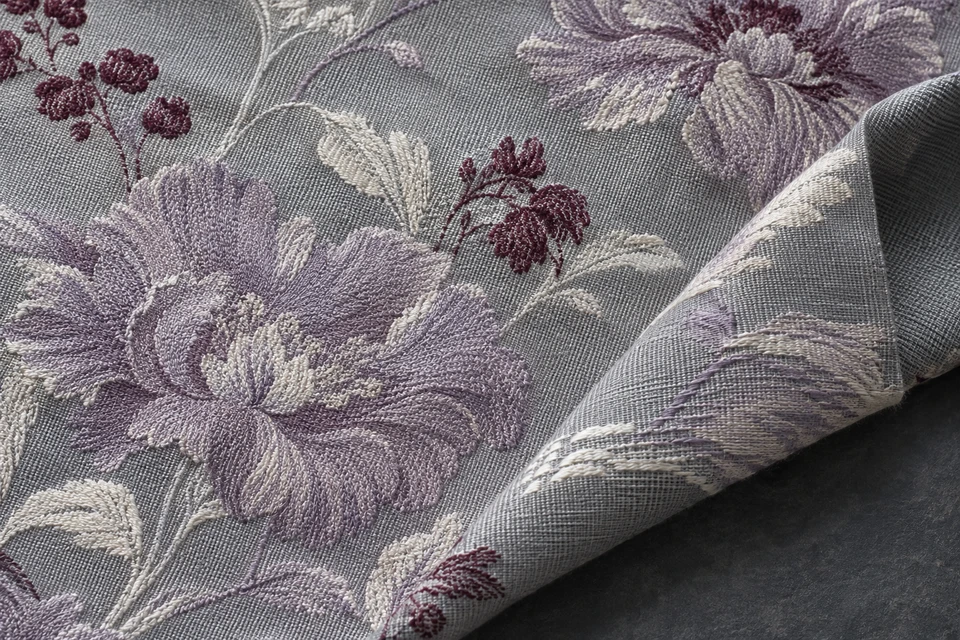
Request a physical swatch with the face, reverse and intended length direction identified. Have the supplier explain which visible yarns belong to the base and which create the flowers. If the proposal is a different patterned woven structure, name that honestly. The purchasing decision is whether the identified construction suits the panel, not whether every patterned textile can be sold under the same attractive label.
Give the ground and pattern their own material fields
Do not infer fibre from surface sheen
A small amount of glossy pattern yarn can dominate a product photograph while a less visible ground provides much of the cloth. Record the declared fibre composition of each relevant component and the basis for any overall composition statement. Keep those declarations tied to the exact sample revision. A soft ivory base and a bright lavender flower do not establish cotton, silk, viscose or polyester content by sight.
This separation also makes substitution discussions practical. If the mill proposes changing only a pattern yarn, ask what else changes: its apparent thickness, shine, colour, reverse appearance or interaction with the supporting weave. Do not approve the substitution solely because the overall colour name remains the same. Request a revised swatch and decide whether a new finished panel is needed before the change enters a production order.
Turn the sample over before deciding on lining
Judge the reverse in its intended use
Supplementary pattern yarns can produce a reverse that looks quite different from the decorative face. Examine the proposed floats and their distribution directly. Do not describe every reverse float as a defect, and do not accept every loose length as normal simply because the fabric is called brocade. The relevant question is how that exact reverse will behave and appear in the specified finished item.
For a cushion panel, consider contact with the insert and the arrangement around a zip opening. For a decorative hanging, consider whether the reverse will ever be visible or handled. Where a backing or lining is proposed, inspect the completed layer combination rather than a face-only swatch. Added layers may change drape and the way the flower relief reads. Choose them through the sample approval, without inventing a universal float-length limit.
Include the cut edge in the panel development
A woven swatch is not a completed component
The panel maker must cut through the proposed ground and decorative yarn arrangement. Ask for a sample cut in the intended direction and assembled with the planned seam treatment. Review the edge before assembly, the finished seam and the reverse near the seam. This helps establish whether the pattern yarns remain contained in the actual construction, instead of assuming that a tidy woven selvedge represents every cut edge.
Give the factory a drawing of the panel outline and the flower positions that matter at the seam. Distinguish a structural edge decision from an aesthetic choice about cutting through a blossom. Those require different approvals. A visually complete flower can still sit beside an unsuitable seam, while a deliberately cropped flower can be entirely acceptable when the supporting construction has been properly developed and agreed.
Compare quotations on the same finished-panel scope
Make extra operations visible
An offer for face fabric alone is not directly comparable with an offer for a cut, backed and sewn decorative panel. List the requested supply stage and identify whether backing, seam preparation, pattern positioning and component inspection are included. Ask each supplier to quote against the same revision and to state what remains a development assumption. This avoids choosing a nominally cheaper option that excludes essential conversion work.
For a small branded collection, ask how the proposed design, ground colour and pattern-yarn combinations affect minimum quantities and sample charges. Obtain project-specific figures rather than borrowing a general mill minimum. The buyer can then decide whether to reduce colour variants, simplify the panel range or keep the proposal for a later collection. None of these choices should rely on an unconfirmed stock or delivery promise.
Release a construction record that the receiving team can use
Keep the appearance reference separate
The approval file should connect the accepted face and reverse sample to the material declarations, panel drawing, layer arrangement and edge finish. Include clear photographs of both sides and retain the physical reference where practical. The receiving team needs to know which construction was ordered, not merely recognise a similar purple flower. Record any agreed variation in the pattern yarn appearance separately from defects requiring review. Use FR-01 as a visual direction only; supplementary pattern wefts and backing require separate sample evidence.
When discussing a floral collection with FY Bedding, provide the intended product, panel dimensions, visible sides and desired decorative effect. Ask for confirmation of the actual construction and a suitable development sample before committing quantities. A collection photograph can start a design conversation, but it cannot establish that a specific listed style uses brocade, a particular fibre or an approved backing system.
Before purchase, identify the ground and supplementary pattern yarns, approve both sides, confirm the finished layer stack and retain a cut-and-sewn panel reference.
Method references: The Metropolitan Museum of Art: ground weave and supplementary brocading weft.