A pale dot inside a dark embroidered petal can be easy to overlook in a styled photograph and conspicuous on the delivered cushion. If the dot is bobbin thread pulled through to the face, changing the top-thread colour will not necessarily address its cause. A buyer needs a clear appearance record and a technically controlled investigation, not an instruction to tighten every machine until the white disappears.
- 1. Identify the unwanted thread before naming the fault
- 2. Treat tension as an investigation, not a universal setting
- 3. Map the symptom across the floral design
- 4. Check the whole stitch after the pale thread disappears
- 5. Keep the correction tied to its production inputs
- 6. Make the purchasing decision specific
Identify the unwanted thread before naming the fault
Photograph the face and the corresponding reverse
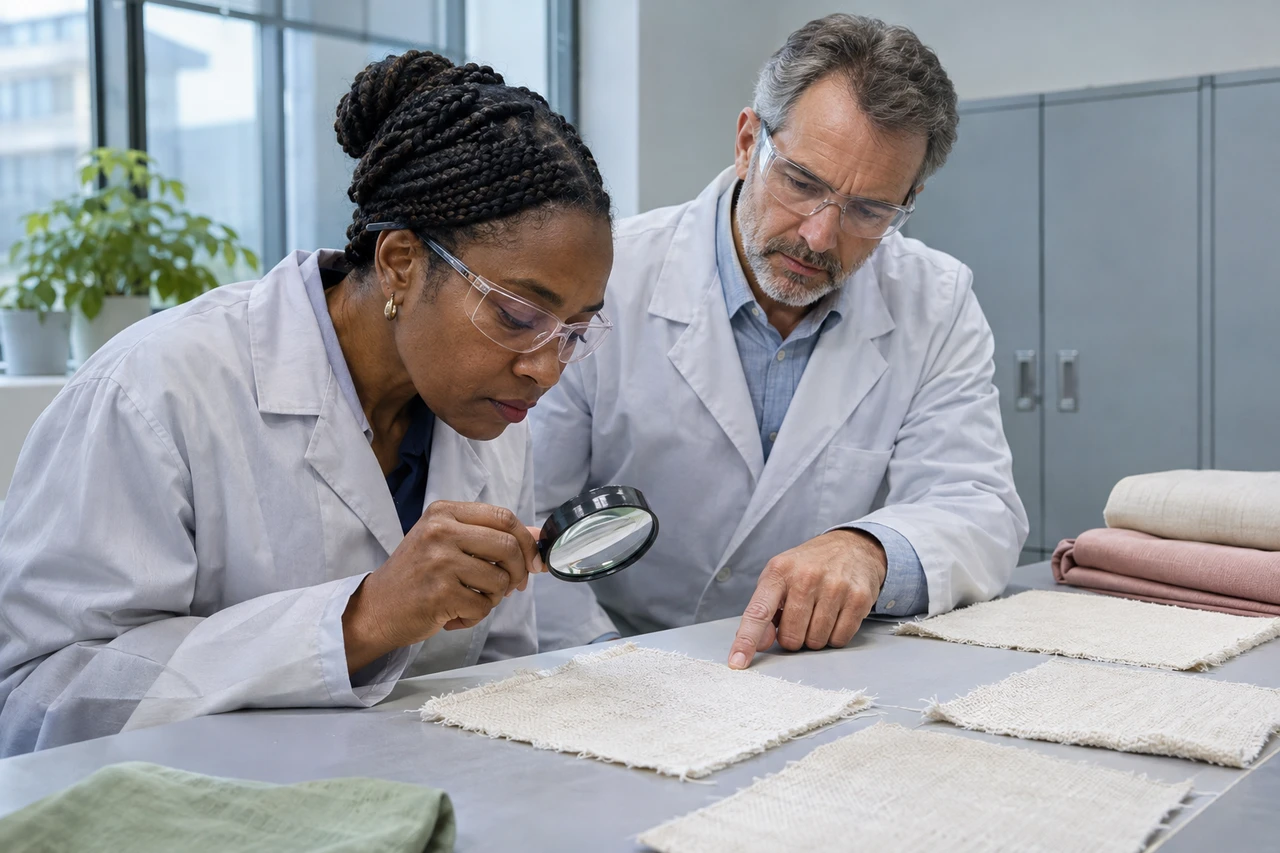
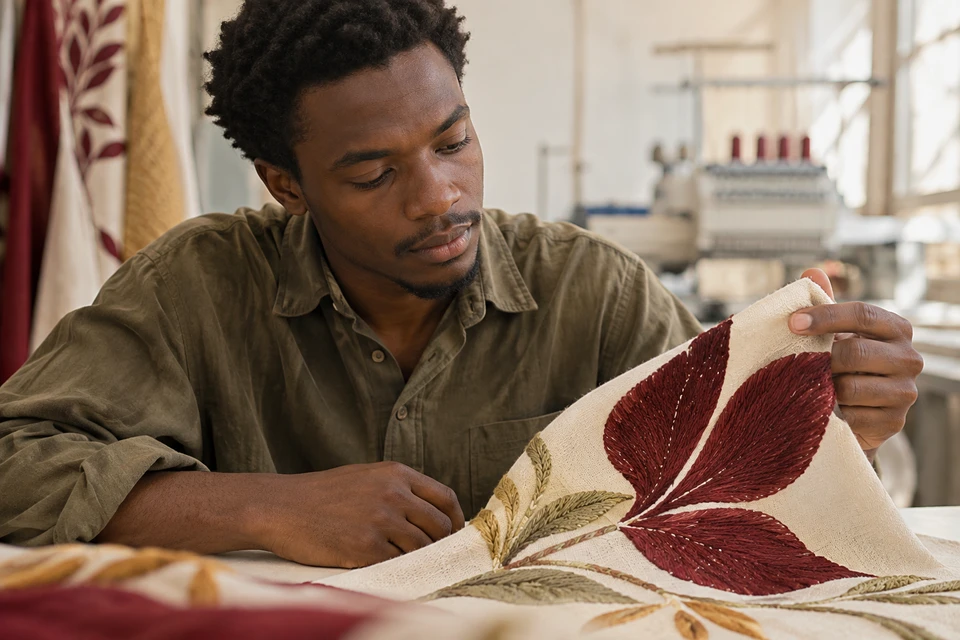
Mark the affected flower, leaf or stem on a sample photograph and retain the physical piece. Examine the same position on the reverse with the supplier's technician. Ask whether the visible material is bobbin thread, ground fabric between stitches, an intentional highlight or another element. Similar-looking pale spots can have different explanations. A buyer's inspection note should record what is visible before treating a suspected mechanism as a confirmed diagnosis.
Use the proposed thread colours and fabric when reviewing visibility. A high-contrast sample may reveal a condition that a pale tone-on-tone design conceals. That does not make the underlying construction acceptable automatically in the quieter colourway. Establish which surfaces and viewing conditions matter for the intended product, then retain close and normal-distance photographs. A magnified image is useful for identifying a thread but should not silently become the sole commercial appearance standard.
Treat tension as an investigation, not a universal setting
Several setup conditions may produce a similar symptom
Brother's technical guidance lists several possible causes of bobbin thread appearing on an embroidery face, including threading, tangles, bobbin-related conditions, needle issues and tension. The guidance belongs to specified equipment; it is not a universal production recipe. Ask the responsible operator to inspect the actual machine, consumables and setup rather than applying an internet adjustment number to a different system. Preserve the original sample so the correction can be compared honestly.
Request a short investigation record identifying what was found and what changed. It might concern an incorrectly threaded path or a consumable mismatch, but the cause should come from the examination, not from the buyer guessing at a photograph. If several variables are changed together, the supplier should explain how it will reproduce the accepted setup. A successful isolated sample is less useful when nobody can identify the conditions that produced it.
Map the symptom across the floral design
Location can help the technical team narrow its review
Record whether pale thread appears throughout the motif or mainly at narrow stems, dense petal tips, direction changes or other specific locations. These observations do not prove a cause. They give the technician a more useful starting point than a general complaint that the embroidery looks untidy. Include the design file revision and the sample identifier, so the investigation is tied to the actual embroidered path rather than a similarly named artwork file.
Inspect repeated flowers and more than one sewn sample where the approval plan requires it. Note whether the condition recurs at the same positions or varies between pieces. Keep this distinction in the record without inventing a statistical conclusion from a few examples. If the proposed correction includes a design-file change, identify it separately from machine setup changes. Buyers should know whether the accepted appearance depends on a revised motif, a corrected production setup or both.
Check the whole stitch after the pale thread disappears
A cleaner face alone does not complete approval
Compare the corrected face and reverse with the original. Look for changes in ground distortion, thread arrangement and the clarity of narrow floral details. An adjustment intended to address one visible symptom may alter another aspect of the embroidery. The buyer should not approve an unseen reverse simply because the front photograph looks darker. Refer uncertain stitch formation to qualified technical staff and keep the required appearance distinct from any performance assessment.
Review the finished panel in the intended cushion, sham or other textile assembly. A flat hoop sample and a filled cushion do not present every stitch at the same angle. Where the product's intended care is relevant, use an agreed sample assessment and record its scope. Do not infer care durability, seam strength or acceptable production variation merely from the absence of white dots. Those questions need their own criteria and evidence for the actual proposed construction.
Keep the correction tied to its production inputs
A substitute bobbin thread deserves an explicit review
Record the approved top and bobbin thread references, ground fabric, design revision and responsible setup record. Ask the supplier how it will identify a changed consumable or machine condition before production approval is reused. This is not a request for one setting to govern every machine. It is a request for traceability between the submitted sample and the process proposed for the order, with technical adjustments handled by the appropriate personnel.
If a supplier proposes matching the bobbin colour to the dark floral face, distinguish appearance concealment from correction of a setup issue. The new thread may be a legitimate design or production choice, but it should not erase an unresolved explanation. Review the resulting reverse and any colour-dependent presentation requirements as well. Keep the old and new samples clearly identified so a later reviewer can understand what was changed and why the revised piece was accepted.
Make the purchasing decision specific
Accept a defined sample, not a promise of perfect tension
The approval response should say which sample and revision are accepted, which visible conditions require further work and what evidence remains outstanding. For quotations, separate any design revision, sampling work and production assumptions rather than treating all floral embroidery as interchangeable. Ask for the proposed minimums and schedule on the stated construction. Avoid claiming that a photo review has established an entire factory's embroidery capability or guaranteed that every future piece will be identical. Use FR-01 only to communicate a botanical direction; the proposed embroidery needs its own identified thread and sample record.
For an FY Bedding floral enquiry, send the selected visual direction together with marked face and reverse photographs and the intended product format. The online floral collection can help communicate a design direction; it does not confirm a particular embroidery construction or the thread system used for a proposed order. Request a feasible sample route and evidence appropriate to that proposal. A useful correction closes the loop between the observed pale thread, the documented investigation and a repeatable approved sample.
Identify the visible thread, preserve face and reverse evidence, and ask the technician to document the cause and correction. Reinspect the complete embroidery before approving the revised sample.
Method references: Brother: possible causes of bobbin thread appearing on an embroidery face.