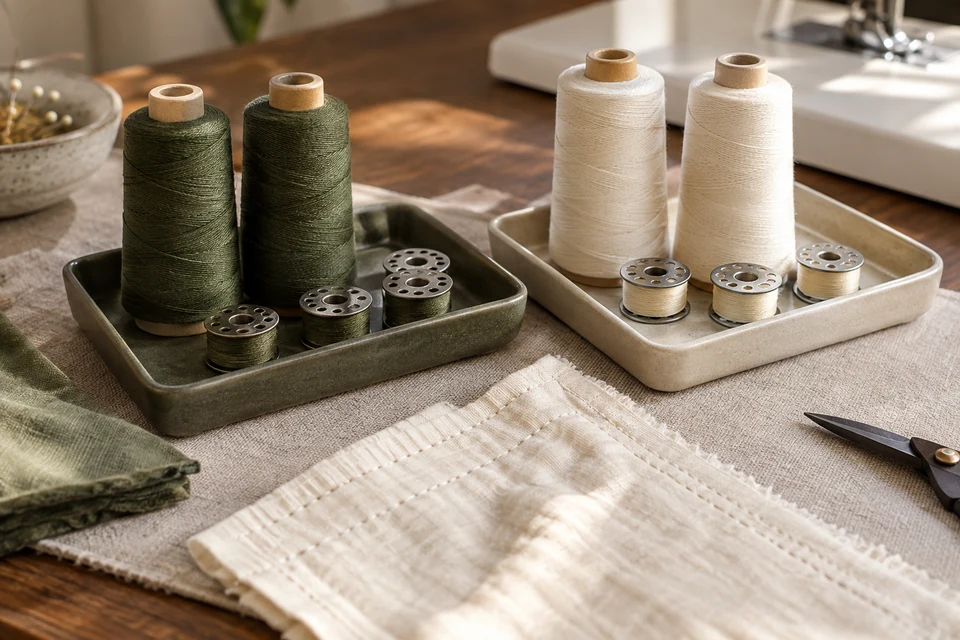
A bedding seam can contain the correct thread type but the wrong color. During a color changeover, a previous cone or bobbin may remain at the station, or partly used stock may return to the wrong group. The resulting mismatch can be difficult to notice on the side facing the operator. Prevention depends on controlling thread identity through the change, not merely asking inspectors to look more carefully at finished goods. This guide focuses on mixed-shade seams during changeovers rather than the initial selection of sewing thread.
Define the approved thread combination
Keep material and shade identities distinct
Record the approved thread reference for each relevant needle and bobbin position, including any intentionally different combination. The thread specification guide establishes the material and construction requirements. Add the color reference and product revision explicitly. A familiar supplier article code may describe the thread family without identifying the shade required for the current bedding order, so neither the operator nor purchasing should infer color from a partial code.
Retain a usable comparison reference and define the viewing conditions for checking shade. Similar cream, white or neutral threads may be hard to distinguish in poor light, while spool labels can become separated from their contents. The shade-control guide supports an agreed visual boundary without prescribing a universal tolerance. Make clear which seams require which shade so an intentional contrast stitch is not confused with contamination from the previous production color.
- Identify thread type and color separately.
- Record needle and bobbin combinations.
- Retain a controlled shade reference.
- Distinguish intentional contrast from wrong-color sewing.
Clear the previous allocation safely
Use the station's authorized changeover procedure
Have trained personnel follow the equipment's required safe procedure for a thread change. The buyer's control should record completion and identity checks, not provide improvised instructions for accessing moving parts. Account for relevant cones, bobbins and loose thread allocated to the previous color. The purpose is to prevent old stock from remaining available as an apparently suitable replacement when a current cone runs out during the next production run.
Define where partly used material goes and how its identity is preserved. A common unmarked container makes later shade selection dependent on appearance alone. Keep approved leftovers separated from unknown material, using the factory's established traceability method. The product traceability guide can support the link between stock and order. Do not relabel an unidentified bobbin with the nearest matching shade simply to restore a tidy inventory balance after the changeover.
- Follow authorized safe changeover procedures.
- Account for cones and bobbins from the previous color.
- Separate identified leftovers from unknown stock.
- Do not assign missing identity by visual guess.
Confirm the first sewn sample on both sides
Match the evidence to every relevant position
Sew and identify the agreed first-off sample using the current setup, then review both visible sides and the seam locations relevant to the product. A correct top thread does not establish the bobbin color. Record which positions were checked and compare the result with the approved reference. Use a suitable sample form that makes the stitch visible without confusing a temporary test scrap with a finished product that has passed all inspection requirements.
Review the sample under the agreed lighting and viewing arrangement rather than changing the standard until a doubtful match appears acceptable. If interpretation is unclear, escalate to the named reviewer with the sample identity and thread references. The inspection checklist should keep shade, stitch formation and other seam requirements separate. A visually matching thread does not establish seam strength or correct construction, and a strong-looking seam does not excuse an unapproved color combination.
- Identify the first-off sample and setup.
- Inspect top and underside thread appearance.
- Record every relevant sewing position.
- Keep shade acceptance separate from other seam criteria.
Control replenishment during the run
Treat a replacement bobbin as a new identity check
A correct changeover can be undone when thread is replenished later. Define how the operator obtains the next approved cone or bobbin and verifies its identity before use through the authorized station procedure. Keep the current order allocation distinguishable from stock for adjacent products. The process should be practical enough for routine use, not an elaborate record that staff abandon when production is busy or several colors are being handled near one another.
Include a response for shortages of the allocated shade. An apparently close alternative is a proposed change, not an automatic continuation of the approved setup. Use the substitution protocol if a replacement is considered. Record the decision and any output boundary associated with the change. This prevents a commercial urgency from becoming an undocumented thread variation that only appears when the buyer compares several finished items from the same shipment.
- Define the replenishment identity check.
- Keep adjacent color allocations distinguishable.
- Escalate shortages before using alternatives.
- Record the output boundary of any approved change.
Contain a discovered mismatch
Trace the run before deciding its disposition
When a wrong-color seam is found, identify the last confirmed correct check and the relevant replenishment or changeover event. Hold the traceable uncertain scope for review instead of assuming the mismatch affects either one item or the entire order without evidence. Record which side and seam contain the wrong thread. The segregation guide provides a route for keeping uncertain output separate while the responsible team determines its disposition.
Send the product color matrix, seam visibility requirements and observed changeover problem in a quality-focused buying brief. Ask how thread identity will be maintained between initial setup and later replenishment. Any rework or acceptance by deviation needs the buyer's agreed authorization and scope. The lasting correction should address the point where identity was lost, so the next color change does not repeat a problem that final inspection merely caught once.
- Locate the last confirmed correct check.
- Hold the evidence-based uncertain scope.
- Record mismatch location and disposition.
- Correct the identity failure at its source.
Release a thread color changeover with confirmed needle-and-bobbin identities, a two-sided first-off review and a controlled replenishment route throughout the run.