When an embroidered petal looks uneven, adding more visible stitches can seem like the obvious correction. That can miss the foundation beneath the surface. Underlay is stitching placed below the visible embroidery, and its role is different from a separate sheet of backing. A buyer reviewing a floral sample should ask the embroidery specialist to examine that foundation before accepting an unexplained increase in stitch coverage.
Distinguish stitching from supporting material
Two things can sit beneath the same flower
Wilcom describes underlay as a foundation for embroidery, with functions that can include stabilisation and support for the visible stitches. This is a technical starting point, not a guarantee against puckering or a universal setting. Ask the digitiser to identify the underlay used for the proposed floral shapes and explain its purpose on the actual ground textile.
List physical backing or stabilising material separately from underlay stitches. Also identify the top-stitch thread and the base fabric. A supplier saying that it added support may mean a revised stitch foundation, a different backing material or both. Those are different revisions and should be recorded separately. Keeping the vocabulary clear helps the buyer compare samples without pretending to prescribe the technical solution.
Select a small set of revealing shapes
A complete bouquet is not the first diagnostic step
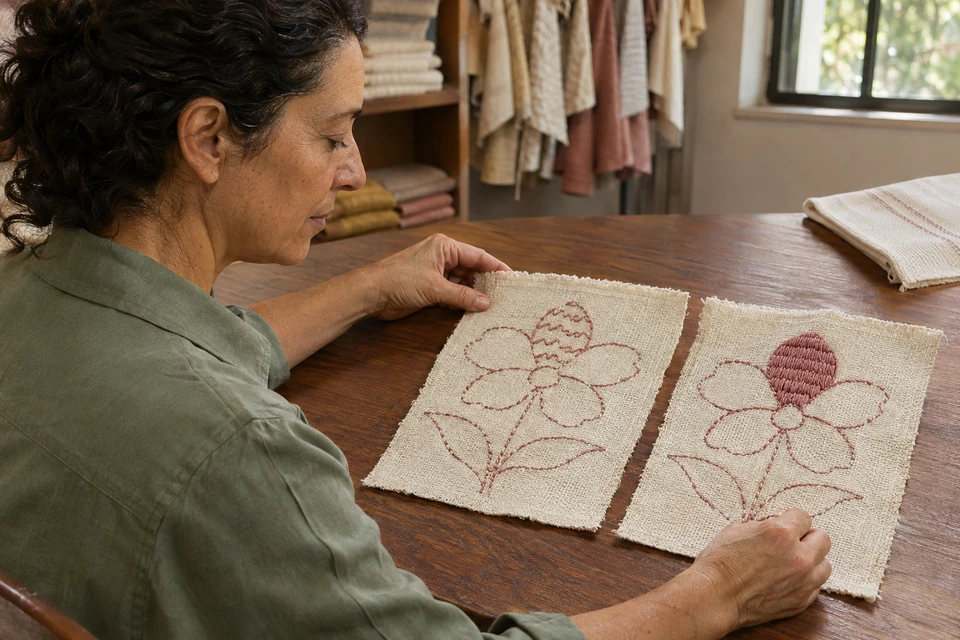
Choose a broad petal, a narrow leaf and a curved or pointed area from the actual artwork. Include a shape that already shows the concern, rather than replacing it with an easier generic test motif. Keep each at the intended finished size. The selected areas should reveal how the proposed foundation supports different parts of the design without forcing the team to interpret an entire busy arrangement at once.
Record the visible observation before changing the file: for example, a depressed petal centre, an uneven edge or a distorted ground area. Use neutral language and photographs tied to the sample. Do not label the cause as insufficient underlay simply because the defect appears in a filled region. The competent embroidery team may identify another contributing factor, and the review should leave room for that investigation.
Request a controlled stitch trial
Make the revision understandable
Ask the specialist to propose an underlay trial while keeping the relevant other inputs identified and, where appropriate, unchanged. These include the nominated fabric, thread, backing, motif scale and visible-stitch design. If another input must change for a valid technical reason, document it explicitly. Comparing two attractive samples with no revision record does not explain which construction is being approved.
Where useful, request a safe demonstration sample stopped after the foundation stage, alongside the completed version. The technical team should make that sample under its normal controlled process; buying staff should not interrupt or reach into running machinery. The foundation-only piece can make the proposed construction easier to discuss, but it is not the finished acceptance reference. The completed embroidery on the actual ground remains essential.
Evaluate the covered result rather than hidden complexity
More stitches are not a purchasing objective
Inspect the finished trial in ordinary light and from an oblique angle. Compare the intended petal shape, edge definition, surface character and neighbouring ground. Note where the foundation becomes visibly intrusive or where the top stitching fails to produce the intended result. Judge against the agreed floral appearance, not against a preference for the largest stitch count or the most elaborate file.
Ask the technical owner to explain any trade-off among appearance, bulk, handling and production feasibility. Avoid setting a universal underlay density or demanding that one setting be copied across every leaf. Different shapes and materials may need different approaches. Procurement should approve the identified result and the proposal supporting it, while leaving machine-specific decisions with competent production personnel.
Reassemble the flower and the product
Interactions can change outside a test shape
After the selected shapes are resolved, review the complete bouquet with overlaps, small stems and adjacent motifs restored. Check that the revised foundation has not altered the hierarchy of the floral design or created an unexpected raised area where shapes meet. Keep this review distinct from thread-colour approval and visible stitch-direction approval, even though all three contribute to the same finished motif.
Inspect the design in the intended pillowcase, cushion cover or other nominated item. Seams, linings and user-contact areas may be absent from a flat trial swatch. Record the reverse construction and any retained support material in the finished assembly. A good-looking floral face does not independently approve accessible backing remnants, internal bulk or care instructions; those questions require their own scoped evidence.
Freeze the technical reference and change process
A repeat order needs more than the artwork picture
Retain the approved embroidery-file revision, component references, representative trial pieces and finished sample. Ask who controls the production file and how a later change to fabric or backing will be reviewed. A new fabric that appears visually similar may not justify carrying the same foundation forward without assessment. Keep the accepted reference available rather than allowing a fresh operator's interpretation to become the new standard silently. The FR-01 floral reference can communicate a botanical direction; its photograph does not confirm the proposed production process or materials.
Include the complete assembly in the agreed care and handling assessment, and record only the outcomes actually observed. For a FY Bedding sample enquiry, send the floral artwork, nominated ground, intended product and close views of the specific concern. Ask for an explained sampling proposal instead of simply requesting denser embroidery. That gives the sourcing and technical teams a precise decision to resolve and helps keep development charges and approval responsibilities visible.
Separate underlay stitches from physical backing, investigate a defined floral shape with a controlled trial, and approve the finished assembly. Extra top stitches are not a substitute for understanding the foundation.
Method references: Wilcom: underlay as embroidery foundation.