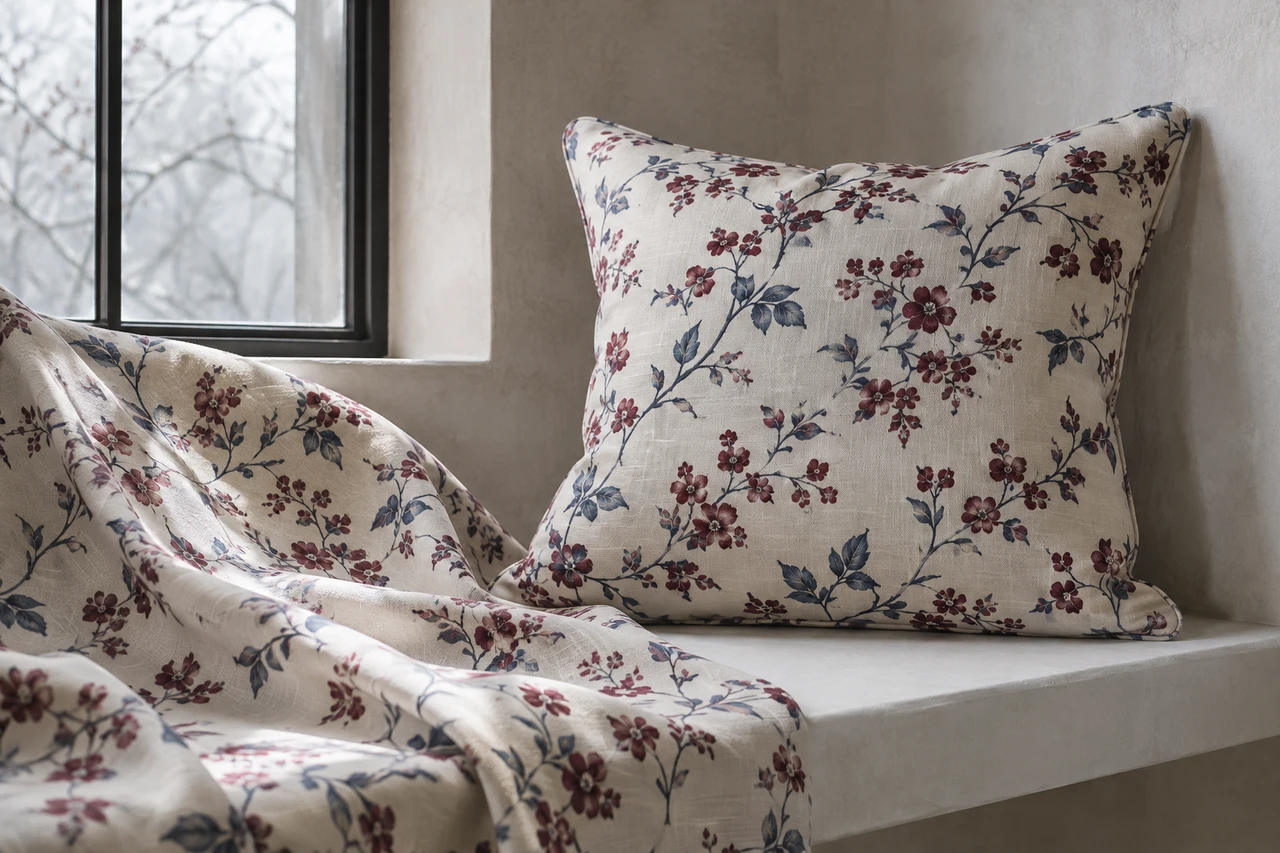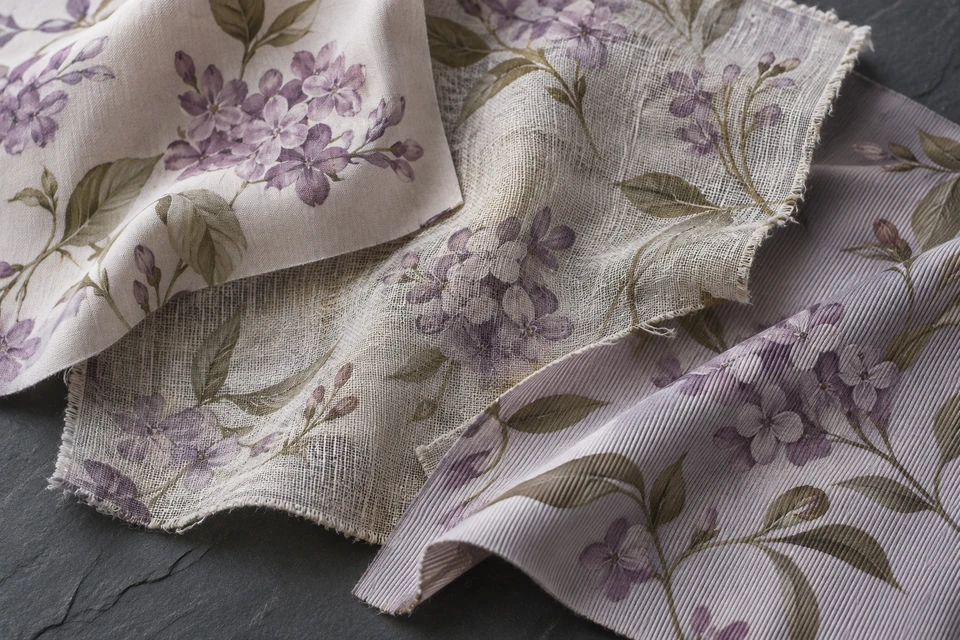
A floral duvet and its textured companion cushion can belong to the same palette without looking like the same surface. The purchasing decision is which colour relationships must stay recognisable, and which differences are acceptable consequences of the chosen materials.
- 1. Assign the colour roles before comparing swatches
- 2. Obtain a sample on every proposed base
- 3. Compare surfaces in the arrangement the buyer will sell
- 4. Build a material-specific acceptance set
- 5. Compare quotations with the real sampling scope
- 6. Protect the relationship when a component is reordered
Assign the colour roles before comparing swatches
Decide what must connect the products
Identify the colours that carry the collection: perhaps a muted leaf green, a lilac petal and a warm open ground. Give each one a visual role in the proposed set. The buyer may want the leaf colour to connect every component while allowing the ground to vary, or may need a quieter cushion that supports the duvet. Write that priority rather than asking for an undefined perfect match across all surfaces.
Use the FY floral collection and a reference such as FR-01 to discuss the desired botanical direction. Do not infer that the reference is offered on every proposed fabric. The new project's artwork, substrate and construction each need confirmation. Keep the visual mood reference separate from the physical standards used to approve actual colour on each component.
Obtain a sample on every proposed base
One attractive strike-off cannot represent a different cloth
Ask for the precise material and finishing identity of each sample. A smooth fine cloth, an open textured cloth and a ribbed surface should not be treated as interchangeable merely because a supplier uses the same colour names. Link each swatch to its proposed product and print or decoration route. If the first sample uses a substitute base, mark it clearly and state which decisions it can support.
Request enough printed area to show the important colours together. A tiny petal isolated from its ground can give a misleading impression of the complete palette. Where companion artwork differs, include a common colour reference area or another agreed comparison aid without confusing that aid with the finished design. Ask the technical team how it will assess colour consistency on the actual surfaces; do not invent one numerical tolerance for every fabric and process.
Compare surfaces in the arrangement the buyer will sell
Flat swatches and a dressed set answer different questions
First place the samples side by side under agreed viewing conditions, keeping the intended faces and directions identified. Then arrange them as the duvet, pillow and companion will appear together. A cushion's curved surface or a folded duvet edge changes what is visible. Keep photographs of both views and retain the physical samples for decisions that depend on real colour and surface appearance.
Separate a colour disagreement from a texture disagreement. A buyer may accept the hue but dislike the way a prominent rib interrupts a delicate flower, or may like the texture while finding the ground too visually dominant. These are different revision requests. Record the component, the affected colour or motif and the intended change. A broad request to make all materials closer can lead to unnecessary adjustments to samples that were already suitable.
Build a material-specific acceptance set
Use a family of standards with a clear relationship
Select the approved sample for each base and identify how it relates to the leading component. Do not nominate a smooth duvet swatch as the only physical master if the textured cushion has been separately accepted with a deliberate variation. The approval record should make that difference visible to inspectors and future buyers. Otherwise, a reasonable material-specific interpretation may later be rejected against the wrong reference.
Where the technical owner requires instrument readings or additional lighting checks, retain the method, conditions and result with the corresponding material. Keep these records separate from the designer's overall styling acceptance. Neither a photograph nor an attractive combined arrangement establishes formal colourfastness, composition or chemical compliance. Those requirements need evidence applicable to the actual supplied materials and intended market, not a general collection-level assertion.
Compare quotations with the real sampling scope
Shared colours do not remove separate production decisions
List each component's base, artwork version, route, quantity and approved reference. Ask which materials or colourways have separate minimums and whether colour development must be repeated when the base changes. A common palette can simplify communication, but it does not guarantee a shared dye or print setup, combined MOQ or lower cost. Obtain the supplier's project-specific explanation before fixing the retail assortment.
If the budget cannot support every proposed combination, edit the range deliberately. The buyer may retain one textured companion, use a confirmed plain fabric for another piece or postpone a secondary colourway. Compare the effect on the full set before making the commercial choice. Do not accept an unreviewed material substitution simply to preserve the original item count; it can change both the visual relationship and the evidence needed for the product description.
Protect the relationship when a component is reordered
A new lot should be reviewed beside the retained family
Retain the approved component samples together with their dates and identities. When one item is reordered, compare its proposed sample with the relevant retained standards and with current saleable stock where appropriate. Note the condition of the retained references so age, exposure or contamination is not mistaken for a new production difference. Ask for a technical review when the comparison is uncertain rather than silently shifting the whole palette.
Send FY Bedding the desired floral direction, component list, available artwork and quantity split through the custom procurement enquiry. Explain which colour connects the range and which variations you may accept. That brief supports a more focused proposal than demanding identical appearance from unlike surfaces, while leaving material availability, manufacturing route and evidence requirements open for factual confirmation.
Approve a labelled physical sample for every base and a combined set view. Define which colour relationships are essential, and reopen the affected approval when a material or finishing route changes.