A floral repeat that works as a digital tile does not automatically fit the rotary screen proposed for production. Before approving engraving, the buyer needs to know how the artwork will travel around that screen and return to its starting point. Otherwise, a late scale change can alter the flowers, spacing and collection layout after the design team believed its work was finished. This purchasing decision belongs before the screen is made, not after a roll of fabric reveals an unexpected repeat.
Ask for the actual proposed screen repeat
A general process name leaves the physical constraint unresolved
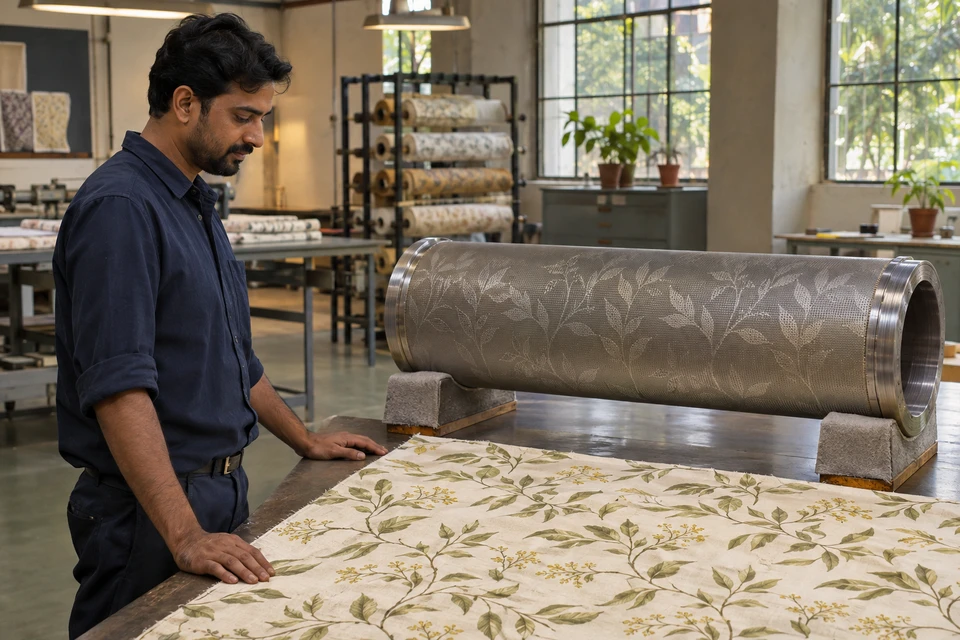
CottonWorks explains that a rotary screen's circumference determines its repeat dimension. This is a process principle, not evidence of the screens or machinery available for a particular FY Bedding project. Ask the proposed printer to state the usable repeat for the offered route and confirm how it relates to the supplied artwork. Avoid selecting a dimension from a different equipment brochure and assuming it applies to the quotation.
Keep the repeat in the fabric travel direction distinct from the design width and usable print width. Mark both directions on the development reference. A floral tile may have two numerical dimensions, but they serve different roles when it is prepared for the proposed screen. Have the technical team identify any applicable preparation constraints rather than letting an artwork file name or a landscape preview stand in for the production brief.
Preserve the intended flower scale during adaptation
More than one artwork solution may fit the same route
If the current tile does not fit, ask the designer and printer to propose alternatives before making the change. They might evaluate a revised repeat unit, a different arrangement of complete motifs or a deliberate scale adjustment, subject to the actual route. The buyer should see what each proposal changes in the finished floral composition. A simple resize percentage does not explain whether a small leaf or large focal flower remains appropriate for the article.
Separate the motif dimensions from the empty spacing around them. A proposal that keeps the flowers at their accepted size but changes the layout is different from one that enlarges everything. Request a full-size reference of each serious option and name the intended product sizes. If no acceptable adaptation exists, ask whether another print route should be considered rather than forcing a technically convenient but commercially unsuitable design into the original quotation.
Inspect the wrap-around boundary
The join must be reviewed as part of the repeat, not hidden at the edge
Request an unwrapped artwork view showing where one circumference ends and the next begins. Then view enough adjacent repeats to see how the boundary behaves in the overall design. Inspect stems, leaves, background textures and blank spaces at that location. A tile can appear balanced alone while producing an obvious interruption when the next unit follows it. The buyer needs to approve the repeated field, not just a single attractive rectangle.
Use a marked working reference to discuss any discontinuity, but retain a clean artwork version for the actual production handoff. If the technical team changes the boundary, ask for a revised proof that includes the neighbouring repeat. Do not approve the repair only from a close crop that conceals its effect elsewhere. A correction to one leaf can unintentionally alter the spacing or rhythm of the surrounding floral arrangement.
Hold the colour layers to the same geometry
A repeat revision must reach every relevant file
When the proposed route uses separate colour screens, ask the printer to confirm that the revised geometry is consistently reflected in the relevant separation files. The buyer need not perform screen preparation, but should know which version of the design the complete set represents. A last-minute change to one artwork file can otherwise leave different parts of the print working from different repeat decisions.
Record the accepted repeat dimensions, orientation and revision in the release brief. Ask who has authority to approve a further adaptation during screen preparation. If a supplier proposes a technical change after the buyer has accepted the design, require a clear description and an updated proof. Do not treat engraving approval as an open permission to alter motif scale or remove design elements without returning to the responsible design owner.
Connect the screen decision to the fabric trial
A prepared screen is not the final product evidence
Request a representative print trial from the agreed production route on the proposed substrate. Compare the repeated field with the approved artwork and inspect several boundaries, not only the centre of one flower. Keep any separate findings about registration, colour, print quality or fabric condition clearly identified. A correct circumference does not establish that every other aspect of the printed textile has been accepted.
Review the trial at the scale and viewing distance appropriate to the intended bedding range. Use the actual design orientation and keep a full-repeat reference alongside any smaller swatches. If the project later changes fabric or finishing, ask the technical team what needs to be re-evaluated. Do not assume that an existing screen alone guarantees unchanged motif appearance, final dimensions or bulk performance across a different material proposal.
Make engraving a named commercial milestone
Clarify what the buyer is authorising at that point
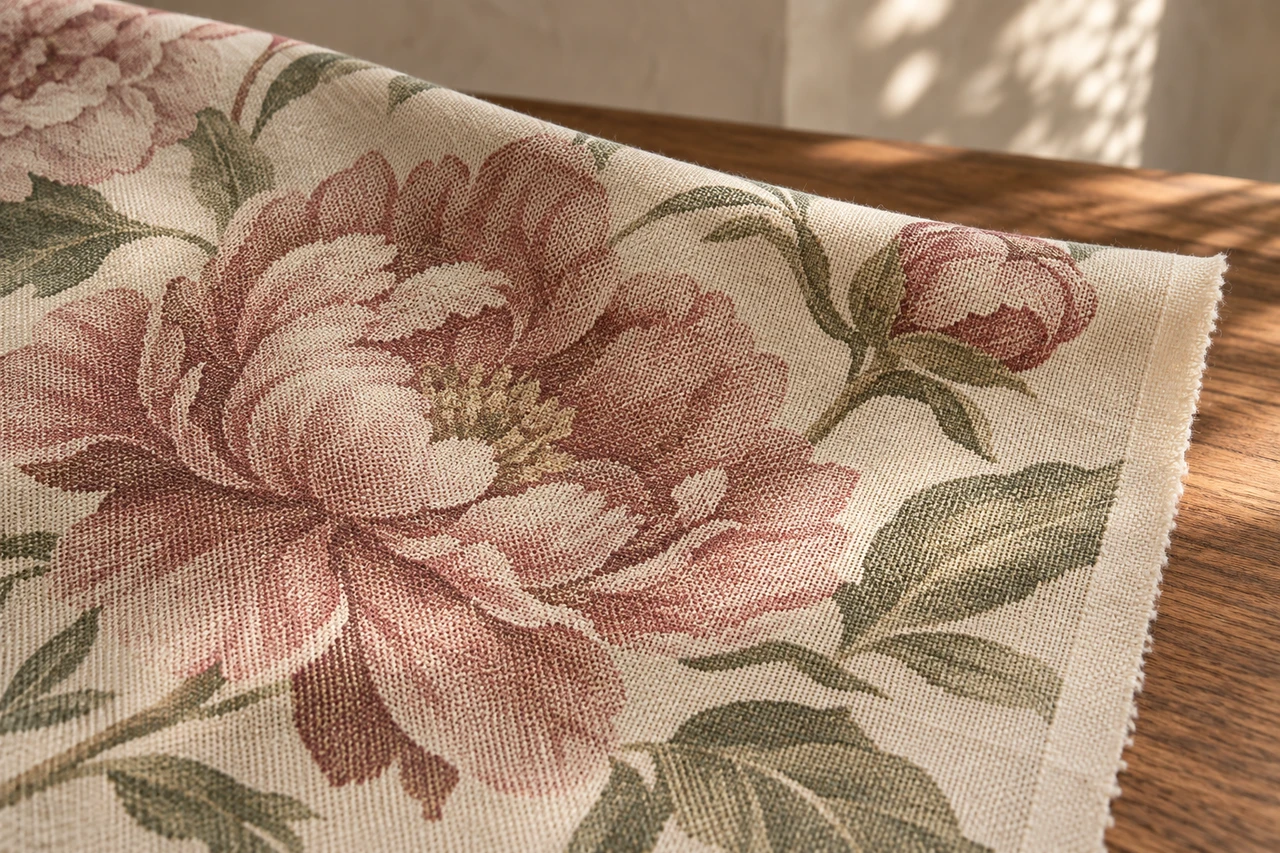
Before approving screen preparation, confirm the supplier's proposed development sequence, cost responsibilities and change process. Distinguish approval of artwork adaptation from acceptance of a fabric trial and from authorisation of bulk production. The agreement should identify who confirms each stage. This is an operational purchasing record; contractual terms and any ownership or reuse rights require the parties' own explicit agreement rather than assumptions drawn from a standard checklist. The FR-01 floral reference may help communicate a botanical direction; its photograph does not confirm the proposed production technique.
Send FY Bedding the authorised floral artwork, required finished article, motif dimensions and planned quantities. Ask which proposed printing route can be evaluated and which repeat options it supports. Link the design discussion to the relevant floral collection reference without claiming that a displayed style uses rotary printing. A well-defined enquiry requests a feasible sample path; it does not promise a particular machine, minimum quantity, price or delivery slot before those details have been confirmed.
Confirm the offered screen repeat before engraving, approve any motif-scale or layout adaptation, inspect the wrap-around boundary and verify the accepted geometry in the actual fabric trial.
Method references: CottonWorks: rotary-screen repeat and printing geometry.