A reversible Halloween duvet cover needs more than two attractive fabric faces. Buyers should decide what the shopper sees when the bed is made, when the top is folded down and when the cover is reversed. Those are separate visual arrangements, and one flat artwork approval cannot settle all three.
Start with the dressed-bed story
Choose which face leads the collection
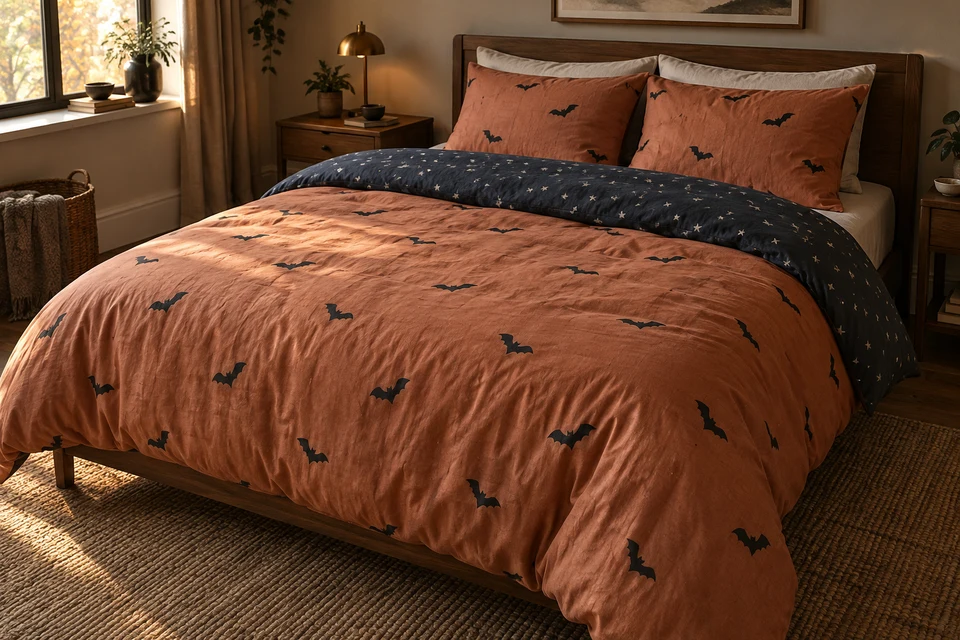
Write a short visual brief describing the main face, supporting reverse and intended fold. A terracotta bat print paired with a dark star reverse might create a strong contrasting band; two equally busy prints can compete at the same fold. Neither choice is automatically wrong. The question is whether the combined view matches the retail story and remains understandable in a small product photograph.
Sketch an unfolded view, the preferred turned-back view and the fully reversed view. Mark which motifs should remain visible near the pillows and which may fall over the sides. Keep this decision separate from face and label orientation approval: an correctly oriented label does not prove that the two designs look balanced together. Give the merchandising team responsibility for the visual arrangement, and the technical team responsibility for translating it into a repeatable sample.
- Identify the lead face and supporting face by artwork revision.
- Agree whether both faces receive equal prominence in retail imagery.
Define the fold without hiding the product
Record the arrangement on a real insert
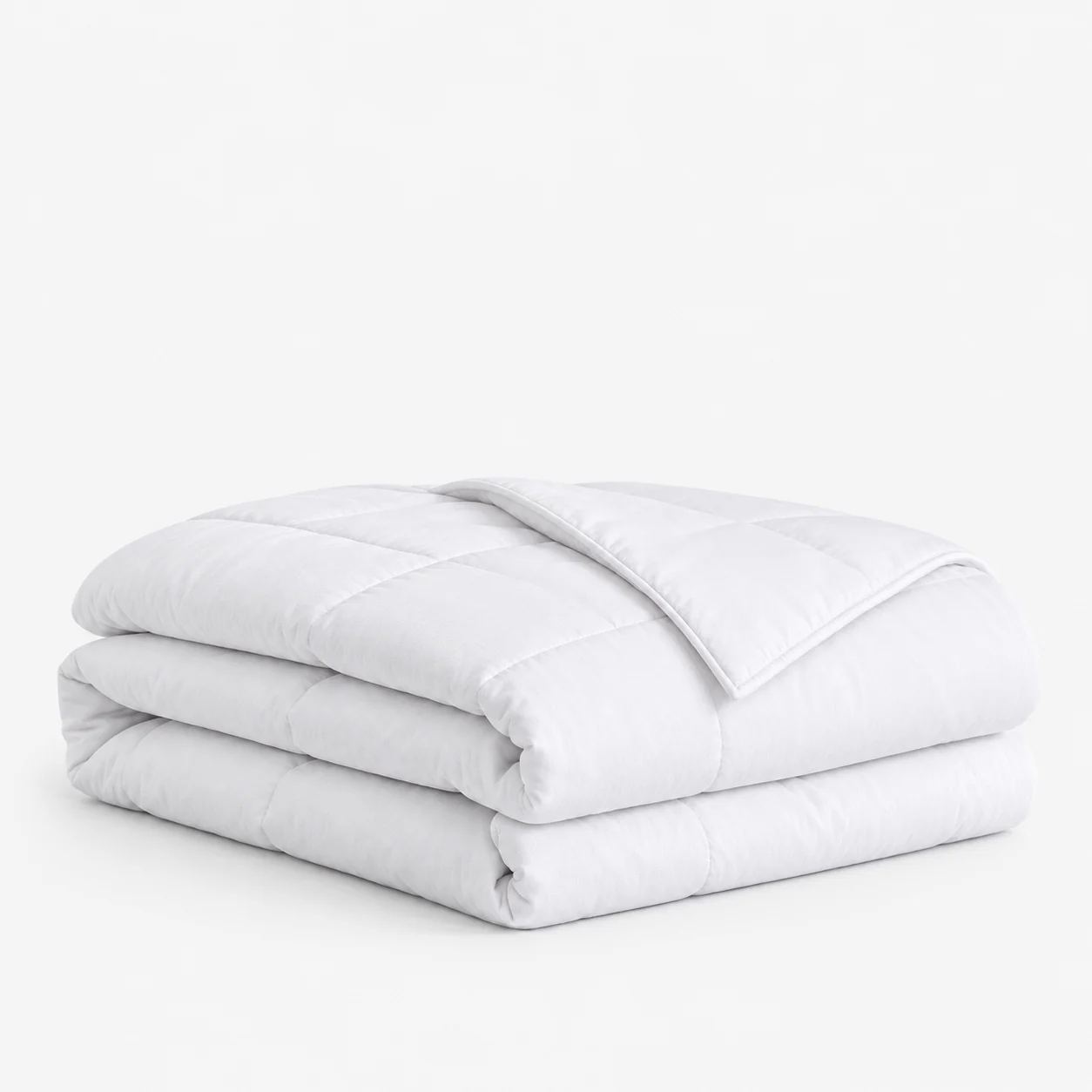
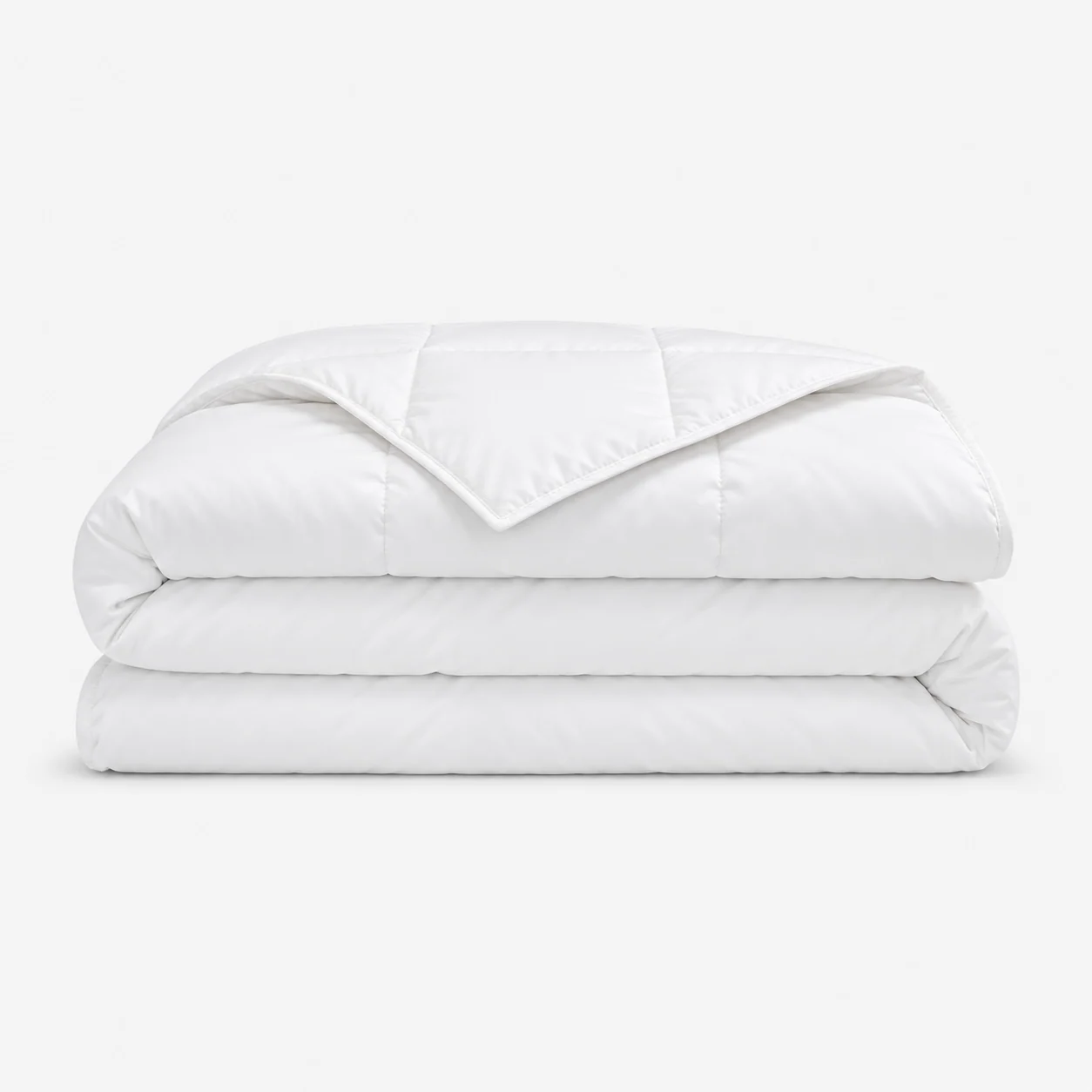
Use the intended duvet insert and actual sample size. Fold the top back, then record the distance from the head edge to the fold and the visible depth of the reverse. State where the pillows sit. A photograph alone leaves too much room for a different stylist to recreate a different bed, especially when the camera crops out the top edge.
Inspect whether the turned edge curls, whether a seam becomes the most visible line and whether the contrast band still reads from the doorway. Do not pull the cloth unnaturally tight simply to make the photograph work. The fold should be achievable during ordinary bed making. If insert movement alters the band, review insert retention and corner ties as a separate construction decision. Record the insert used rather than assuming every insert will create the same result.
- Photograph both the whole bed and the fold at a closer distance.
- Retain fold dimensions alongside the approved styling photograph.
Check where motifs disappear
Review visible areas rather than a flat repeat alone
A bat close to the fold may become a partial shape, while a large moon can vanish beneath a pillow. Mark the areas that must communicate the seasonal theme even after styling: the lower central bed, pillow faces and exposed reverse band. Then compare these areas against the artwork layout for each size offered.
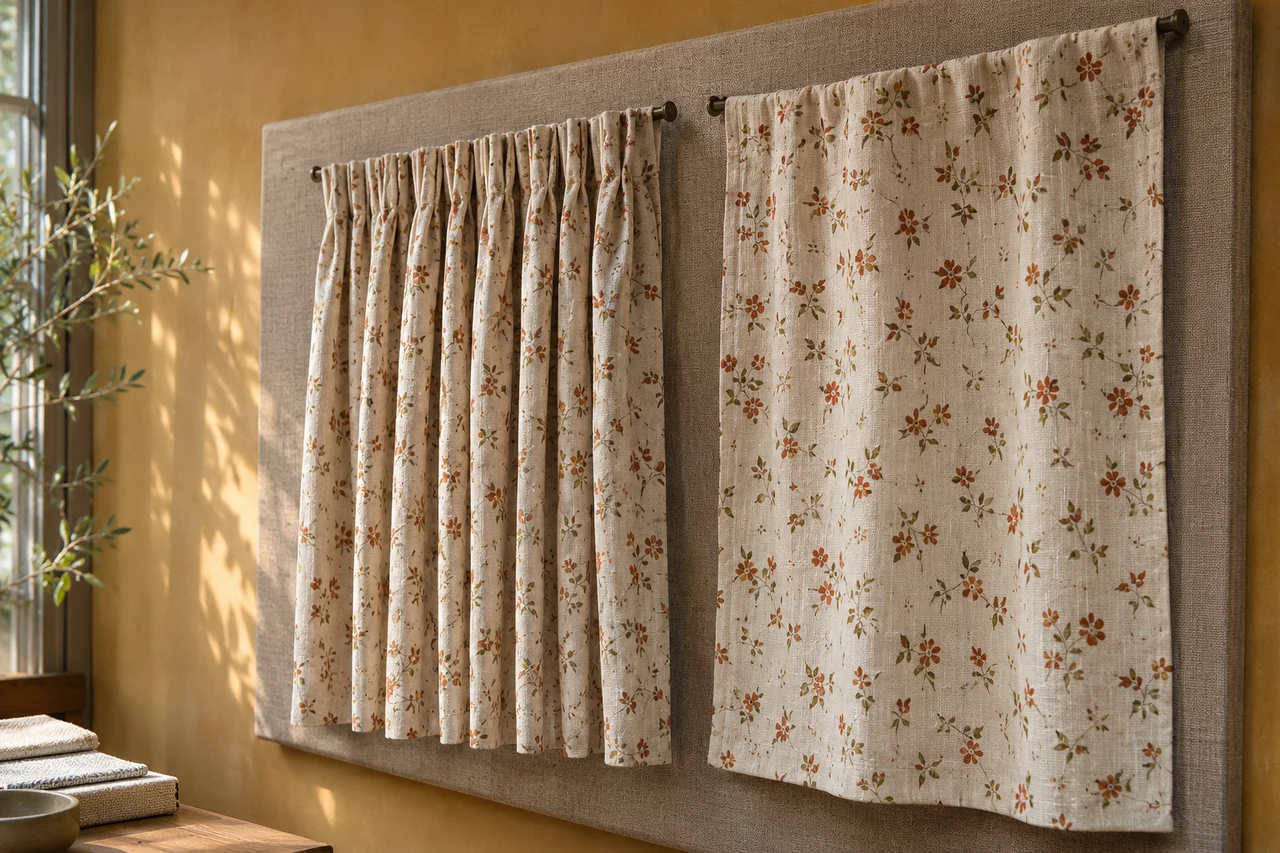
Use the pattern-repeat and panel-matching guide for cutting details, but do not turn every incidental motif position into a placement promise. Decide which features require controlled placement and which are acceptable variation within an all-over repeat. A placement requirement affects the brief and quotation; it should not appear for the first time as a rejection note on bulk goods. Review the least favorable realistic fold as well as the ideal catalog arrangement.
- List any motif that must remain whole in the approved visible zone.
- Separate controlled placement from normal repeat variation.
Pair pillows and sizes deliberately
Avoid approving only the easiest bed size
Prepare the pillow arrangement as part of the reversible set rather than borrowing cushions from another collection. Record whether pillow fronts match the lead face, show the reverse or deliberately combine both. Turn the duvet over without changing the pillows and decide whether that second arrangement is still an intended selling view. If additional decorative cushions are styling props, keep them out of the supplied-set description.
Review the largest and smallest offered duvet sizes against the same visual principle. A fixed fold depth can occupy a different proportion of each bed; a proportion-based fold can expose different motifs. Use size-set sample approval to document the selected approach. Where a size has not been physically sampled, identify the remaining uncertainty and the evidence needed before releasing its final imagery.
- Record supplied pillow quantities and face combinations.
- Name every size represented by a physical dressed-bed sample.
Release photography with the sample
Keep merchandising and production evidence connected
Once the bed arrangement is accepted, retain an unedited reference photograph, the sample identity, artwork versions, insert details and fold measurements together. Retail imagery may be color corrected, but the approval record should still explain which physical goods were photographed. Follow photography-to-sample linkage when moving from a development image to a final listing.
Before ordering, ask which changes would trigger another dressed-bed review: a new reverse color, different pillow assortment, revised repeat or altered finished dimensions are sensible candidates. Do not assume a successful seasonal photograph confirms wash performance, stock availability or a holiday delivery date. Those require their own agreed evidence. Share the three bed views with FY Bedding when discussing a reversible program so sampling can target the exact relationship between the faces, rather than a vague request for two-sided Halloween bedding.
- Attach the approved three-view sequence to the product brief.
- Keep availability, testing and delivery decisions outside the visual approval.
Can a second person recreate the accepted turned-back view using the recorded sample, insert, pillow arrangement and fold measurement without guessing?