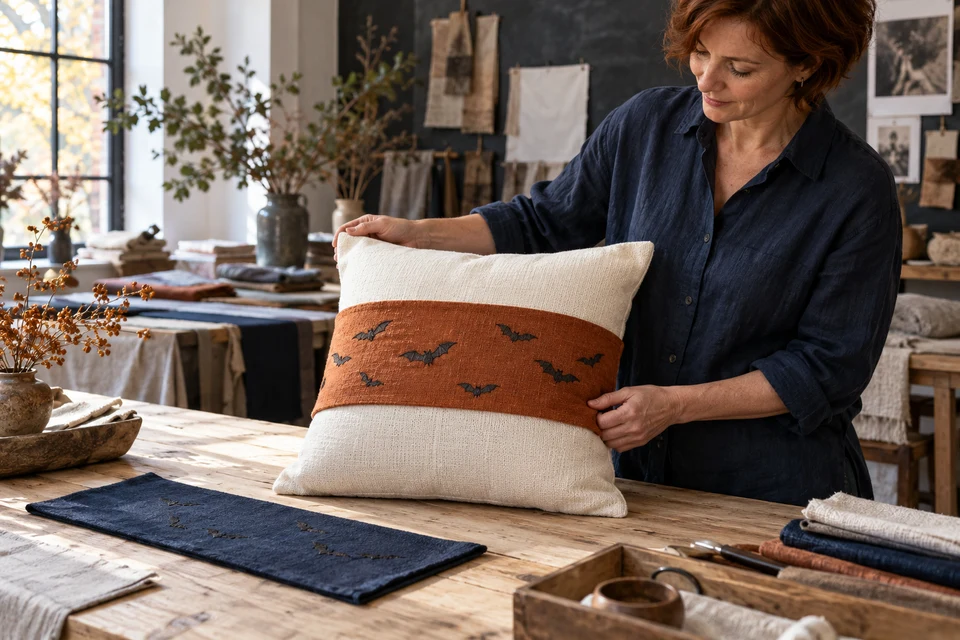
A removable decorative sleeve can add a Halloween motif to an already covered cushion while leaving the base fabric visible. The buying decision differs from ordering a complete cushion cover: the base cover and insert remain separate, and the overlay must work around their assembled shape. A useful specification identifies the reference cushion, the exposed margins and the closure. It does not assume that one sleeve fits every nominal cushion size or that the photograph shows all items included in the sale.
Identify the filled base cushion
Nominal cover size is not the installed circumference
Choose the actual cover-and-insert combination used for development. Record its relevant dimensions and fullness in the agreed condition, then show how the sleeve travels around it. A flat cover measurement alone does not describe the path over a filled cushion. Add the reference base to the technical pack, clearly marking whether the order includes that base or only the decorative overlay.
Review the overlay on the same reference during revisions. If the retailer intends to offer it for several base cushions, list those combinations and request separate fitting observations. Avoid translating one successful fit into a universal-size claim. The buyer should decide whether a tailored fit, adjustable arrangement or limited set of compatible bases best matches the retail proposition before asking suppliers to quote competing versions.
- Name the actual filled reference cushion.
- Keep compatibility claims limited to reviewed combinations.
Set the visible margins on the front
The exposed base is part of the design
Specify the overlay's finished width and intended position on the cushion face. Show how much of the base remains visible on either side in the fitted sample, rather than approving the sleeve as a flat strip alone. A wider overlay may conceal the original cover's design; a narrower one may leave insufficient space for the chosen Halloween motif. Review the complete composition from the intended display direction.
Place the bat or other motif relative to the visible installed area using the artwork version record. Keep the rear join and any hidden region out of the principal motif unless that placement is deliberate. A change in sleeve circumference can shift where the artwork lands after installation, so confirm the finished position again when the fitting construction changes.
- Approve overlay width and exposed margins together.
- Check artwork after installation, not only on the flat strip.
Define the rear join or closure
A continuous sleeve and an adjustable wrap are different products
State whether the overlay is a closed loop, a tied wrap or another proposed arrangement. Show the rear construction, closure position and the way it contacts the existing cover. Include any fastening component in the material and cost records. Do not let a sample maker add an unrecorded adjustment merely to achieve an attractive front view on a cushion that differs from the agreed reference.
Inspect the edges and rear join for local bulk against the base. The seam specification method can record the offered construction. Ask the buyer to define the intended handling review, including installation and removal, without inventing a universal comfort or retention threshold. A decorative sleeve should not be described as securing the insert or replacing the original cover's closure.
- Show the rear arrangement and all included fasteners.
- Keep overlay function separate from the base cover's closure.
Review movement and contact in the intended use
A static photograph cannot establish retention
Observe the fitted overlay under the buyer's agreed handling sequence. Record whether it rotates, bunches or changes the exposed margins, and whether the closure moves into a visible area. Use the actual base fabrics proposed for compatibility because surface texture can change the interaction. These observations should remain specific to the sample and procedure, not become a blanket non-slip claim.
Identify any requested material, color-transfer or care evidence in a product testing plan. Keep the overlay and base care instructions distinct unless the combination has been reviewed. A removable seasonal accessory may be cared for separately; do not imply that the buyer can wash the complete assembled cushion without supporting instructions. Recheck fit if the agreed care process changes the sleeve dimensions.
- Observe rotation and bunching on the agreed base.
- Separate fit observations from material and care claims.
Describe the selling unit without ambiguity
The styled cushion may not be included
State plainly whether the selling pack contains only the overlay, an overlay with a cover or a complete filled cushion. Use pack imagery and copy that make exclusions clear. For multiple designs, count complete overlays and their closure components rather than confusing decorative sleeves with full cushion covers. The assortment checklist can reconcile those actual selling units.
Align the reference base, width, closure, artwork technique and packaging before comparing MOQ and price. Ask suppliers to identify setup costs or minimums driven by embroidery, print or fastening choices. Request a fitted sample and a packed unit before confirming production milestones. Keep Halloween launch timing conditional on the approved construction and confirmed delivery plan rather than implying stock from a styled reference image.
- Separate supplied overlays from styling cushions in retail copy.
- Compare quotations for the same fitted construction and pack.
Share the filled base-cushion reference and desired Halloween front view with FY Bedding. Request a fitted overlay, rear-closure view and clear selling-unit proposal before choosing the seasonal sleeve assortment.