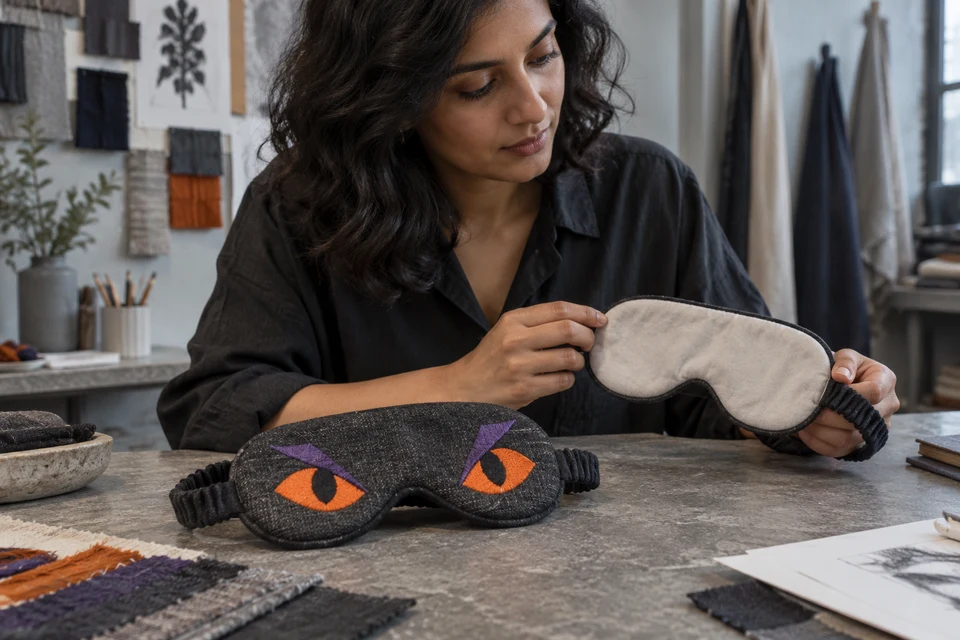
An adult Halloween textile eye mask combines a decorative front with a face-contact construction. A convincing monster-eye design does not establish comfort, light exclusion or suitability for a particular user. The purchasing brief should therefore separate the visible motif from the physical outline, lining and strap. This article addresses an adult retail accessory proposal, not a medical device, protective item or children's product; no sleep or blackout performance is assumed.
Draw the contact outline before placing the eyes
Artwork centers are not anatomical fitting points
Identify the finished width, height and nose-bridge contour on an unambiguous drawing. Define how the sample is held during measurement and which curve is the reference for the lining. The outer monster-eye motif can be larger or offset for visual effect, but it must not silently change the agreed outline. Include both faces in the technical pack so the maker can distinguish decoration from a construction requirement.
Review the proposed contour with the buyer's designated adult fit reviewers under an agreed procedure. Record observations about contact and positioning rather than claiming that one outline suits every face. A change to the nose cutout can alter the visible motif and the way the lower edge sits. Keep revision photographs tied to the exact pattern, and do not approve fit only from a mask laid flat on a table.
- Dimension the finished outline independently of the motif.
- Identify the actual fit-review procedure and sample revision.
Keep decoration and the lining specification separate
Inspect the reverse of the decorative process
Specify the face material, lining and any intermediate layer individually. Ask whether embroidery backing, print treatment or seam allowances could be exposed toward the wearer. Open a development sample when needed to understand the proposed layer sequence. A soft-looking outer surface is not evidence of the lining's composition or its behavior against skin, and a photograph cannot establish an irritation or allergy claim.
Require the supplier to describe how the decorated panel joins the lining at the edge. Use the seam specification approach to identify the actual join and any local bulk. Recheck the reverse if the artwork becomes denser or the decoration method changes. Keep material declarations and requested supporting evidence attached to the revised sample rather than treating the front artwork approval as approval of every internal component.
- List each layer and its proposed composition.
- Inspect backing, seams and edge bulk on the contact side.
Describe the strap in a defined state
An adjustable proposal needs more than a total length
Show the strap attachment points, proposed adjustment method and the conditions used to measure its length. Distinguish a relaxed elastic dimension from an agreed extended measurement; neither should be invented from the photograph. If fabric covers the elastic, identify how the covering is joined and whether folds accumulate near the fastening. The supplier should quote the same attachment and adjustment arrangement that appears on the approved sample.
During the agreed review, observe whether moving the strap shifts the mask edge or pulls the decorated face into a different shape. Document the finding without setting a universal comfort threshold. Where testing is needed, put the intended observation and method into a product evidence plan. Do not advertise reliable pressure distribution, universal sizing or retained elasticity on the basis of a brief fitting session.
- Identify relaxed and other requested measurement states.
- Repeat the contour review after changing the strap construction.
Approve the monster eyes on the assembled face
A centered flat graphic can move after turning
Mark the motif's position relative to the finished top edge and nose contour, then inspect an assembled mask with its lining and strap fitted. Embroidered eyes may appear uneven if the panel curves or the edge seam consumes different amounts of the artwork. Keep the accepted expression and placement visible in the artwork version record, including the intended left and right orientation.
For a range containing different characters, check whether each design uses the same construction. A new raised eyebrow, applique or densely stitched pupil can change local stiffness and bulk. Ask which variants need a physical sample rather than extrapolating from one simple design. Record the cosmetic review separately from fit and material evidence so approval of a compelling Halloween expression cannot accidentally release an unreviewed lining.
- Review placement after turning and final assembly.
- Identify variants that change stiffness or contact-side construction.
Limit retail wording to supported attributes
A decorative theme does not establish functional performance
Prepare proposed fiber, care, sizing and use wording for the actual retail channel. Keep medical, sleep-improvement, blackout and child-use statements out unless the responsible product owner has established the relevant evidence and requirements. Ask for care review on the assembled article, including decoration, lining and elastic. The buyer resource checklist can organize these requests without presenting an unfinished proposal as a tested product.
Before comparing prices, align the layer specification, motif technique, strap, individual packing and assortment count. Confirm whether a different artwork or strap color introduces a separate setup or minimum. Retain one sealed selling pack alongside the development sample, and check that its contents match the approved version. Request the actual sampling and production schedule rather than promising a Halloween arrival date from a stock photograph.
- Keep unverified sleep, blackout and medical claims out of copy.
- Align the quoted construction and pack with the released sample.
Send FY Bedding the adult accessory brief, motif file and proposed lining and strap requirements. Request separate artwork, construction and fit-review records before deciding whether the sample is ready for the intended retail channel.