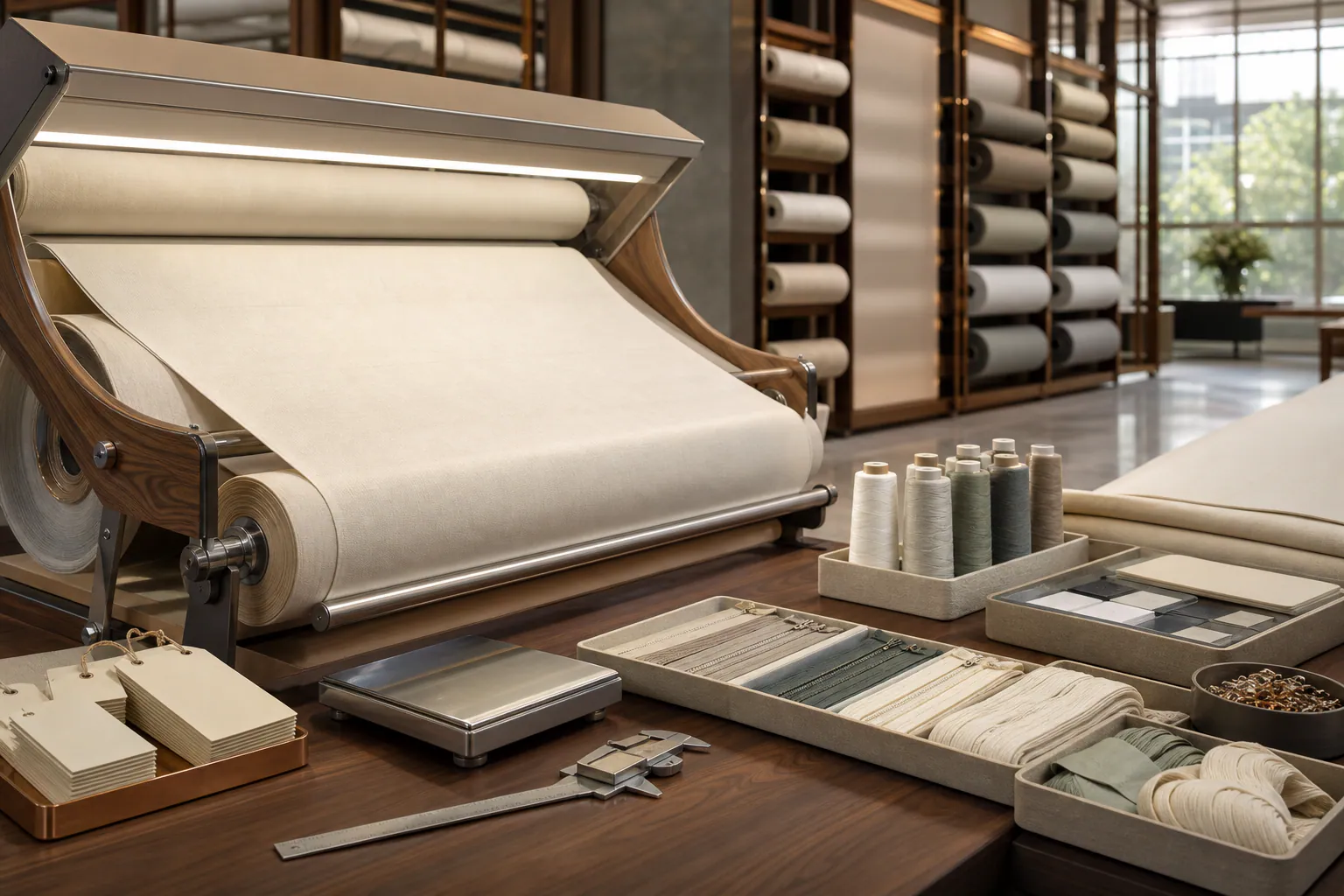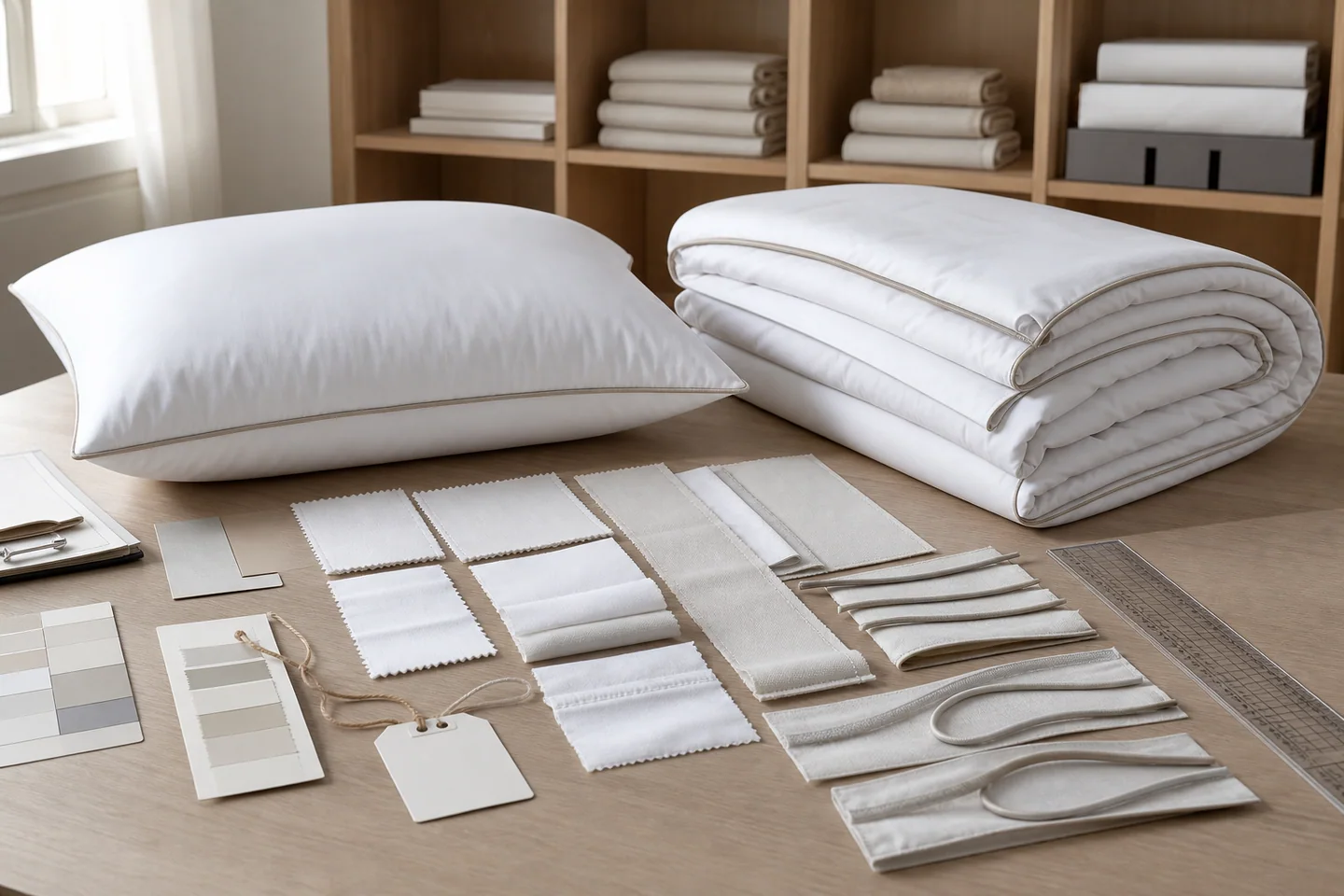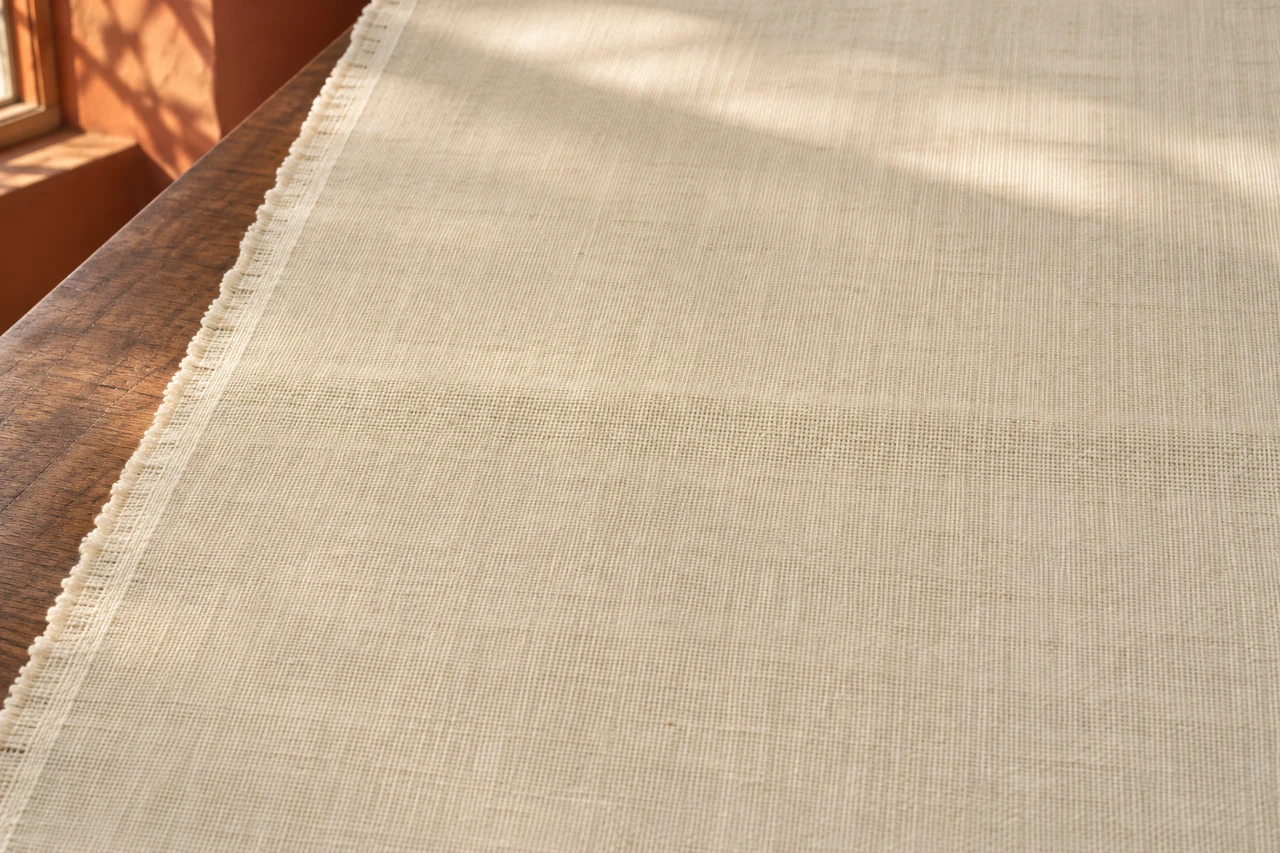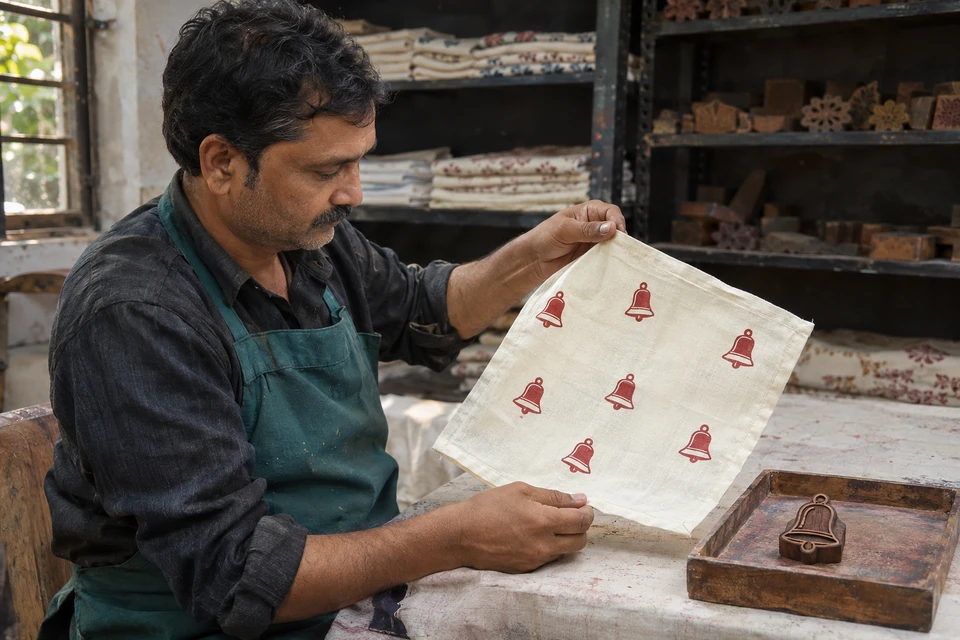
A fine outline around a Christmas bell can make a hand-block-printed napkin feel deliberate and lively. When the coloured fill shifts relative to that outline, the effect may remain acceptable, or it may turn into a visibly doubled motif. Calling every shift handmade character leaves the buyer and supplier without a decision rule. Agree the intended relationship first, then use real printed references to show what variation the project can accept.
Identify which impressions create the motif
Do not assume every colour comes from one block
The V&A explains relief printing as transferring an image from raised areas of a block to another surface. For the proposed napkin, ask the maker to identify which impressions form the outline, which form the coloured interior and whether any detail is added by another method. This is a construction question about the actual proposal. It does not establish a geographic craft origin, a particular workshop relationship or a handmade claim for a product that has not been documented.
Keep an original authorised motif file with the supplier's interpretation. A mock-up may show the outline and fill as one perfectly aligned digital shape, while the physical proposal uses separate impressions. Ask the maker to show the expected result at the final napkin scale before agreeing the production route. If the offer is a screen-printed or digitally printed imitation of a block print, name it accurately and review it as that alternative rather than carrying over an unsupported process description.
Decide whether the outline should touch the fill
A deliberate gap is not failed registration
Mark the intended relationship at a broad motif area, a narrow corner and a small internal detail. An outline may be designed to touch the fill, overlap it slightly or sit outside it with visible ground between. Those choices produce different appearances. Show the selected relationship with a physical reference and an enlarged image that clearly identifies the location. Avoid a general instruction such as perfectly aligned when the artwork itself contains an intentional offset or uneven border.
For a bell, inspect the upper loop, the curved body and the lower lip separately. A small movement that is unobtrusive across the broad body may close a narrow opening or create a second edge at the lip. Record which detail controls acceptance. If the design cannot retain that detail through the proposed route, ask for a deliberate artwork revision and review it at normal viewing distance. Do not let individual printers improvise different corrections within one order.
Build a bounded set of physical examples
Character needs a limit as well as a preferred sample
Request several identified impressions that represent the maker's proposed production appearance. Select a preferred reference and discuss any examples near the boundary of what the buyer finds acceptable. Keep the actual samples where practical, supported by photographs under the same lighting and at the same scale. A screen image alone can hide small gaps or exaggerate them through contrast. The goal is an agreed visual boundary, not a universal numerical tolerance borrowed from a different print process.
Record the direction and location of each shift rather than reducing the discussion to good or bad. Separate outline-to-fill movement from incomplete coverage, a smeared impression or a changed ground shade. They may require different technical responses. If a sample is held for review, ask the responsible maker to propose a controlled correction. Purchasing should not prescribe extra pressure, additional paste or another impression as an improvised remedy; those actions can change the appearance elsewhere in the motif.
Inspect the relationship across a finished napkin
One successful bell cannot approve the whole field
Review enough of the printed area to include several adjacent motifs and the positions near the finished edges. Follow the same outline-to-fill relationship across the field. Note whether a recurring shift changes direction, becomes more visible toward one side or affects only one detail. Record the sample identity and the locations of the observations so the supplier can investigate. A close-up of the neatest motif should remain a detail view, not the only evidence used for approval.
Next look at the hemmed napkin and the intended retail fold. Confirm that the design still reads as planned where motifs are partly concealed or approach a corner. This is not a demand for every item to look mechanically identical; it is a check that the agreed hand-printed character remains coherent on the product being purchased. Where the care plan requires a processed sample, compare the same motif relationships afterward and distinguish movement or colour change from a pre-existing offset.
Keep the accepted variation visible in inspection
Do not repair findings only for the camera
Give inspectors the chosen reference set and a short list of locations to examine. Ask them to record unclear cases for the agreed decision owner rather than inventing a wider handmade allowance. Preserve the relationship between each finding and its production lot or sample reference. If a supplier submits a revised sample, identify what was changed and whether the correction affects the outline, fill, ground or finishing. A cleaner photograph with no explanation is not a traceable revision.
Agree how nonconforming pieces will be held and assessed within the order's actual quality plan. This article does not prescribe an acceptance sampling level or promise a particular rejection rate. It defines the visual question that such a plan needs to address. Any rework route should be approved by the responsible technical team and reviewed on the actual textile. Do not recolour or redraw a published product photograph to conceal a print relationship that remains unresolved in the goods.
Quote and describe the selected interpretation
Seasonal character is not a delivery guarantee
Send the motif revision, fabric proposal, intended impression sequence and accepted visual range with the quantity and size requirements. Ask the supplier to confirm what the quotation covers, including sample rounds, finished hems and the presentation pack. A finer outline or an additional colour impression may change the proposed work; obtain the supplier's actual scope rather than assuming that every version sits within one generic block-print price. Keep minimums and timing specific to the confirmed proposal.
FY Bedding can use a complete outline-and-fill reference to discuss the development question with you. Include both the preferred appearance and examples that explain your boundary, not just a festive mood image. Before retail release, align the product description, imagery and supplied process evidence. Avoid naming a traditional workshop, place of origin or brand association without support. Christmas motifs establish the intended collection theme, while stock availability and delivery dates still require separate confirmation.
Map outline and fill, agree whether they touch or leave a gap, and retain a bounded physical variation set that inspectors can apply to complete finished napkins.
Method references: V&A: raised-block relief printing.