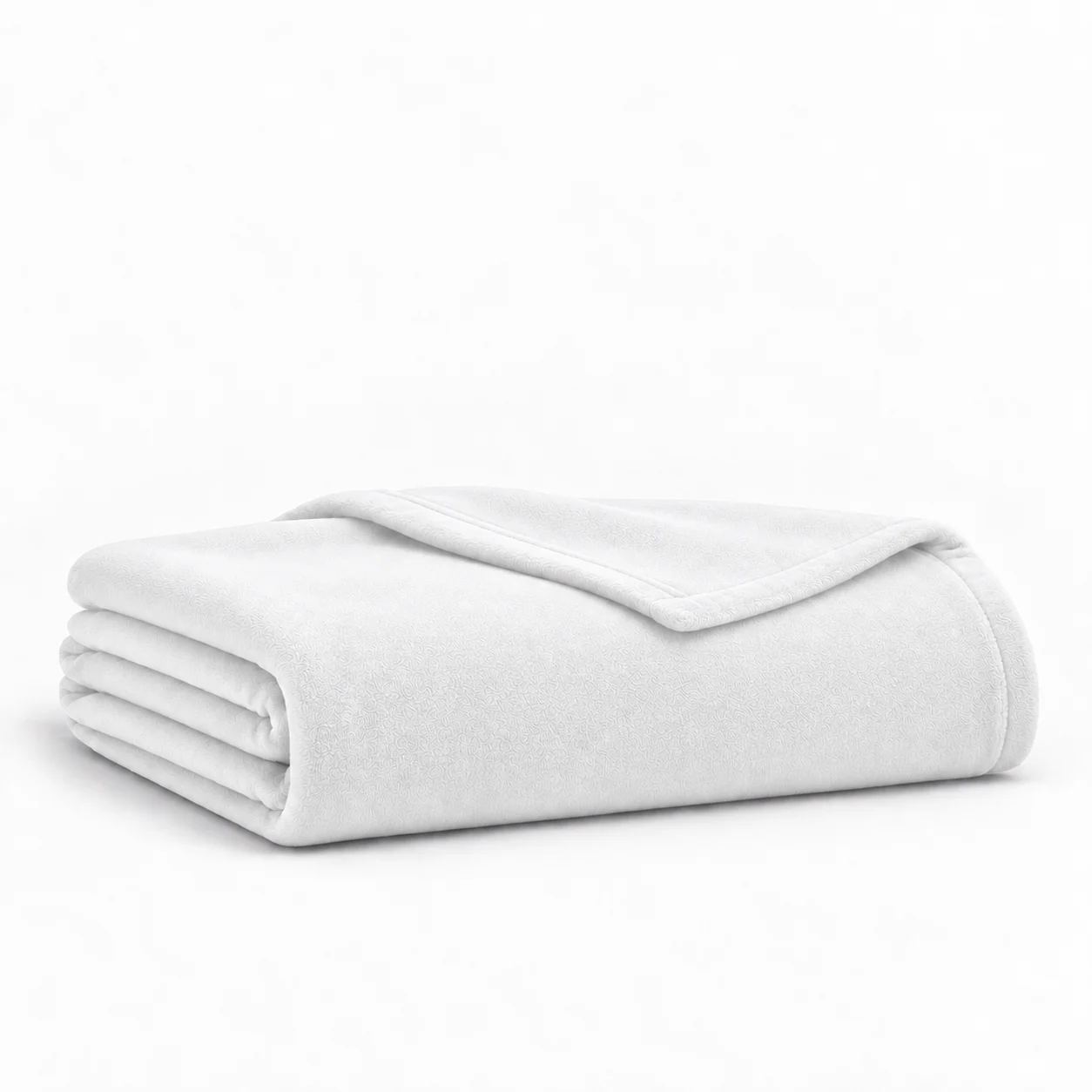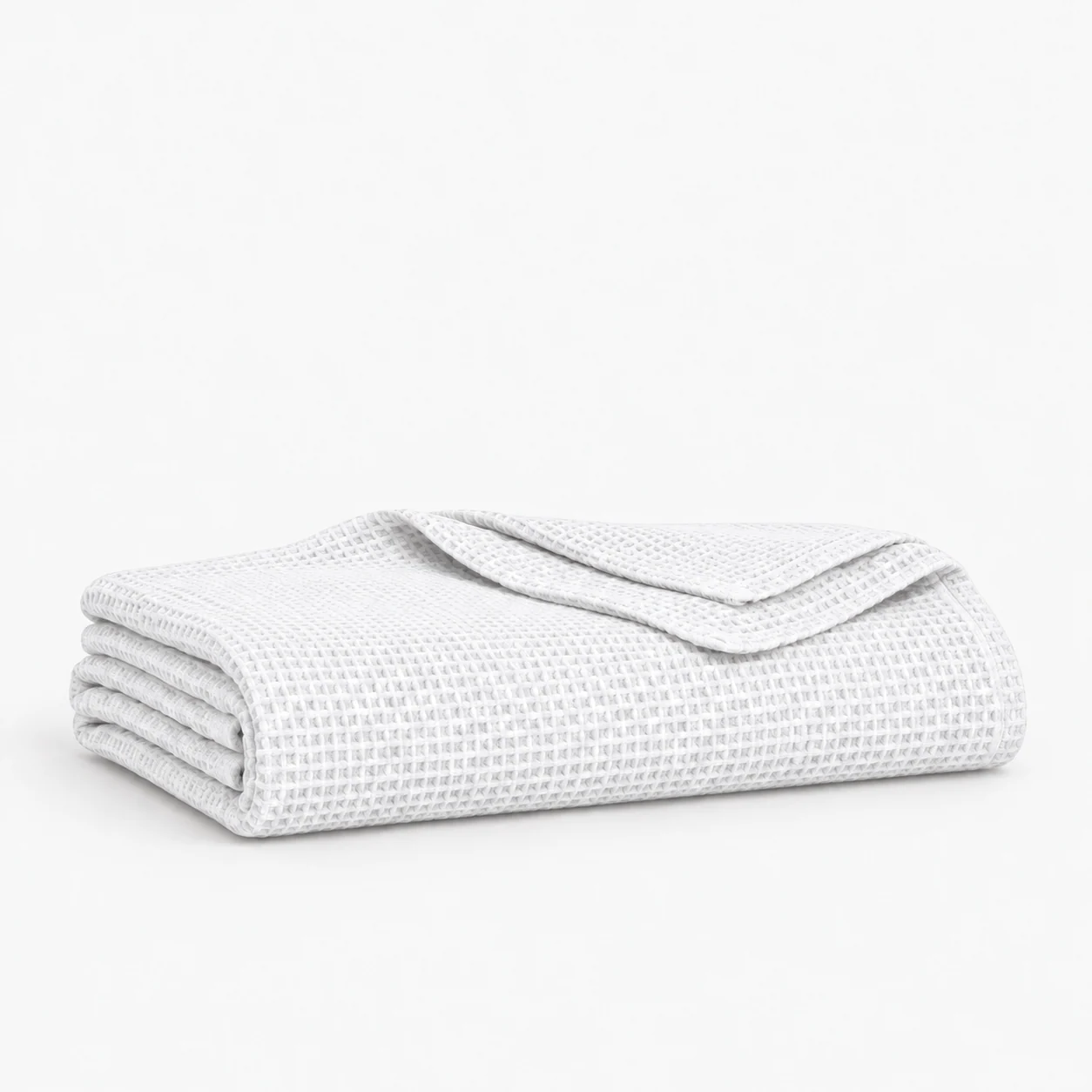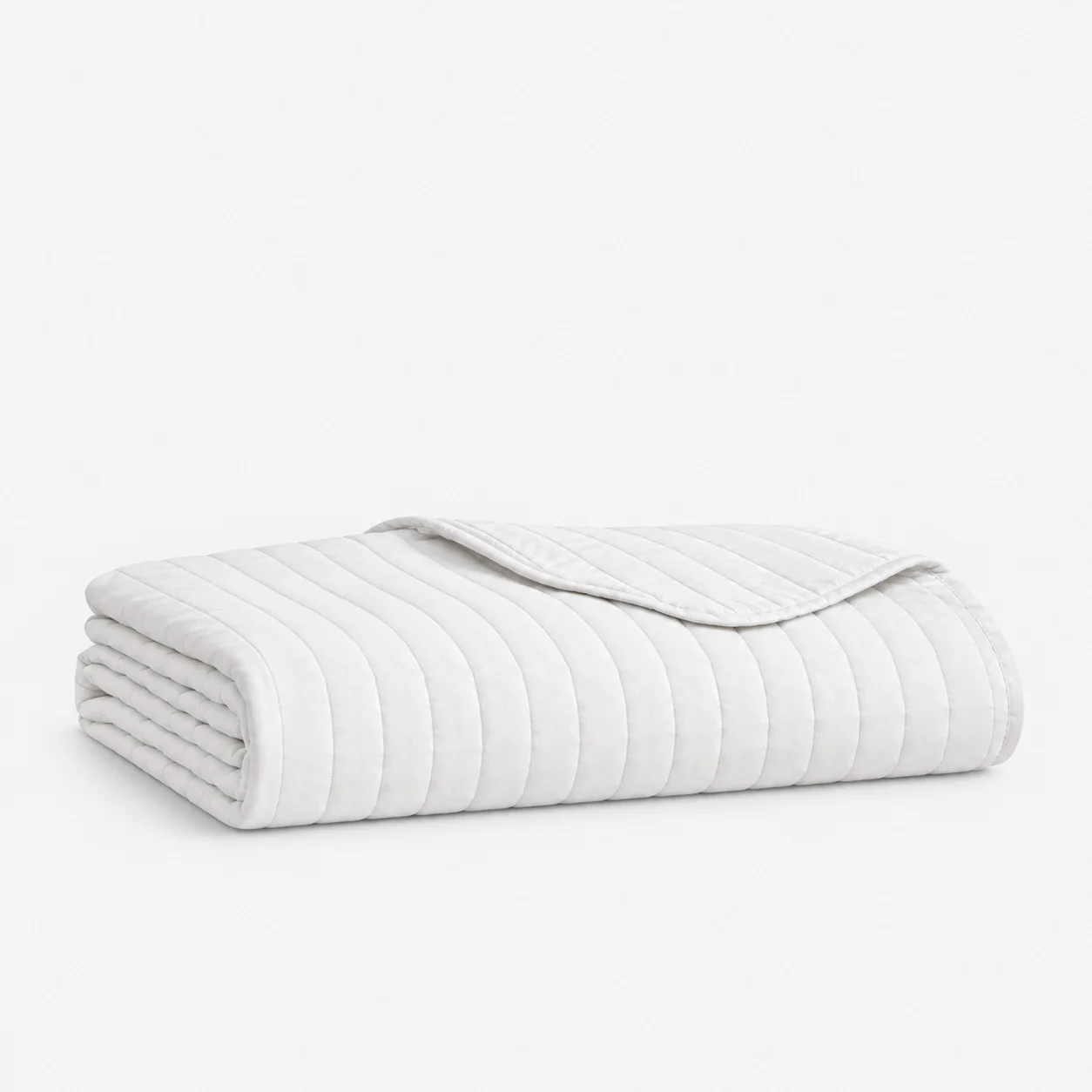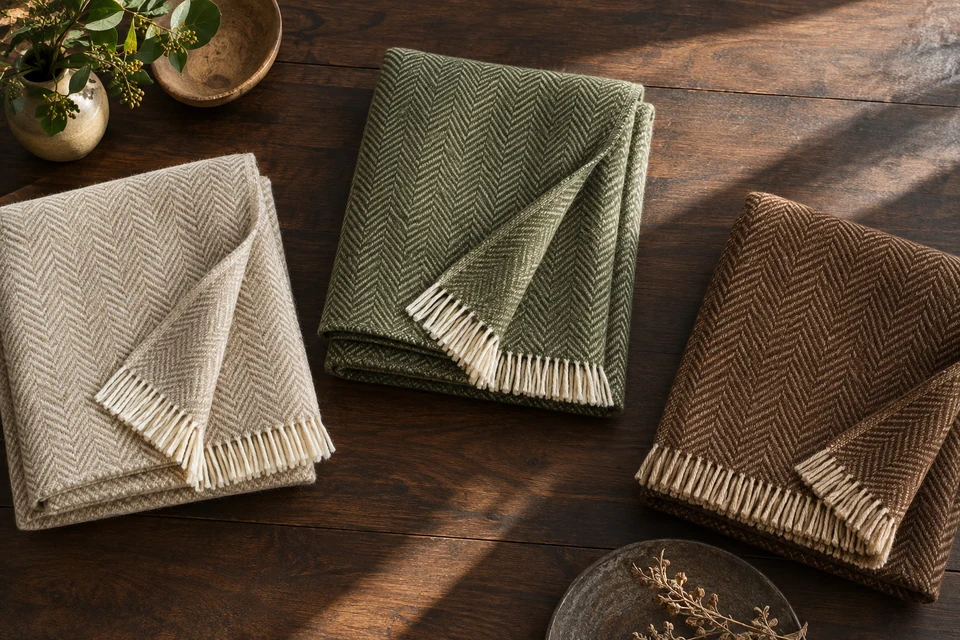
Herringbone can give a blanket a quiet geometric rhythm without relying on a large printed motif. Yet two products described with that word may differ in yarn, construction, finish, scale and intended use. A buyer comparing photographs alone can miss the very differences that determine the collection's hand and presentation. Begin by establishing what creates the pattern, then decide which complete blanket belongs in the range. The name identifies a direction for discussion, not a ready-made performance specification.
Establish whether the pattern is woven
A visual resemblance is not the same specification
CottonWorks defines herringbone as a broken twill with alternating right- and left-hand twill sections. Its woven-design explanation distinguishes the offset break from the point in a chevron. Those references clarify terminology; they do not establish the fiber, weight or performance of a proposed blanket.
Ask the supplier to explain the actual offered construction and show both faces of a sufficiently large sample. If the product is a print with a herringbone appearance, describe it that way rather than calling the visual effect a woven structure. Record material composition and finish separately. The specification brief should keep pattern, fiber and surface treatment from becoming one ambiguous product label.
Judge the rhythm on the whole blanket
A close-up and a room view answer different questions
Compare the pattern at the distance where the product will normally be seen. A fine structure that reads clearly under a macro lens may appear almost solid across a bed; a bolder contrast can dominate a small sofa display. Neither is automatically better. Ask the design owner whether the blanket should anchor the collection visually or provide a quieter layer beside other textiles.
Review the proposed face and reverse, then drape and fold the full sample in the intended arrangement. Record whether either face may be presented to the customer. Where color contrast or yarn direction matters, keep the sample orientation consistent across comparisons. The pattern placement guide becomes relevant if a particular edge or panel relationship is required, but avoid demanding unnecessary motif alignment merely because the blanket has a repeating structure.
- Review a full drape as well as a close detail.
- Name the intended display face or both accepted faces.
- Identify the pattern's role within the surrounding range.
Put yarn, hand and coverage beside the pattern
Do not let a refined appearance settle the use decision
Request finished dimensions, weight and the supplier's material and construction description for each candidate. Then compare how the actual blankets feel and fall. A dense-looking photograph is not a measurement, and an apparently soft surface does not prove a particular fiber. Use the handfeel and finish review to record any preparation or finishing difference that might influence the comparison.
State whether the item is a decorative foot throw, a sofa layer or a blanket expected to provide a particular bedding function. The blanket and throw guide addresses the broader use decision. Herringbone itself does not establish warmth, snag resistance, pilling behavior or hotel-laundry suitability. Select the actual evidence needed for the proposed product instead of transferring those properties from the pattern name.
Include the perimeter in the comparison. A bound, hemmed or fringed option can present the same main fabric differently. Ask which edge constructions are actually offered, how the visible finish is controlled and what changes the finished dimensions. Retain the accepted edge sample with the body material rather than approving them as unrelated decorative pieces.
Revisit the structure after care and handling
Keep the initial sample available for an honest comparison
Have the appropriate technical owner agree a care and handling assessment for the intended use. Review the identified blanket before and after that process, recording dimensions, edge shape, surface appearance and pattern presentation. Avoid smoothing or stretching one candidate into a more attractive state than another. A comparison needs consistent preparation and useful overall views, not just a new close-up of the best area.
If a concern appears, describe it before assigning a cause. A change in the visible pattern, local waviness or a surface mark may need different follow-up. The surface-damage guide can support the evidence plan where relevant. Preserve the actual observations and the care route; a limited trial should not become a lifetime durability promise or a general claim about all herringbone fabrics.
- Keep an identified unprocessed reference.
- Compare body, perimeter and pattern in the same state.
- Match additional evidence to the observed concern.
Build the assortment around real fabric options
Commercial simplicity must be confirmed, not assumed
Ask whether the proposal uses an existing fabric construction or requires a new development route. Herringbone should not automatically be quoted as a custom jacquard; the jacquard development guide describes that separate decision. The supplier should identify which preparation, yarn or weaving stages apply to the actual offer rather than price from a fashionable pattern name.
List the desired colors and finished sizes, then ask which share a material platform. Confirm whether a change affects yarn allocation, fabric minimums, usable width or conversion yield. Do not divide one headline fabric quantity across many blanket SKUs until consumption and edge requirements are understood. A focused launch may preserve a stronger visual range with fewer combinations than an extensive assortment that is difficult to reorder.
Finish with the fold, pack and repeat-order brief
The buyer should recognize the same product after delivery
Test the intended retail fold, belly band or other approved packaging on the actual blanket. Check which portion of the pattern and edge the shopper sees, and whether unpacking reveals the face and dimensions described. Use the shelf-ready packing review when the product must fit a defined display. Do not use heavy staging to hide a different bulk or drape.
To request a useful herringbone comparison, send the intended use, preferred scale and color direction, size range and care expectations. Ask for clearly identified alternatives with construction differences stated openly. Keep the chosen fabric, edge and preparation references available for repeats so the next sourcing discussion starts with the accepted product rather than another appealing photograph.
Choose the herringbone blanket by its actual woven construction, complete-product presentation and evidence for the intended use, then align the assortment and packaging with that same reference.
Method references: CottonWorks: herringbone construction definition; CottonWorks: herringbone and chevron construction distinction; no performance claim is transferred.