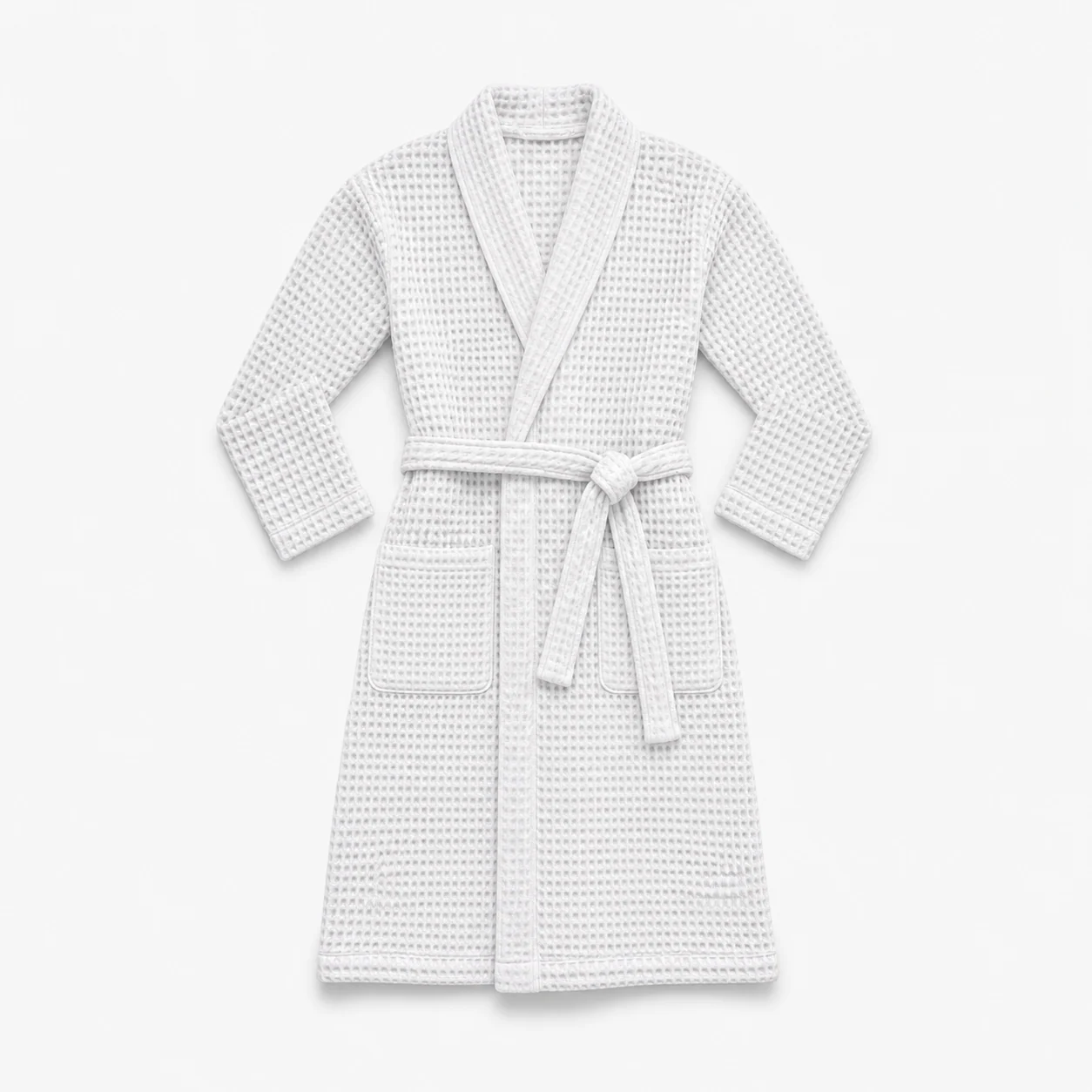
Missing belts do not always justify replacing otherwise serviceable hotel bathrobes. A separate belt order can be useful, but only when it is matched to the robes still in circulation. The original robe size label may not describe today's loop opening, care condition or tying requirement. Build the replenishment decision around actual retained robe families and a clear compatibility record, rather than ordering one generic strip of white fabric.
Group the retained robes before requesting belts
A size name is not a compatibility group
Collect representative robes from the current fleet and identify their model, size, fabric construction and service history where available. Separate visibly different generations even if they share the same purchase description. Include examples that represent the actual condition in use, not only an unused archive sample. Record which groups need replacements and how many belts are required for each group.
Create a simple compatibility table with one row per robe family and a reference photograph of its belt-loop area. If the original specification is available, use it as context rather than overriding the physical evidence. The reorder-control guide helps distinguish an unchanged repeat order from a replacement component that must work with retained goods. Keep unidentified robes out of a blanket compatibility claim until they have been reviewed.
- Separate robe models and generations before counting demand.
- Retain one identified robe reference for each proposed belt family.
Check loop passage and usable tying length
Approve the belt on the robe, not flat on the table
Measure the usable loop opening on the retained reference and compare it with the proposed belt's finished width and thickness. Feed the belt through the loops without folding it into a narrow cord or forcing a bulky end through. Then review the tying arrangement under the hotel's intended use conditions. Define the usable belt length and finished end construction explicitly rather than relying on an approximate cut length.
Ask the hotel operations team to participate in the fit decision. A belt that threads through successfully may still be inconvenient to tie or may sit differently from the original. Use belt-loop placement inspection to document the robe-side relationship. There is no need to invent a universal replacement length: approve the relevant pairing and record which robe family it covers.
- Check both ends through the narrowest representative loop.
- Record the approved robe-and-belt pairing, not just the belt dimensions.
Compare hand, thickness and shade deliberately
A replacement need not pretend to be an aged original
Request the proposed belt's fibre, construction and finishing description. Compare it with the retained robe under consistent light and handling conditions. Discuss whether the hotel expects a close visual match or accepts a deliberate replacement standard. A new belt may differ from a robe that has had many laundry cycles; that difference should be acknowledged in the approval rather than hidden in a highly lit photograph.
Do not ask a supplier to guarantee an invisible match across an unrecorded mixed fleet. Set a practical acceptance reference for each group and record any permitted shade relationship. The shade-band control guide supports a documented visual range. If the replacement uses a different fabric to simplify replenishment, treat that as a design decision requiring fit and care review, not an unannounced substitute.
- Review new belts beside actual retained robes.
- Separate acceptable shade variation from incorrect construction.
Review compatibility after the hotel's care process
Initial fit is only one stage of approval
Agree a representative care comparison with the hotel's laundry and technical team. Record the process, belt identity and robe reference used, then repeat the loop and tying review after conditioning. Check length, thickness, twisting, edge appearance and end finish. Do not assume that a replacement belt follows the retained robe's behaviour merely because both are described as cotton or waffle.
Keep the approved care instructions and process limits attached to the replacement component record. If the hotel outsources laundry, ensure the sample evidence and operational instructions refer to the actual proposed handling route. The outsourced-laundry custody guide can help maintain identity through a trial. Record observations without claiming a service-life improvement that the project has not established.
- Repeat the fit check after the agreed care sequence.
- Log which belt and robe were paired during the trial.
Make replenishment easy to identify
Control component quantities without replacing the fleet
Use a distinct belt SKU or component code and list the compatible robe families in the buying record. Agree the packaging unit and a clear external identification method so laundry or stores staff do not mix different lengths. Base the initial quantity on the identified replacement need and the hotel's chosen spare policy, not a supplier's generic proportion. Keep any uncertain compatibility groups separate in the order.
Ask how future changes will be notified, particularly width, end finish, fabric and care instructions. The component minimum-order guide helps frame discussions about shared constructions and separate lengths without assuming a particular MOQ. FY Bedding can review retained-robe measurements and sample references for a replacement-belt brief. Confirm feasibility, sample scope and replenishment timing before committing the hotel's operational plan.
- Label replacement packs by the approved compatibility group.
- Require approval before changing a belt component used across several robe models.
A replacement belt is ready to order when the hotel can identify the robe families it fits, the agreed usable length, the accepted material and shade relationship, and the result of the relevant care comparison. One generic belt description is not a fleet-wide approval.