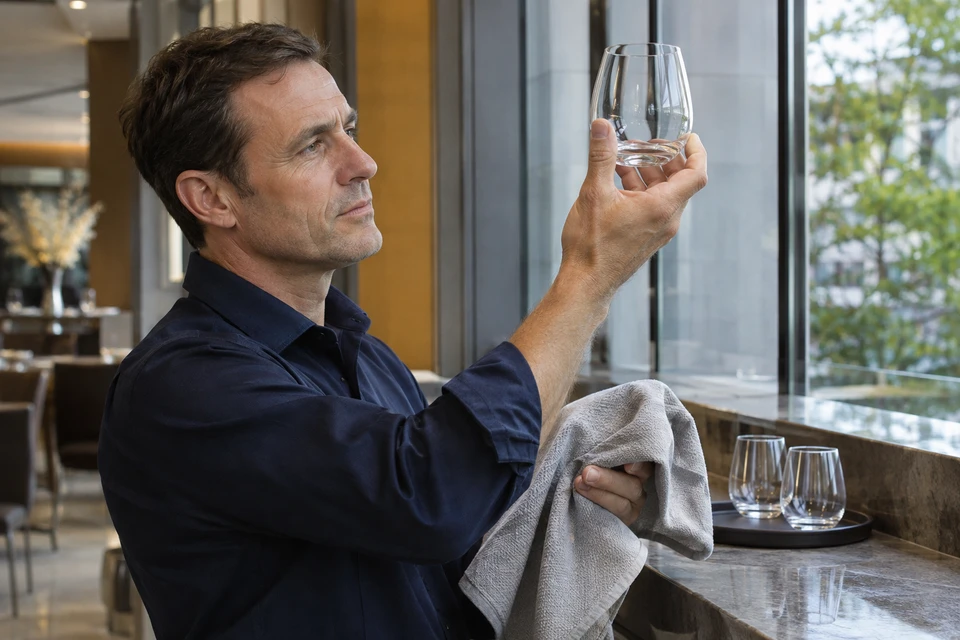
A cloth can feel excellent and still leave the hotel's glassware looking unfinished. Evaluate polishing proposals on the surface they are meant to finish, while controlling the preparation and handling that can otherwise make a fair comparison impossible.
Define the finishing task with the service team
Polishing is not the entire glassware-cleaning process
Ask staff which glassware shapes and finishing situations the cloth will serve. A small stemless tumbler, a large wine bowl and a narrow glass may present different handling needs. Choose representative intact items and record why they were selected. Keep the hotel's approved cleaning and hygiene procedures in place; a procurement trial should not replace them or imply that a polishing cloth provides sanitisation.
Describe whether the evaluation concerns visible finishing after the existing process, handling comfort or both. Identify the state of the glass and cloth at the start of each comparison using the service team's approved procedure. A sample used on a damp surface cannot be fairly ranked against another used on a differently prepared dry surface without acknowledging that difference. The first useful decision is a consistent task, not an immediate ranking of fibre names.
Compare identified cloths under the same conditions
Keep size and construction visible in the record
Request the proposed fibre composition, construction, finished size, edge treatment and care information for each cloth. Do not infer a blend or cleaning performance from a soft hand or a product photograph. Label the samples privately so the team can trace observations to the correct proposal. If the buyer uses a blind comparison to reduce brand preference, keep the identity key available to the person managing the trial.
Use comparable glass preparation, handling time and viewing conditions for each proposal. Record whether the sample is new or has been through the agreed care process. Manufacturing residues, previous use and laundry treatment are potential comparison variables, not details to omit. Ask the technical owner to define any formal test required for the project; the working trial described here is a practical selection aid rather than a universal laboratory method.
Inspect the glass in useful light
Count observations separately instead of giving one vague score
Look at the finished glass against a consistent bright background and from more than one angle. Record loose visible fibres, streaks, haze and isolated marks separately. A cloth may leave little lint but still produce an unsatisfactory visual finish under the chosen procedure. Conversely, a mark may already have been present before the cloth was used. Include a pre-trial observation or a suitable control so the team does not assign every imperfection to the textile.
Photograph examples with enough context to identify the glass and the inspected area. A close crop can document a fibre, while a broader view shows whether the defect is noticeable in normal presentation. Avoid turning an uncontrolled phone photograph into a numerical performance claim. Agree the buyer's acceptance language with the relevant technical owner and use it consistently, including how uncertain observations should be reviewed rather than scored as definite failures.
Review the grip without stressing the glass
Edge bulk and usable area affect the task
Ask trained staff to handle the selected glassware using the venue's safe procedure. Observe whether the cloth provides a manageable working area, whether its edge repeatedly enters the area being finished and whether staff have to change their grip awkwardly. Use intact glassware only and avoid forceful twisting or improvised pressure tests. The objective is to assess the textile during ordinary work, not to demonstrate glass strength.
Record comfort and control separately from the visible result. A larger cloth may be convenient for one task and cumbersome for another; a thick edge may be unobtrusive on a broad tumbler but awkward in a smaller opening. If the department needs two cloth sizes, identify the task assigned to each before multiplying stock lines. That gives the purchase a practical rationale rather than assuming one nominal size must suit every service station.
Repeat the comparison after the agreed care process
A new-cloth result does not settle an operational purchase
Put samples through the proposed care route under controlled conditions and keep their identities intact. Recheck dimensions, edge condition and the same glass-finishing observations. Record the actual number of cycles evaluated and avoid extending that limited result into a lifetime claim. If the hotel uses an outside laundry, confirm how the proposed cloth would be handled within that system before treating a sample-room result as representative.
Investigate changes in visible finish with the service and laundry teams. A difference may relate to the cloth, the care process or the preparation of the glassware. Change one relevant variable at a time where practical and retain the observations from the earlier comparison. A useful procurement decision explains why the selected combination works for the intended operation; it does not simply repeat a supplier's unsupported lint-free description.
Build an order and receiving reference from the trial
Purchase the confirmed proposal, not a generic description
Record the selected material proposal, size, edge finish, approved sample identity and care route. Add the intended task and the visual acceptance reference used by the service team. Ask the supplier which changes would require a new sample, including a different fabric construction or finishing route. Quantity planning should follow the actual service and laundry flow rather than a universal cloth-per-glass ratio supplied without knowledge of the operation.
Send FY Bedding the glassware types, finishing task, quantity estimate and comparison observations through the hospitality project enquiry. Ask for material and sample options without assuming an unverified composition or performance result. At receiving, compare the supplied cloth with the retained reference and repeat the bounded working check before wider use if the project requires it. Keep formal hygiene requirements and any claimed performance evidence under their appropriate review process.
Use the same glass preparation and viewing setup for each cloth. Separate lint, smears, grip and post-care observations; a clean-looking result is not a sanitisation claim or lifetime guarantee.