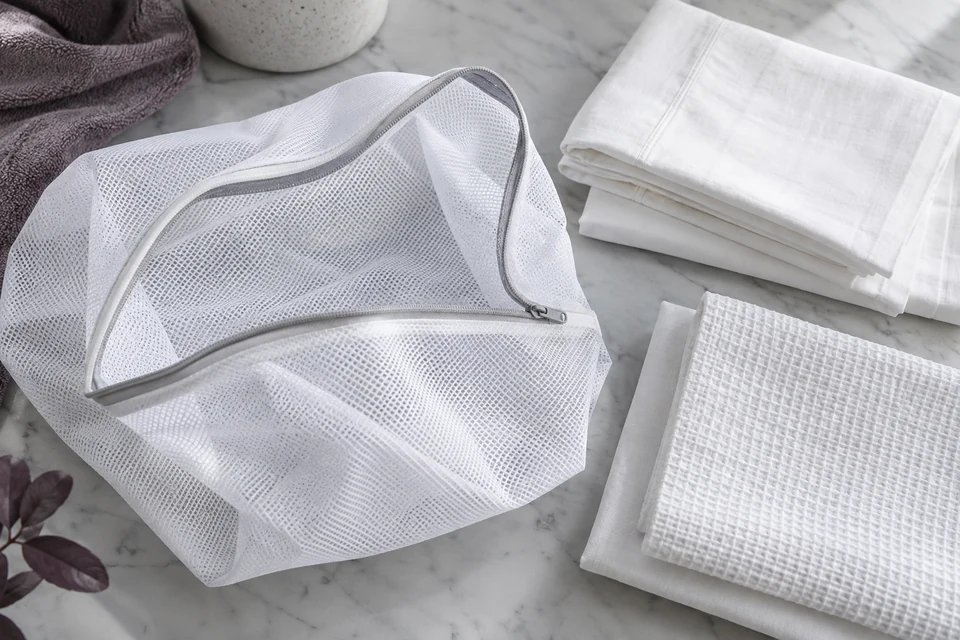
A hotel laundry mesh bag may help keep an identified group of items together, but its presence does not establish cleaning effectiveness or compatibility with a laundry process. Buyers need an operator-approved trial covering the actual items, usable loading arrangement, closure and identification route. The purchase decision should distinguish bag construction from the laundry provider's process approval. This guide focuses on the accessory and its traceable use, without prescribing wash temperatures, chemical doses, machine settings or universal loading limits.
Start with the operator's permitted use
Identify which items may enter a bag
Ask the responsible laundry operator whether the proposed items and bag are permitted in the intended process. Record the bag manufacturer's relevant product information and the operator's restrictions before arranging a trial. Do not assume that a mesh appearance means compatibility with every machine or textile. The outsourced laundry custody record should distinguish the bag's identity from the identity and count of the items placed inside it.
Describe the intended purpose precisely: keeping a small identified group together is different from making a protection, hygiene or loss-prevention claim. If the provider cannot support the proposed purpose under its operating conditions, retain that as an unresolved requirement. Put the intended items, care information and decision needed into the buying brief. This lets the supplier propose a suitable accessory while leaving process authorization with the organization responsible for the laundry operation.
- Confirm operator permission before the trial.
- Identify the items and intended purpose.
- Record manufacturer information and restrictions.
- Separate accessory identity from contents identity.
Review usable loading and closure
Compare the real contents with the proposed bag
Bag dimensions alone do not describe a usable loading arrangement. With the operator, record the type and quantity of the actual items used in the trial, their starting condition and how the closure is presented. Avoid assigning a universal fill percentage from a photograph. If the intended load cannot be accommodated according to the operator's instructions, the purchasing decision must change the bag, the grouping or the proposed use rather than force the sample closed.
Inspect the identified closure, seams and accessible trim for conformity to the submitted reference. Record how the operator expects the closure to remain contained and which visible defects require withdrawal from use. A closure that works once on an empty bag does not approve a filled assembly through a process. Keep construction observations in the inspection record, distinct from the laundry provider's assessment of operational compatibility and finished-item results.
- Record the actual trial contents.
- Follow the operator's loading instructions.
- Check closure presentation on the filled bag.
- Keep construction and process decisions separate.
Trace identity through handoffs
Make the contents count independently recoverable
Define how staff identify the bag and reconcile its contents at the relevant handoffs. Where a marker is proposed, obtain the responsible parties' approval for its material, position and process compatibility. Do not add an improvised tag or loose attachment to a laundry load. The record should allow staff to resolve a missing or unreadable identifier without assuming that every similar bag contains the same items or belongs to the same property.
Use a simple trial ledger that records the bag reference, starting contents, handoff owner and returned contents. Note any opening or regrouping that occurs during the permitted workflow. The procurement evidence file should retain both the ledger and the actual exceptions, including count discrepancies. A matched bag count is not a matched item count, so do not report complete reconciliation unless the level of identification required by the project has actually been checked.
- Approve any identification method before use.
- Record contents at agreed handoffs.
- Log openings and regrouping events.
- Reconcile items as well as bags.
Observe the authorized process outcome
Avoid turning a trial into a broad performance claim
Have the competent laundry team assess the relevant finished-item and accessory outcomes under its approved procedure. Record the process reference, trial date, bag version and observed condition without publishing unsupported cleaning or protection claims. The testing plan should identify any additional evidence needed for the project's stated requirements. A visually intact bag and a correct return count do not independently demonstrate cleaning efficacy or suitability for all future loads.
Document closure condition, seam changes, identifier legibility and any operational exceptions that the team reports. If an item requires separate assessment or reprocessing, preserve that disposition rather than counting the entire bag as an unqualified pass. A proposed change in bag construction, contents grouping or laundry route should return to the responsible operator for review. This prevents a narrow trial result from becoming an unrestricted instruction used across different properties or providers.
- Record the authorized process reference.
- Capture accessory and item outcomes separately.
- Preserve reprocessing or hold decisions.
- Limit approval to the reviewed arrangement.
Release the accessory with its use conditions
Keep replacement decisions visible
The purchasing release should identify the bag model, approved use, loading instruction, identification method and operator acceptance record. Include the observable conditions that lead staff to remove a bag from the approved workflow and the person responsible for deciding its disposition. Do not prescribe a universal service life without evidence. Where the operator changes, ask the new provider to review the arrangement rather than inheriting the previous provider's decision automatically.
For a hotel accessory sourcing request, provide the proposed textile group, required identity level and laundry operator's constraints. Request samples against that brief and separate any commercial quantity decision from the process trial. Keeping these records together makes reorder substitutions easier to assess: a similar mesh color or nominal size is not enough when closure construction, identification or permitted use differs from the accepted sample and documented workflow.
- Release the model with explicit use conditions.
- Define withdrawal and disposition ownership.
- Review changes in provider or construction.
- Match reorders to the accepted reference.
Buy laundry mesh bags against an operator-approved contents, closure and identification trial; never use the bag's appearance or a matched return count as evidence of cleaning performance.