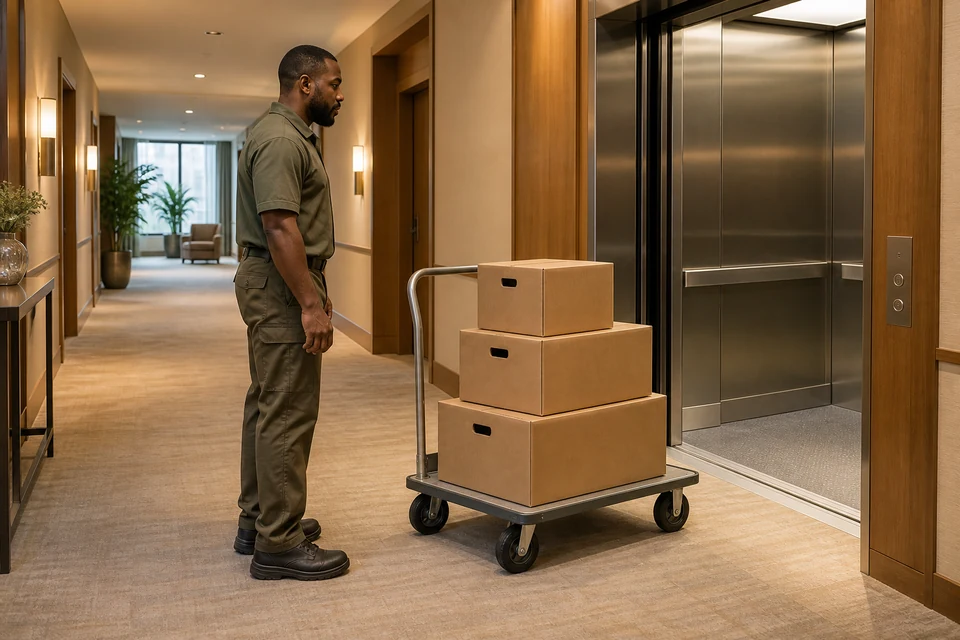
A hotel linen delivery can fit the unloading area yet fail at a service doorway, corridor turn or lift entrance. Procurement should verify the final internal route before freezing the delivery-unit configuration. This is a coordination task involving the property and competent logistics personnel, not an invitation to improvise equipment operation. The review concerns the packed unit's physical route into the property; floor allocation quantities and room setup remain separate decisions with their own reconciliation records.
Obtain the actual delivery route
Use property-confirmed access information
Ask the property to identify the permitted unloading point, staging area, service entrance, lift and destination store. Record restrictions supplied by the property rather than assuming that the public entrance is available. The hotel opening timeline should allow time for this confirmation before dispatch. A drawing from an early design stage may not represent installed doors, temporary protection or operating access arrangements.
Have the relevant property and logistics personnel confirm usable openings and route constraints, including turns and any changes in level. Record the source and date of that information. Do not publish universal clearances or infer safe equipment use from a photograph. Where capacity or operating limitations apply, obtain them from the responsible property or equipment authority and keep them with the route record.
- Identify the authorized route.
- Confirm installed rather than proposed access.
- Record information sources and dates.
- Obtain applicable limitations from responsible personnel.
Define the packed delivery unit
Include everything that travels through the route
Record the unit's complete external dimensions and gross weight using the final packing configuration. Include the pallet or approved handling platform, protective material and any projections. Carton dimensions alone may omit the feature that controls doorway passage. Align this record with the freight data handoff so the property is not planning access around an obsolete estimate.
Separate transport units from the units intended for internal movement. If the plan includes an authorized breakdown at the staging area, describe the resulting units and the required space and responsibilities. Do not assume that delivery staff will unpack or reconfigure the load without an agreed arrangement. Changes to pack configuration also need a review of protection and traceability, not just smaller dimensions.
- Measure the complete packed unit.
- Include the supporting platform and protection.
- Distinguish transport and internal-movement units.
- Identify any planned breakdown stage.
Review the route with competent staff
Resolve uncertainty before the shipment arrives
Have the property and logistics teams compare the identified unit with the confirmed access route. Where a physical trial is appropriate, let competent personnel define and conduct it under their normal approved controls. Procurement should record the outcome and conditions without prescribing lifting techniques or equipment maneuvers. A successful passage through one door does not by itself approve the whole route or the load's operation.
Include the transition into the destination store and the space needed for the agreed handover. The floor-delivery plan controls destination allocation; this route review supplies the physical constraints that allocation must respect. Record unresolved access questions explicitly and avoid dispatch instructions that depend on staff discovering a workaround after arrival.
- Review every identified transition.
- Use competent personnel for any trial.
- Record the approved conditions and limitations.
- Keep unresolved route questions visible.
Select a feasible delivery arrangement
Reconcile changes with packing and timing
If the unit is unsuitable, agree a revised unit, another property-authorized route or a planned staging arrangement with the responsible teams. Any change may affect carton protection, handling counts, arrival timing or the agreed service scope. Review the carton specification and the packed-unit planning record rather than altering the shipment informally at the dispatch point.
Identify who supplies any required authorized equipment and who controls the handover. Procurement should not assume that the supplier, carrier and property include the same internal delivery service in their arrangements. Record the agreed operational scope and obtain the necessary commercial confirmation through the project's existing process. This article does not establish contractual obligations for any party. Make the destination route part of the readiness decision, rather than a note hidden in the delivery address. If access information is still provisional, distinguish a planning estimate from the property-confirmed arrangement. A shipment may be physically complete while the internal receiving plan remains unresolved. Procurement can record that dependency and obtain a coordinated decision on timing without claiming that either the factory or driver can guarantee access. Include a contact who can confirm changes before arrival, and ensure the handoff describes the exact accepted unit rather than a generic reference to linen cartons.
- Agree an authorized revised arrangement.
- Recheck protection and unit identification.
- Name equipment and handover responsibilities.
- Confirm scope through the project process.
Freeze the route handoff
Keep last-minute property changes connected to dispatch
Issue one controlled handoff containing the route reference, accepted unit configuration, arrival coordination contact and unresolved restrictions, if any. The shipment change-freeze process should flag changes to either the property route or the packed unit. A later carton revision can invalidate an earlier access review even when the product quantity stays the same.
Ask the receiving team to reconcile actual arrival conditions with the approved plan and escalate differences before proceeding outside it. Retain the outcome for future deliveries, but recheck changed access or equipment conditions rather than treating a prior delivery as permanent approval. Share property-confirmed route information with the sourcing team early enough to design a practical packing and delivery proposal.
- Issue a controlled route handoff.
- Connect access changes to dispatch review.
- Reconcile actual arrival conditions.
- Reassess the route for relevant changes.
Freeze the delivery-unit configuration only after the property and competent logistics personnel confirm its intended internal route and responsibilities; do not rely on an improvised arrival-day workaround.