An extra-bed kit is a small inventory program with demanding operating conditions. The mattress may be thinner and narrower than the standard hotel bed, the frame folds, storage space is limited and housekeeping often installs the kit after a guest request. Procurement should begin with the property’s actual equipment and workflow, then define a compact set that fits, launders and replenishes predictably.
Audit the rollaway and extra-bed fleet
Procure against real equipment, not a generic size name
Record mattress width, length and height for every rollaway or folding-bed model in service. Note hinge points, straps, rails and any area where bedding could catch during setup or storage. Photograph an opened and folded unit and identify variation across properties. The hotel size-standardization guide can help decide whether one kit can safely serve multiple models.
Separate rollaways from sofa beds, cots or temporary floor beds unless a fit trial proves compatibility. A nominal “single” label is not enough. The equipment matrix should show quantities, replacement plans and the rooms or storage areas where each model is used.
- Equipment model and property location
- Mattress dimensions and allowed variation
- Frame interference points
- Open and folded storage dimensions
Build the kit around guest use and housekeeping speed
Define every component and its role
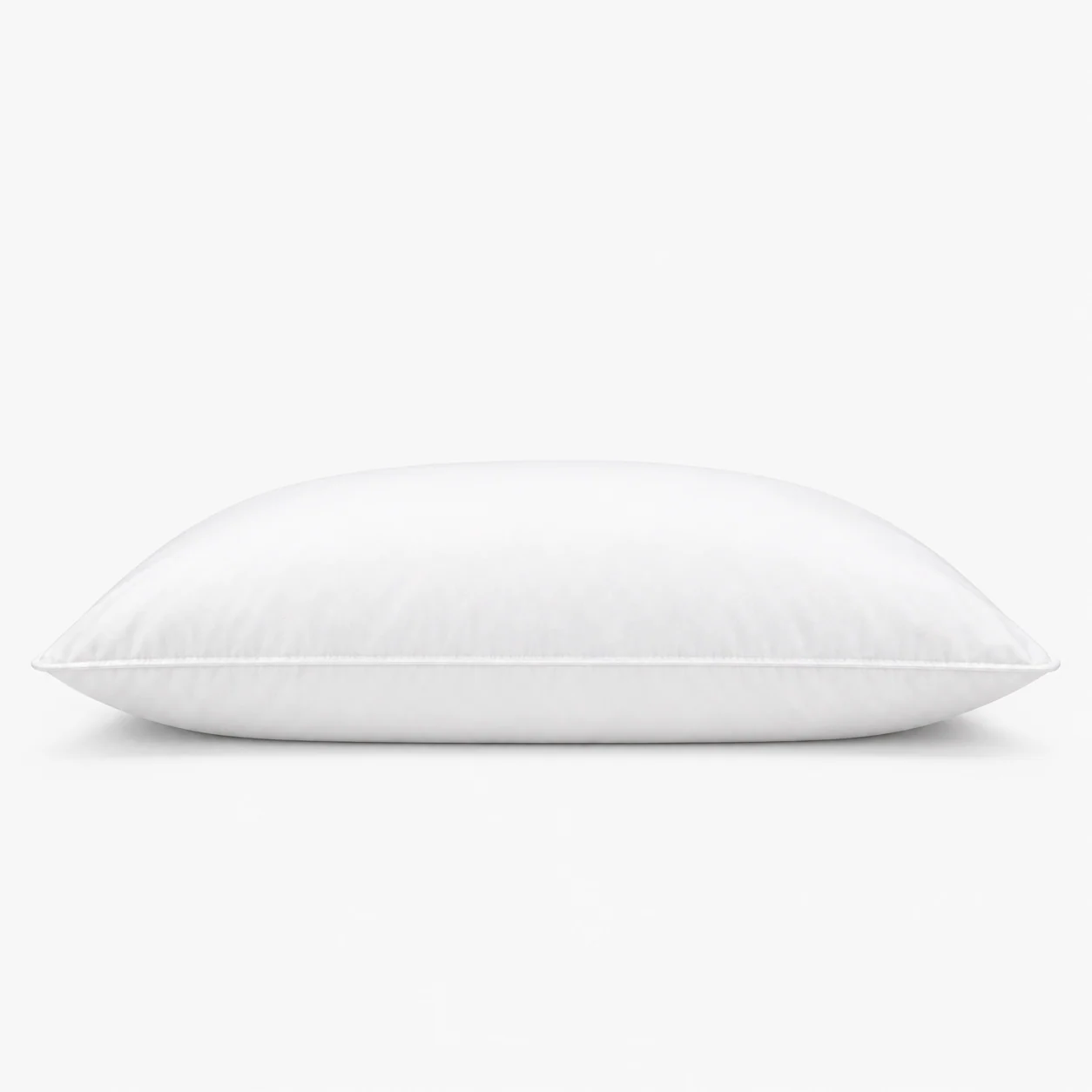
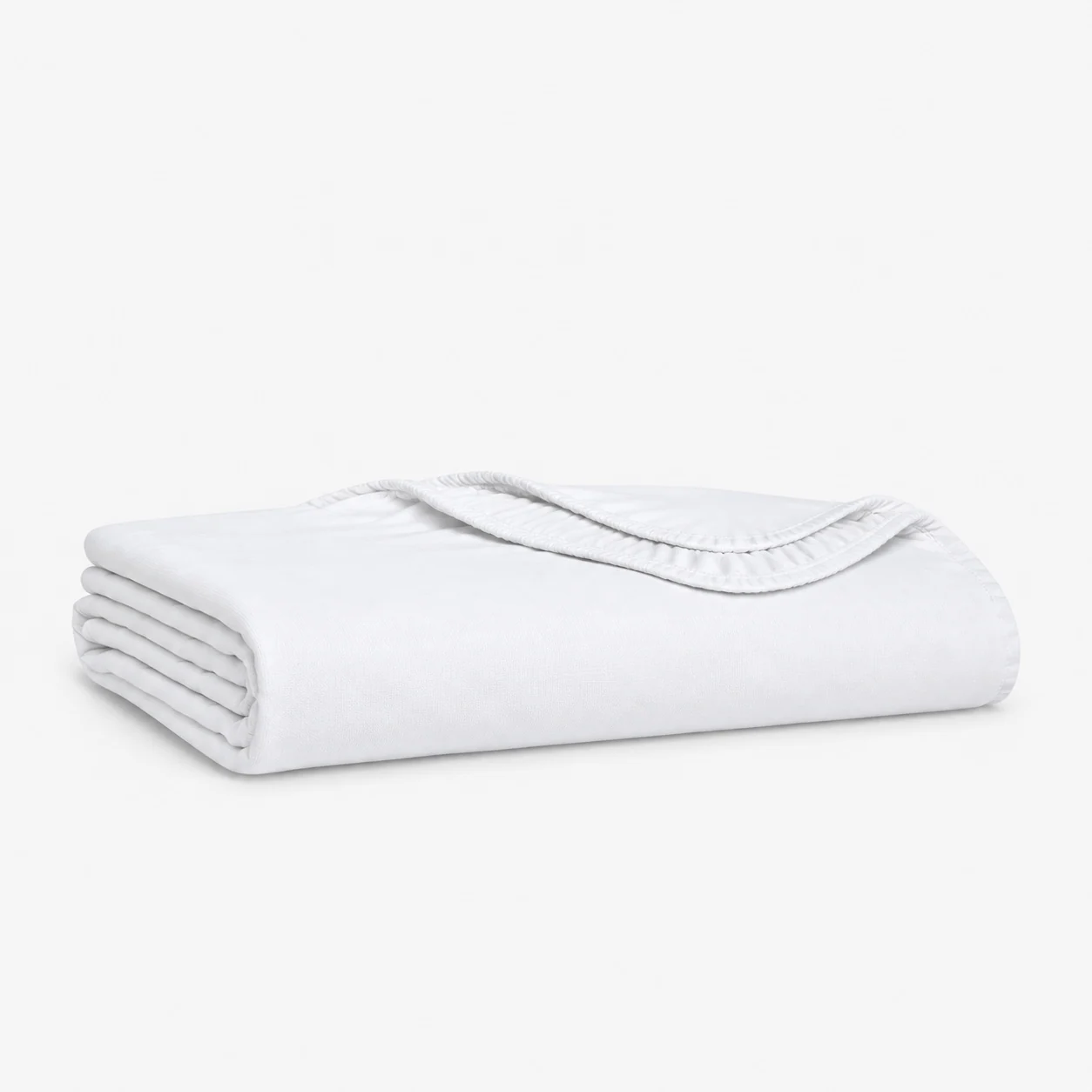
A typical project may include a protector, fitted or flat bottom sheet, top layer, duvet or blanket, pillow, protector and case. The actual combination should follow property standards, climate and laundry capability. Define dimensions, materials, closure and color for each piece. The mattress-protector guide supports the first layer, while the pillow matrix helps avoid an arbitrary fill choice.
Keep the kit complete but not overbuilt. Every extra component adds storage volume, laundry handling and replenishment risk. State whether the duvet is inserted in advance, whether the kit is delivered in a reusable bag and which item touches the folded frame during storage.
- Component-by-component specification
- Warmth and climate direction
- Protective and guest-contact layers
- Reusable storage-bag requirements
Run a room and housekeeping trial
Test the whole operating sequence
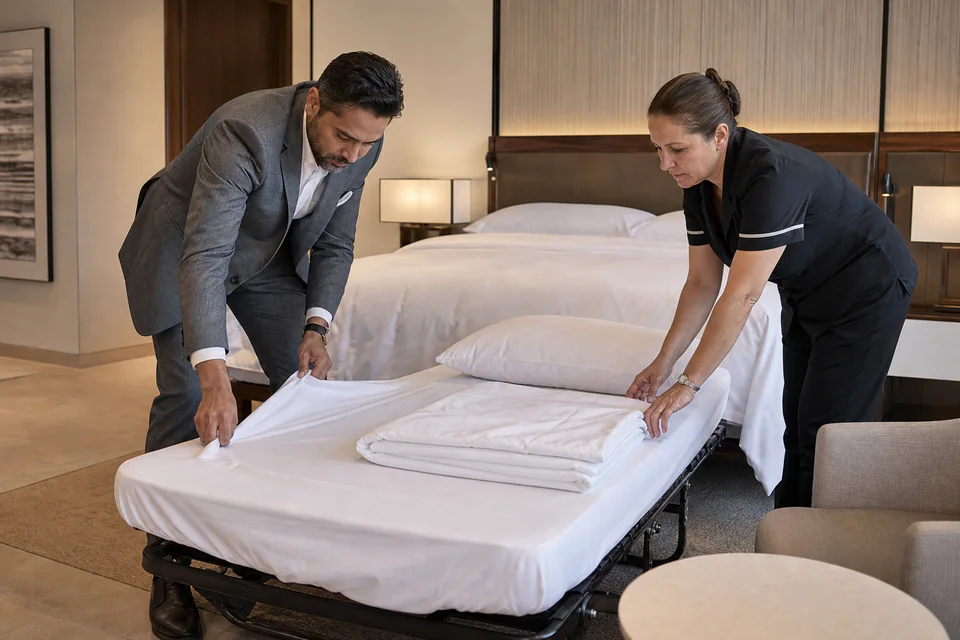
Ask housekeeping to retrieve, move, open, make, strip and refold the bed in a representative room. Observe access, sheet tension, corner security, duvet overhang and pillow placement. Confirm that the made bed does not block the intended route or create contact with moving frame parts. Record the time and difficulties without turning one trial into a labor guarantee.
After the trial, place the kit through the property’s expected laundry and drying process, then repeat the fit check. The hotel linen wash-trial guide helps structure observations about retained size, appearance and handling rather than relying on first touch.
- Retrieval-to-installation sequence
- Made-bed clearance and fit
- Post-laundering repeat trial
- Housekeeping feedback and corrective action
Plan compact storage and unmistakable identification
Make the correct kit easy to find
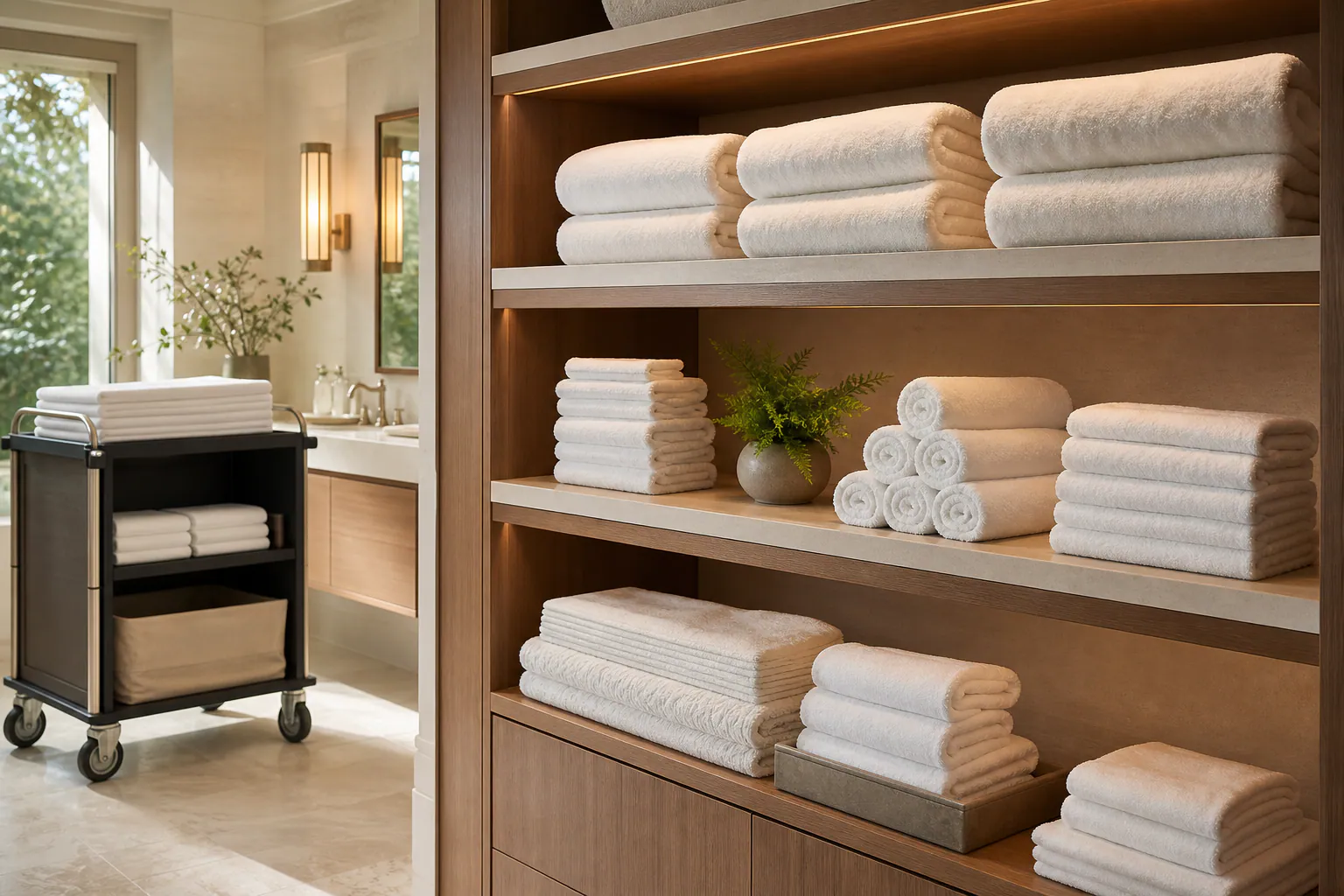
Define folded dimensions and maximum practical pack volume based on the real storeroom. Use breathable, cleanable storage appropriate to the property’s environment and avoid compressing components in a way that damages recovery. Mark the kit size or equipment family clearly, but confirm all label content and placement against the project’s requirements.
The storage bag, outer label and internal component labels should use the same controlled kit identifier. If multiple warmth levels or bed models exist, choose a visual system that housekeeping can distinguish under working conditions. Pair this with the traceability guide when lot-level records are required.
- Folded size and storage location
- Kit and component identifier
- Clean/used handling separation
- Inventory and issue record
Set par, inspection and replenishment rules
Treat the kit as a managed service item
Calculate quantity from fleet size, expected simultaneous use, laundry turnaround, emergency allowance and replacement cycle. Keep assumptions visible and review them after operating data becomes available. Inspect stored kits periodically for completeness, odor, moisture, yellowing, damaged closures and lost identifiers.
Define whether replacements are purchased as complete kits or individual components. A component-level route can reduce waste but requires controlled compatibility. The repair and retirement guide helps set disposition rules. For a property-specific kit and sample route, share equipment measurements through FY Bedding’s hospitality contact.
- Fleet-based par calculation
- Laundry turnaround assumption
- Periodic stored-kit inspection
- Component and full-kit reorder route
Send the supplier the actual rollaway model matrix, mattress measurements, component list, laundry route, folded storage limit and housekeeping trial plan. Approve the complete kit on the equipment after laundering, not only on a sample-room table.