Hotel linen should not remain in guest service merely because it survived another wash, and it should not be discarded for every correctable imperfection. A property needs consistent criteria that separate safe treatment, acceptable repair, alternate use and retirement while preserving guest presentation, hygiene procedures and replacement data.
Classify condition by item and service location
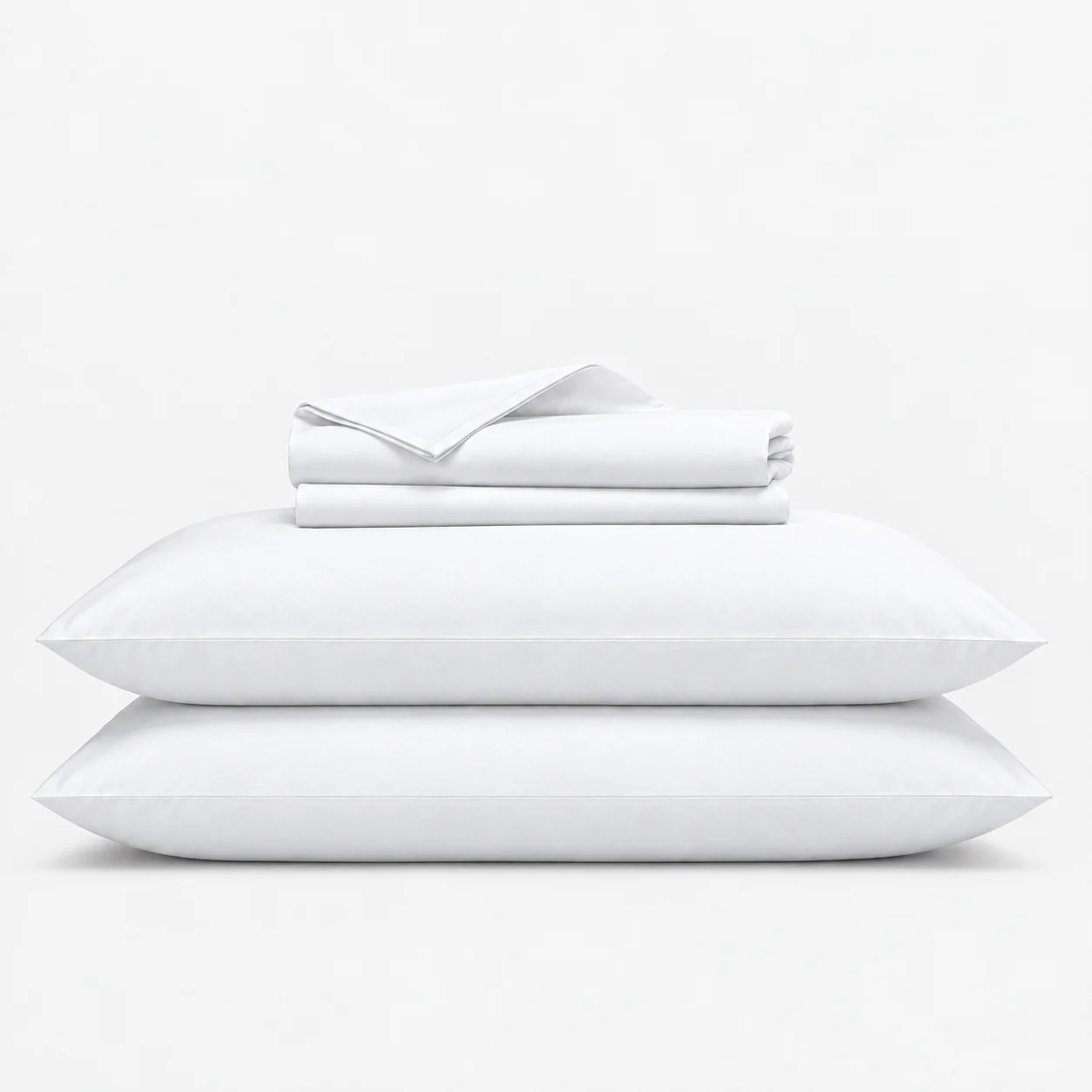
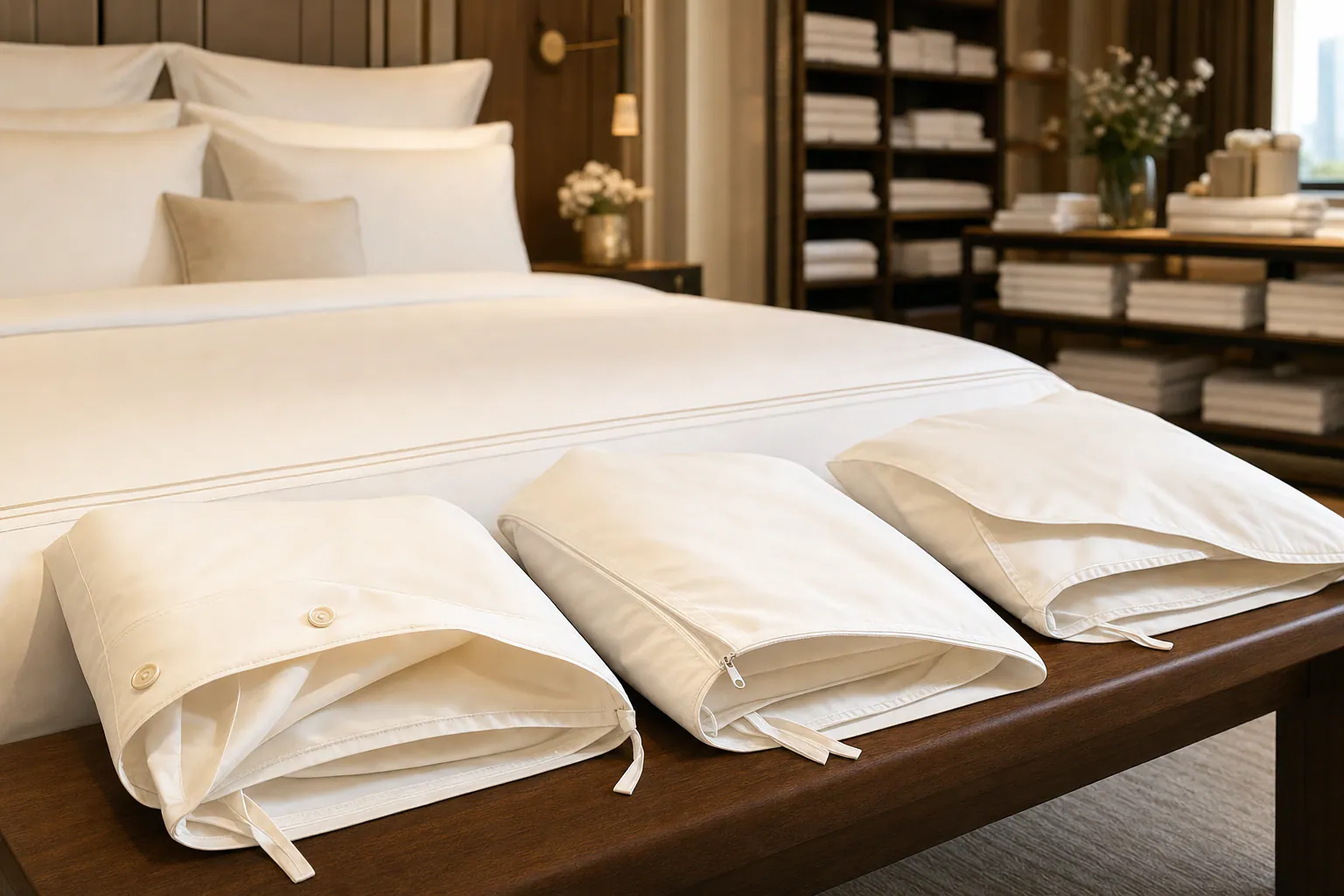
Define the visible and functional expectations for sheets, pillowcases, duvet covers, protectors, towels, bathrobes and table linen. Consider where the item appears, how closely guests see it and whether the condition affects comfort, fit or safety. One universal reject photograph is unlikely to serve every textile and location.
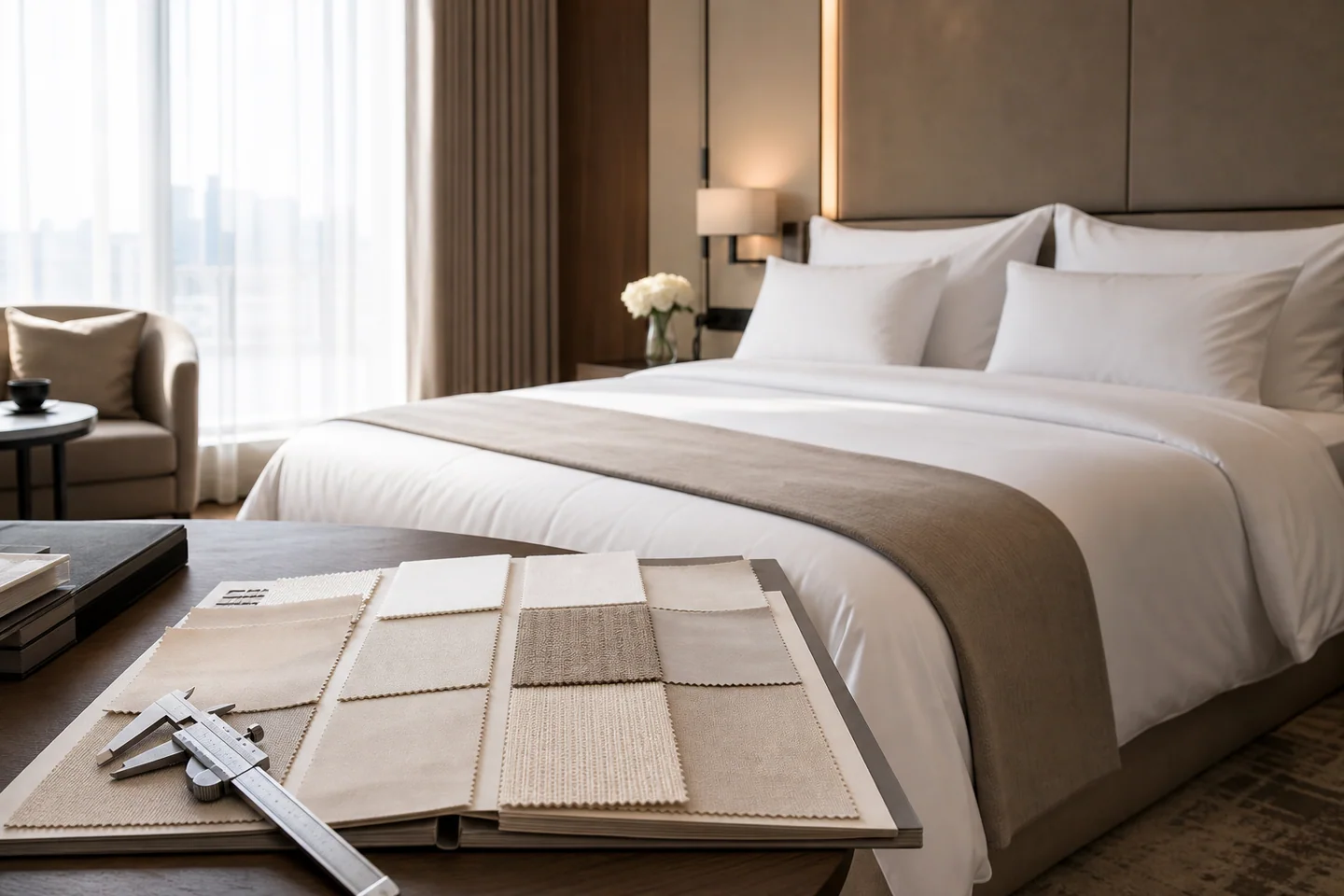
Use measurable construction and size references from the hotel bedding specification sheet. Separate normal texture and shade variation from damage. Provide physical examples for boundary decisions when photographs cannot represent depth, hand, thinning or repaired strength.
Define stain treatment and release decisions
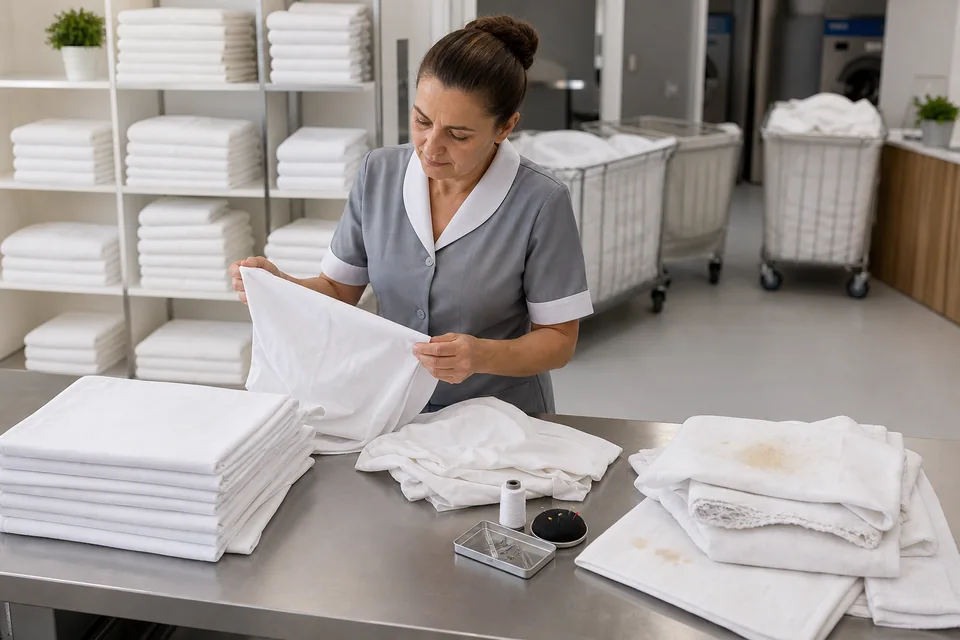
Classify stain type, location, size, contrast and response to the approved treatment route. Follow the property's hygiene and chemical procedures rather than improvising aggressive treatment at the sorting table. Repeated rewash can consume capacity and damage fabric without making a visible item suitable for guest use.
Align treatment with the hotel linen care guide. Record whether an item is returned to service, held for specialist review, downgraded or retired. A stain that is hygienically processed may still fail the property's appearance standard, while discoloration from chemistry may signal a broader process problem.
Approve only safe, discreet and durable repairs
List repairable locations and methods by item. A reinforced laundry bag or hidden utility hem can allow practical repair, while a patch on a guest-facing sheet surface may be unacceptable. Inspect surrounding fabric strength, because stitching a repair into severely thinned material can create another failure quickly.
Apply workmanship principles from the seam and stitch specification guide. Use compatible thread and construction, trim safely and identify repaired stock when monitoring is needed. Confirm the cared-for repair before returning an item to service.
Set retirement, downgrade and isolation rules
Retire or redirect items with persistent high-visibility stain, holes, unsafe tears, failed closures, severe thinning, unacceptable shade, irreversible distortion or loss of required function. Define permissible alternate uses carefully so a downgraded item cannot return accidentally to guest-facing stock or create cross-use confusion.
Link removal categories to linen par-level and replacement planning. Record item family, reason and approximate service age. Securely manage branded or property-identified textiles according to the property's policy instead of placing them into an uncontrolled disposal stream.
Use retirement data to improve purchasing and operations
Trend stain, tear, seam, closure, thinning, shade and loss separately by item, property, laundry route and period. Sudden increases can reveal chemical, equipment, handling or construction issues. Compare pieces purchased, in service and retired rather than treating replacement orders as the only measure of consumption.
Feed recurring failure into reorder specification control and correct the root cause before changing price or weight alone. Review criteria with housekeeping, laundry and procurement so decisions remain calibrated across shifts and new staff instead of depending on individual tolerance.
Create item-specific examples for treatment, repair, downgrade and retirement. Record removal reasons so guest presentation decisions improve laundry practice, specifications and replacement forecasts.