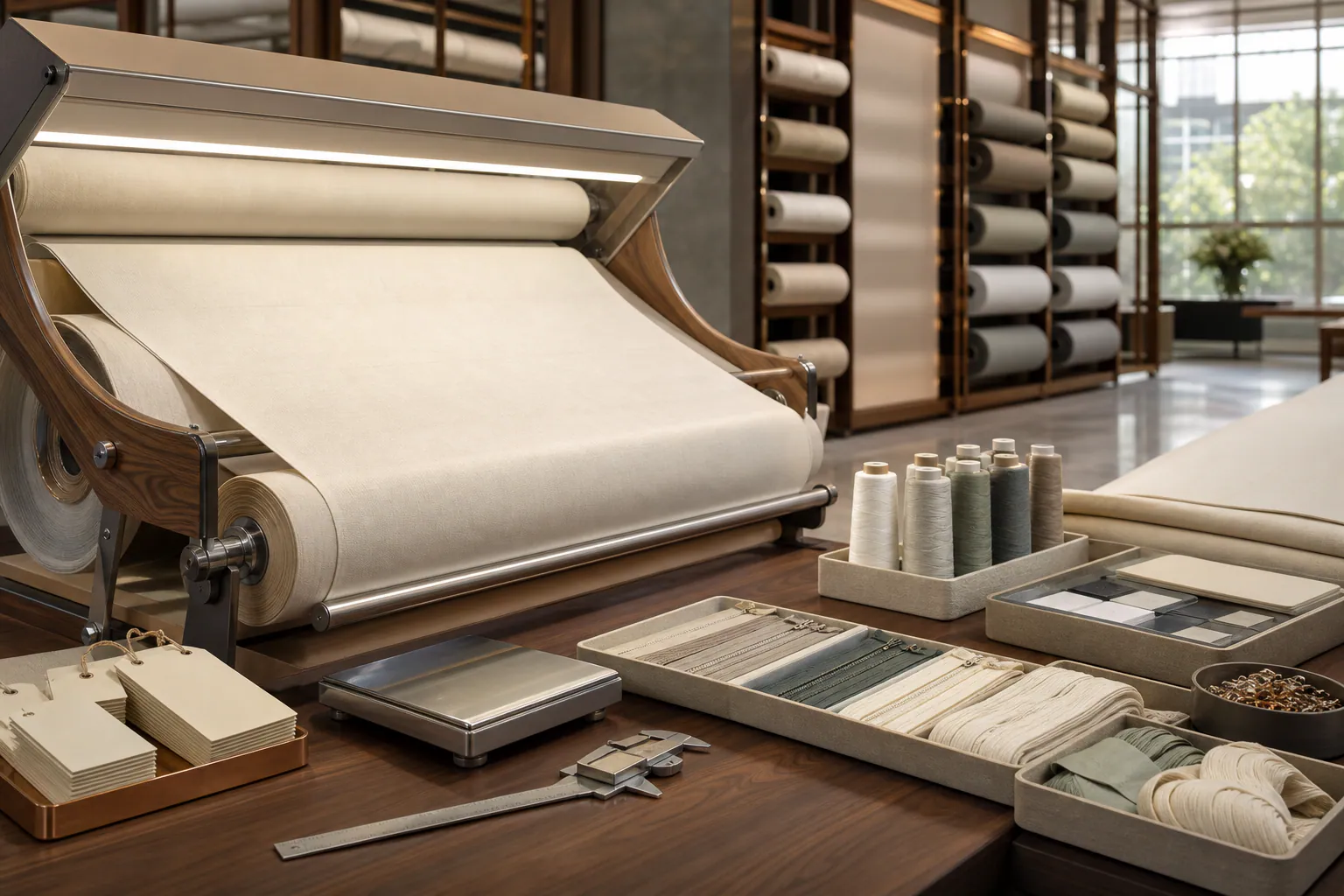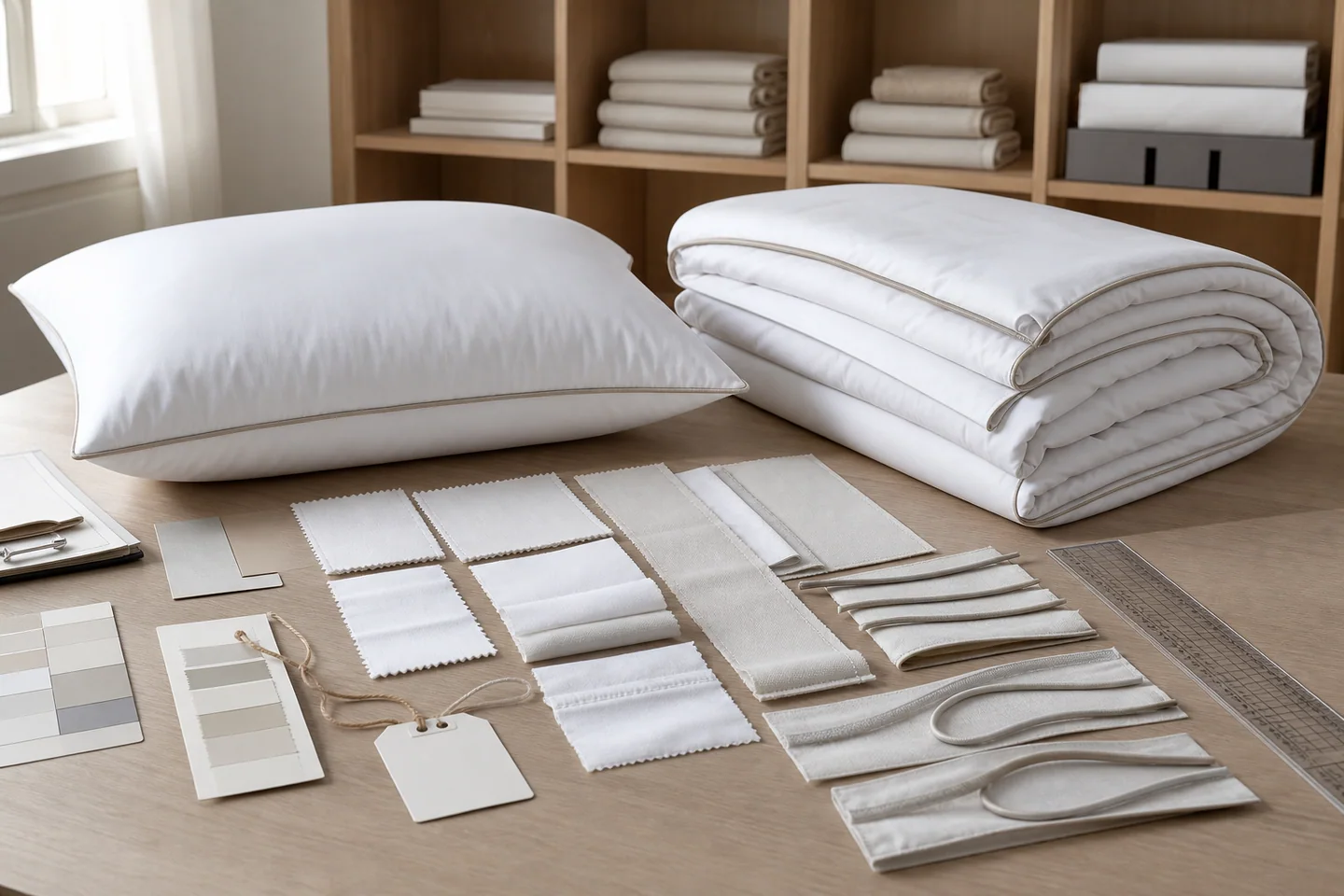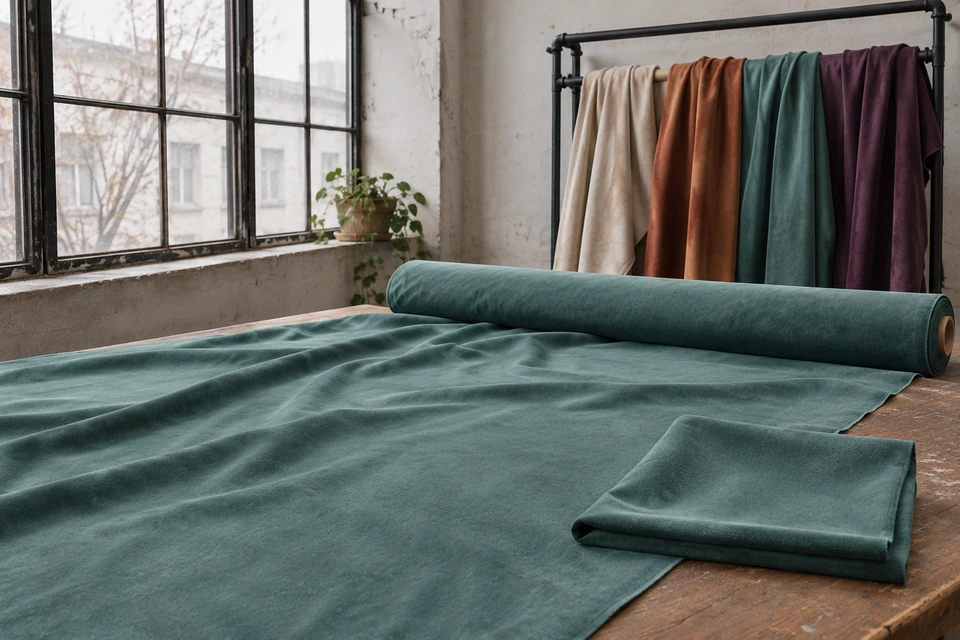
A small peached-fabric swatch can feel appealing while revealing little about consistency across a bed-sized panel. Buyers should establish how the proposed surface looks from edge to centre and in different viewing directions before using a hand-size sample to approve a bedding order.
- 1. Ask what created the surface
- 2. Request a full-width view before final hand approval
- 3. Control viewing direction before calling a shade mismatch
- 4. Compare hand and appearance on the same identified pieces
- 5. Review the large panel and its assembly direction
- 6. Carry the width review into the order record
Ask what created the surface
Peached is an appearance description that needs a process record
Lafer describes sueding equipment using different abrasive or brushing approaches for woven and knitted fabrics. The important purchasing point is that a soft, suede-like surface is a finishing proposal, not a fibre identity. Ask the supplier to state the proposed fabric construction, composition information and finishing route separately. A cotton claim does not explain the finish, and the word peached does not establish cotton content. Keep those fields distinct in the specification and quotation.
Do not confuse this review with a request to remove projecting fibres by singeing or with a fibre-specific fibrillation treatment. A supplier may use several processes in one fabric route, so ask which stage creates the appearance being approved and which sample stage has been submitted. Machinery descriptions are useful background, not proof that a particular mill owns specified equipment or can deliver a stated performance. Obtain project-specific confirmation without importing equipment-maker claims into the FY Bedding product description.
Request a full-width view before final hand approval
A centre swatch cannot represent every lane
Ask for a sample or inspection opportunity that allows the buyer to compare the usable width, with the edges and centre identified. If only smaller pieces can be supplied initially, request their sampling positions and understand the limitation. Several unlabelled squares can be mistaken for width samples when they were all cut from the same narrow area. The record should explain where each piece came from and whether it represents one length position or more than one.
Use the supplier's agreed definition of usable width rather than assuming that every part of a fabric roll will become a finished product. Compare the relevant lanes under the same viewing conditions. Look for a persistent change in surface character, such as a band that appears flatter or more raised than its neighbours. Do not immediately attribute every band to the finishing process. Identify and record the observation first, then ask the technical team to distinguish a finishing difference from a ground-fabric, colour or presentation issue.
Control viewing direction before calling a shade mismatch
Turn the whole comparison, not one sample at random
A surface with fine raised fibres can present differently as the viewing direction changes. Keep sample direction identifiable and compare pieces in a consistent orientation. View them together, then rotate the comparison in a controlled way and record what changes. If two pieces appear different only when one has been turned, that is useful evidence for the discussion. It is not, by itself, a complete diagnosis of either colour consistency or the finishing route.
Use consistent light and avoid photographing one sample in window light and another under a warm desk lamp. Include an overall photograph and a closer view of the area under review. A very shallow camera angle can exaggerate texture; a strongly diffuse image can hide it. Explain the observation in words, including direction and location, so the supplier is not asked to interpret an unexplained photograph. Where colour measurement or specialist testing is needed, agree an appropriate method rather than relying on screen comparisons as definitive evidence.
Compare hand and appearance on the same identified pieces
Do not let a soft feel conceal an inconsistent panel
Review tactile preference separately from visual uniformity, but keep both observations tied to the same samples. A buyer may prefer the hand of one option while finding its appearance less consistent across the width. That is a legitimate development trade-off to discuss, not a reason to mark one sample simply better. Ask the supplier whether a revised proposal can address the observed issue and what other attributes would change. Approve the revised physical result rather than accepting an assurance that the adjustment is minor.
Do not infer pilling resistance, abrasion performance or washing behaviour from a pleasant initial touch. Establish the intended bedding use and the evidence needed for the finished fabric and assembled product. If care processing is part of sample evaluation, identify the conditions and compare equivalent pieces before and after it. Avoid borrowing a generic care recipe from another fabric with a similar surface name. The buyer needs evidence for the actual construction, finish and destination requirements, not a universal promise attached to peached textiles.
Review the large panel and its assembly direction
Make cutting decisions consistent with the approved appearance
Once a fabric option is selected, inspect a representative finished bedding panel. A duvet cover presents a much larger field than a sample card, and seams can bring differently oriented pieces together. Ask the maker to identify the proposed cutting and assembly directions where they affect the surface presentation. If a coordinated pillowcase or reverse uses the same fabric, review those relationships too. A coherent fabric roll does not automatically guarantee a coherent assembled set if orientation decisions remain undocumented.
Consider how a replacement component will be compared with the original set. Retain directional information with the approved sample so a later reviewer does not rotate one item and report a false mismatch. At the same time, do not use direction as a blanket explanation for every difference. A persistent lane change or a visibly altered hand still needs investigation. The practical approval record should make it possible to separate orientation effects, finish variation and actual material changes without pretending that a photograph alone resolves them.
Carry the width review into the order record
Link retained samples to the material actually supplied
Record the fabric reference, declared composition, finishing proposal, width positions, viewing directions and final assembled sample. If the supplier changes the ground, finish route or production source, ask for the relevant review before treating the material as equivalent. Specify the inspection scope and escalation process with the supplier. Avoid inventing an across-the-board numerical tolerance for surface uniformity when the parties have not agreed how it will be observed or measured.
FY Bedding enquiries can include the intended bedding product, preferred surface character, dimensions and expected use, together with a request for full-width evidence. Confirm minimum quantities, development charges and delivery timing against the selected fabric rather than a generic soft-finish category. The useful buying outcome is an identified material and an agreed viewing reference that both sides can reproduce. It is not a claim that every fabric described as peached will have the same hand, appearance, care performance or production capability.
Ask for identified edge-to-centre evidence, consistent viewing directions and a representative assembled panel. Approve hand, appearance and required performance evidence separately, then tie them back to the same fabric and finish revision.
Method references: Lafer: different approaches to mechanical sueding.